
Search used to be a simple tool to look up something on the internet. You typed a short phrase, Google returned a list of links, and you clicked the one that looked most useful. That was the whole transaction. It was fast, impersonal, and entirely predictable.
But that transaction has evolved. Google AI Mode search behaviour has shifted the experience from a list of answers to a genuine conversation—one where users describe what they really need, in plain language, and expect Google to think through it with them.
For businesses, this change is not unreal. It affects how your content gets found, how your services get described, and whether you appear at all when a potential customer is deciding what to do next.
Here we discuss how Google AI Mode is changing search behaviour in 2026 to help you understand what this shift means in practice and how to stay visible.
Each of the shifts below reflects a real change in how people use search today—and what your content needs to do in response.
For decades, people trained themselves to search for broken fragments — “plumber Toronto emergency” instead of “I have a burst pipe and need someone here today.”
That shorthand was never how people thought. It was simply how search engines worked. AI Mode removed that requirement. Users can now describe the full situation—the context, the constraint, the goal—and the search engine handles the interpretation.
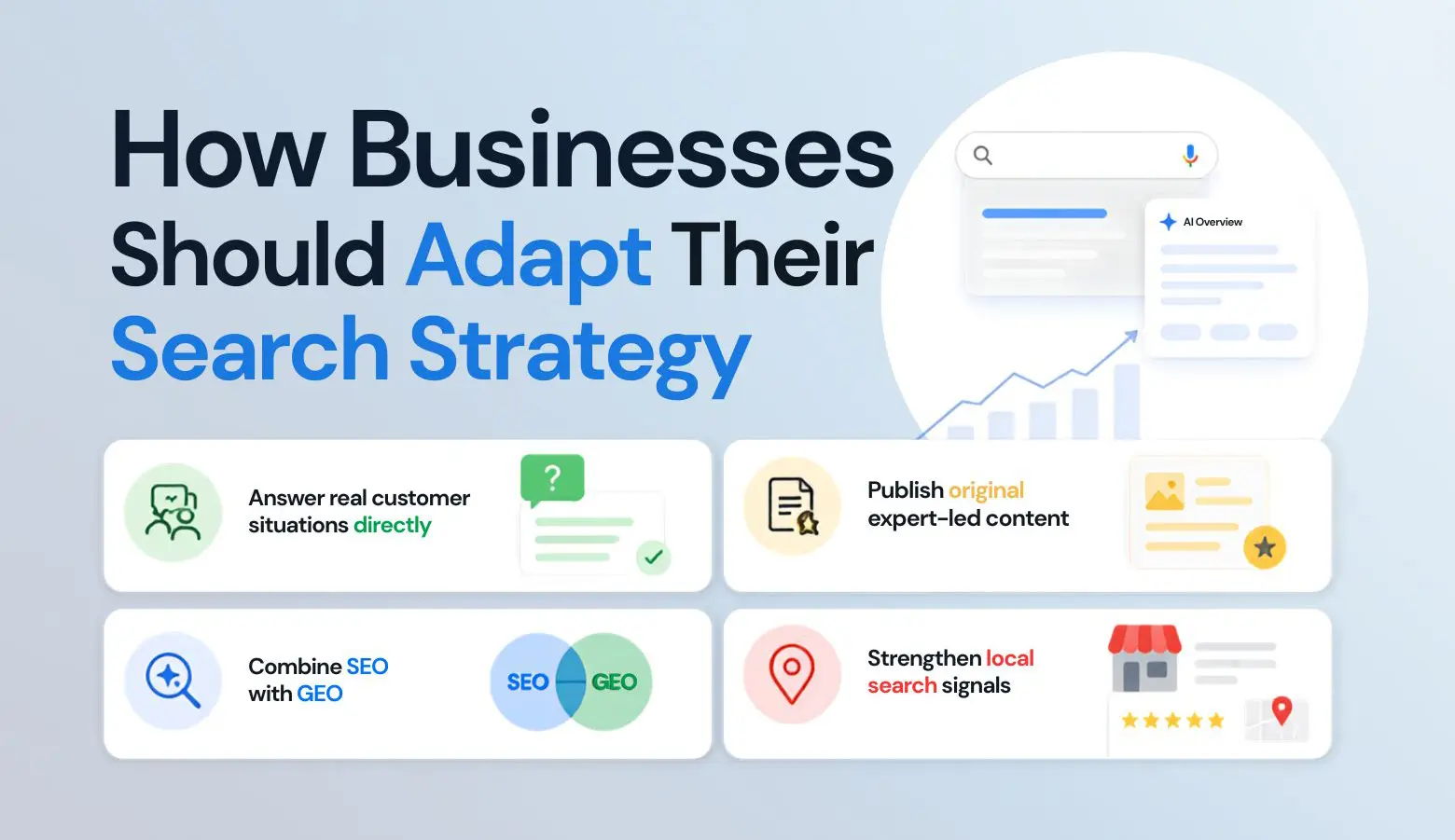
This changes what good content needs to do. If users are arriving with full sentences and real intent, your content must answer real situations, not just match isolated keyword strings on a page.
A traditional search was a single exchange. You typed, Google responded, you clicked or left. AI Mode holds the thread. A user can ask an initial question, receive an answer, and follow up with “but what if I’m in Ontario?” or “what does that mean for a small business?” The conversation continues, each response building on the last.
Understanding Google AI Mode search behaviour means recognizing this new dynamic. Content that has enough depth to sustain a genuine back-and-forth exchange is far more likely to be cited and returned across the full course of a search session.
Typing is still the primary way people search, but it is no longer the only way. Users photograph products they want to identify, hold their phones up to signs they want translated and speak full questions while cooking or driving. For instance, a homeowner might photograph a mould patch on a wall and ask AI Mode what it is, how serious it is, and who to call—all in one spoken exchange.
If your website relies entirely on text to be found, a growing portion of the search audience is bypassing it without ever knowing your business exists.
There is a meaningful difference between someone searching for a fact and someone searching for help in making a decision.
AI Mode is pulling more users into decision-making territory. Queries about travel, finances, health, home improvement, and business choices now unfold as planning sessions rather than single lookups. A user does not just search “best neighbourhood in Hamilton.” They describe family size, commute requirements, school preferences, and budget. Content that answers only one part of this kind of question misses what the user needs and is less likely to be surfaced across the full exchange with AI.
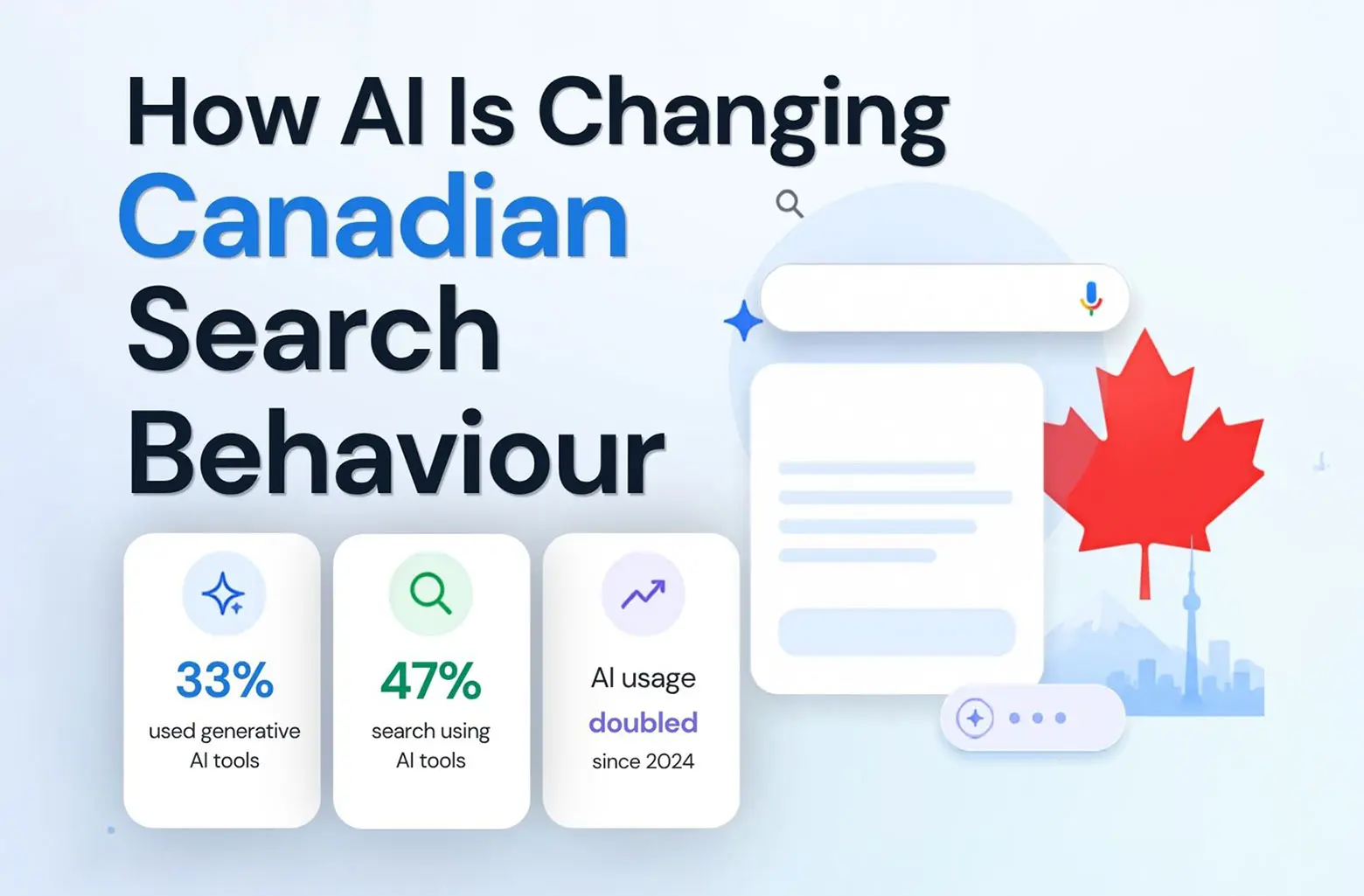
If you look at how people phrase their AI Mode searches, a pattern emerges. They use words like “explain,” “help me understand,” “what should I do if,” and “ideas for.” These are not the words of someone retrieving a fact but of someone working through a problem.
Google AI Mode search behaviour shows that people are bringing their thinking to the interface, not just their queries. Content that speaks to how someone reasons through a problem—not just what the answer is—tends to earn more engagement and citation in this kind of conversational search environment.
In the old model, authority was largely a function of backlinks and domain age. Those signals still matter, but AI Mode adds a new dimension. When Google synthesizes an answer, it draws on content that demonstrates genuine expertise. That means content showing the writer has worked in the industry or helped real clients with the problem. Generic summaries of widely known information are less likely to be selected. Case studies outperform common advice, first-hand insight outperforms borrowed opinion, and real examples outperform abstract explanations. The bar for citation rewards businesses that treat their content as a genuine reflection of what they know.
The old version of Google was a pointer. It said, “Here are ten places that might have what you need.” AI Mode is different. It reads those sources and gives a synthesized answer, with links for users who want more.
This is one of the most consequential AI search trends in 2026 for businesses. You are no longer competing only for only a click. You are competing to be the source Google trusts enough to build its answer from.
That is a harder challenge, but a more durable one—because once you earn that trust, visibility compounds rather than fluctuates.
The changes above are not theoretical. They have direct, practical implications for how businesses invest in their digital presence.
Google AI Mode usage has changed what it means to be found online. A website full of short, keyword-optimized pages was built for a world where users typed fragments. That world is giving way to one where users describe full situations.
If your content answers only the surface-level version of a question, it will not satisfy a user who tells AI Mode exactly what their problem is and expects a real answer. The businesses that will do well are the ones whose content reflects genuine knowledge of their customer’s actual situation—not just the search terms those customers happened to use.
Some businesses assumed AI search would make SEO irrelevant where the opposite is true. Google confirmed that its AI features are built on the same ranking systems as traditional search. Content that does not rank cannot be cited in AI responses.
What has changed is the quality standard. Generic pages summarizing common knowledge are less likely to be selected as sources for AI results. Content with a real point of view, original insights and clear structure earns citations far more reliably. This is good news for any business willing to invest in content that genuinely reflects what they know and have done.
Generative Engine Optimization (GEO) structures content so AI systems can read, trust and surface it in generated answers. This means writing direct answers before expanding on them, using headings that reflect real questions, and making every page useful as a standalone resource.
Optimizing for Google AI Mode search behaviour does not mean replacing SEO. It means to set up on it. Content that ranks well in traditional search can also earn AI citation, provided it is structured around the reader’s actual question. Agencies offering dedicated GEO services help businesses close the gap between ranking and being reliably cited in AI-generated answers.
It is tempting for local service businesses to assume AI Mode mainly affects large brands, but it does not.
When someone asks AI Mode “which electrician in Mississauga is good with older homes,” Google synthesizes an answer from available signals, including Google Business Profile data, reviews, location pages, and your web content quality.
A local business with a thin web presence is at a real disadvantage here. Strong local SEO is now the foundation for local AI visibility, not a separate concern. Your Google Business Profile, your reviews, and location-specific service pages all feed directly into what AI surfaces about your business.
Search has always reflected how people want to find things. Right now, people want more than a list of links. They want a tool that understands context, holds a conversation and gives a useful answer. Google AI Mode search behaviour is pulling search in exactly that direction, and the pace of that shift is real. For businesses, the question is not whether this matters; it already does. The question is whether your content is built for the way people are really searching today.
Google AI Mode is a conversational search experience powered by Gemini. Instead of returning a list of links, it synthesizes an answer from multiple sources and allows users to ask follow-up questions, describe their situation fully, and receive context-aware responses.
Yes. AI Mode synthesizes answers rather than listing links. If your content is not cited, you may be invisible to users searching for what you offer. Citation in AI-generated answers is now an impactful visibility channel along with traditional organic search.
Absolutely. Google confirmed its AI features run on the same ranking systems as traditional search. Content that cannot rank cannot be cited. Strong SEO still remains the base for AI visibility. Both strategies support each other rather than replacing one another.
Content that answers real questions directly, demonstrates genuine expertise and is clearly structured. First-hand insight, original perspectives and well-organized long-form pieces tend to be cited more reliably than generic summaries. Write for the searcher’s actual situation, not just their keyword.
GEO structures content so AI systems can extract and cite it in generated answers. It is not a replacement for SEO. However it is a complementary layer built on top of it. Both rely on the same foundation i.e., genuinely helpful, well-structured content that answers actual questions directly.
When users ask AI Mode for local recommendations, Google draws on your Business Profile, reviews, and service pages. Businesses with accurate and complete local data appear more reliably. Weak or missing local signals reduce your chances of appearing in AI-synthesized answers.