
 Perplexity
 ChatGPT
 Claude
 Gemini
 Grok
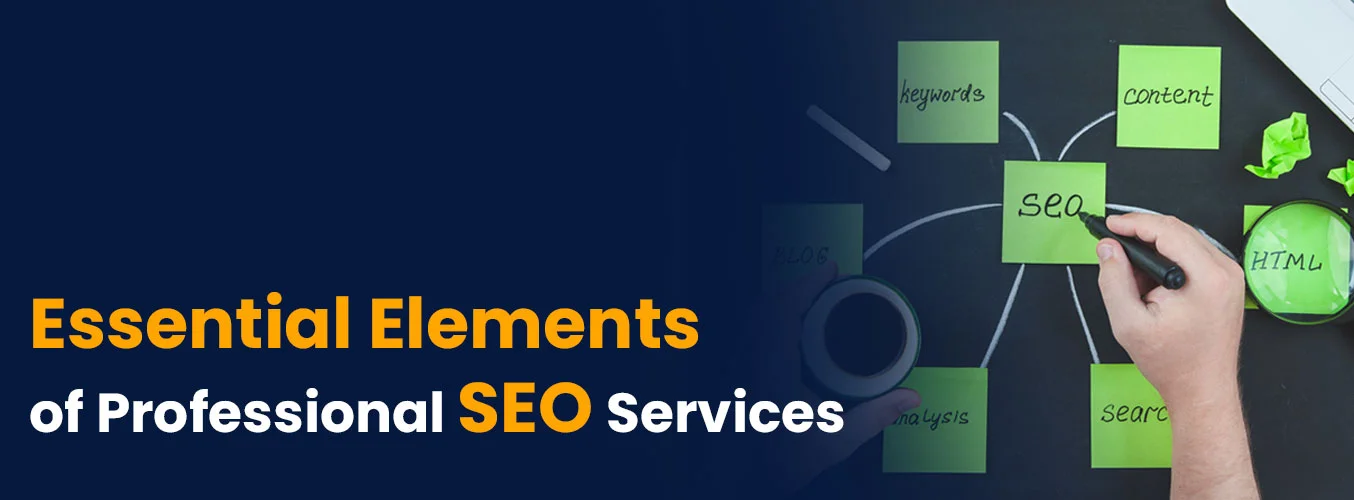
Spending money on a service you don’t fully understand makes no sense. Business owners in Canada know they need to show up in search results, but they are not always certain what they are actually paying for whenever it comes to professional SEO services, or whether the work behind it truly matters. That uncertainty is understandable and fair.
Not every SEO agency delivers the same quality of work. Some promise fast results with little real substance behind their efforts. Others offer arrangements that sound thorough but don’t move your business forward in terms of search visibility.
Good SEO services involve a defined set of work areas, such as keyword research, technical improvements, content creation, and link building. Each area has a specific job to do, and knowing what those areas are helps you assess whether a provider is delivering on what they promised.
In this blog, we discuss what a professional SEO engagement should cover, so you can assess any provider with confidence and a clear sense of what to look for.
What Professional SEO Services Should Cover
Understanding each piece of this work helps you separate what is genuinely valuable from what only sounds good.
1. Technical SEO Audit
When an SEO provider begins working on your website, the first thing they should do is run a technical audit. This means examining your website carefully to find what is causing search engines to struggle with reading or accessing its pages. The review covers crawl errors, which are pages that search engines simply cannot reach; broken links; duplicate content; and the structure of your URLs.
It also identifies issues with page load speed and mobile performance, flagging these as specific areas that will need further dedicated work. Visitors rarely notice these issues, but search engines do, and when left unaddressed, they reduce how well the rest of your optimization work performs.
A good audit gives you a clear, prioritized list of specific fixes, not just a detailed document with no clear direction. Getting this foundation in order first allows everything else on the site to work as it should.
2. Keyword Research and Mapping
Keyword research is defined as the work of finding the exact phrases and words your prospective customers type into search engines when they are looking for what you offer. Without this step, your pages might target the wrong terms, and your content may not reach the people most likely to buy from or contact you. Good research examines search intent (meaning what the person wants to accomplish) and not just the words they typed.
It also considers how competitive certain terms are and whether the people those terms bring in are likely to take action. Each keyword then gets assigned to a specific page on your website, so every page has a clear focus and a defined purpose.
Any genuine SEO services work should always include this step, delivered as a documented plan you can read, follow, and refer back to at any time.
3. On-Page Optimization
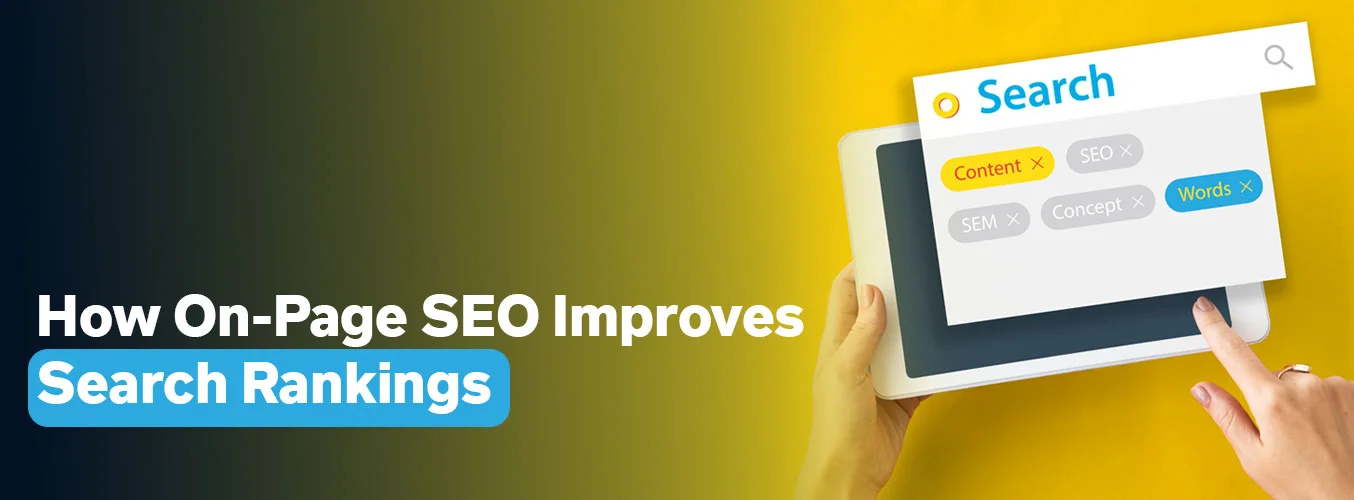
On-page optimization is the work done directly on each of your website pages to make them more relevant to the searches you are targeting. This includes writing title tags (which are the clickable headlines that appear in search results) and meta descriptions (which are the brief summaries displayed just below those headlines). It also means organizing your content with clear headings and making sure each page genuinely covers the topic it is supposed to address.
For instance, a service page should include relevant terms throughout the body of the text in a way that reads naturally, not placed only in the headline. A sound SEO strategy for any individual page also examines internal links, which are the connections between pages within your own website, along with image descriptions and page structure.
On-page work is not a one-time task, because pages need to be revisited as search trends shift and as your business adds new services.
4. Off-Page SEO and Link Building
Off-page SEO refers to the work done outside your website that influences how search engines evaluate your credibility. The key component of this is link building, which is the process of earning links and mentions from other reputable websites that point back to yours. Search engines use these links as signals that your website is relevant and worth referencing, and links from well-regarded, relevant sources help your site rank more competitively.
Two common methods used to earn these links are guest posting and digital PR. Guest posting involves writing useful content for other websites in your industry, which earns a link back to your own site in return. Digital PR involves getting your business mentioned or featured in online publications and media sources, which builds your credibility and adds to your overall presence as a trustworthy source online.
This does not mean collecting as many links as possible, because quality matters far more than quantity, and links from low-quality or unrelated sources can work against you.
Want a done-for-you local SEO audit for your Toronto or Mississauga business?
Off-page work also includes managing your business mentions across directories and review platforms to keep your information accurate and consistent.
Good SEO services always include a clear, honest approach to link building, with open communication about where links are coming from and how they are being earned.
5. Content Creation
Content is the reason people stay on your website once they arrive. Good content answers real questions, explains your services clearly, and builds trust with readers before they ever pick up the phone or fill out a form. This is not about loading your website with articles for the sake of volume. It is about producing pages and posts built around real search terms, written for real people, and structured so search engines can properly read and categorize them.
Every new page should be planned around a specific search term from your keyword research. This gives each page a clear purpose and a defined group of people it is meant to reach. Pages published without this kind of planning rarely perform well in search results.
For instance, a well-written service page can rank for relevant search terms and give a visitor enough information to take the next step. Content is what search engines read and evaluate when deciding where to rank your pages. If the content on your website is weak or unclear in its purpose, the technical work and link building done around it will have very little to show for it.
6. Local SEO
If your business serves people in a specific city or region, local SEO helps make sure those people can find you when they search online. This work involves keeping your Google Business Profile accurate and up to date, with current hours, photos, categories, and contact details. It also includes making sure your business name, address, and phone number appear consistently across all local directories and listing sites.
Earning and responding to customer reviews plays a meaningful role in how prominently your business appears in map results and local search results. Many people in Canada search online for a nearby service provider and then choose from the options that appear at the top of those results. Local SEO is what determines whether your business shows up in that list. It is a specific area of work with its own tasks and requires regular, ongoing attention to remain truly effective.
7. Performance Tracking and Reporting
A professional provider should send you regular reports that show clearly how your rankings, website traffic, and enquiries are changing over time. Rankings refer to where your website appears in search results for specific terms, and traffic refers to how many people are visiting your pages. These reports should be written in plain language that a business owner can read without needing a technical background.
Good tracking covers more than just rankings alone. It looks at which pages are bringing in visitors, which search terms are improving, and where those visitors are coming from. It also shows what people do once they land on your site. For instance, if the number of visitors increases but enquiry volume stays the same, that points to a specific issue worth looking into with your provider.
Many well-structured SEO packages include performance reporting as a standard part of the service, and it is something you should expect from any professional provider. Without it, there is no reliable way to assess whether the work is delivering results.
Additional Services That Matter for Your Specific Business
The elements above apply to nearly every business. These four areas connect more directly to specific business types and to the range of work a full-service provider can offer.
Mobile SEO
A technical audit identifies where mobile performance is falling short, and mobile SEO addresses those issues. Most people searching online today are doing so from a smartphone, which means your website needs to work reliably on smaller screens.
This involves adjusting your website design so that it responds properly to different screen sizes. It also means making content readable without zooming in and ensuring buttons are spaced far enough apart to tap accurately.
Search engines now primarily evaluate your website using its mobile version. This means any issues on a phone screen affect your rankings for all users, not only mobile visitors.
Beyond the visual side, mobile SEO addresses page load speed on cellular connections. Pages that take too long to load cause visitors to leave without engaging. A website that functions well on a phone gives both visitors and search engines a reason to trust it.
E-Commerce SEO
If you run an online store, the optimization work involved is different from what a service-based business needs. E-commerce SEO focuses on making sure your product pages, category pages, and filter options are set up so that search engines can read and rank them. It involves writing original product descriptions, organizing categories around real search terms, and making sure the site does not create duplicate pages through sorting and filtering.
For instance, an online store might have hundreds of product pages. Without proper structure, those pages can compete against each other or not appear in search results at all.
Professional SEO services for e-commerce include schema markup. This is a way of formatting information so that search engines can display product details like price and availability in search results.
When shoppers can see those details before they click, they are more likely to choose pages that match what they need.
Conversion Rate Optimization
Bringing more visitors to your website through SEO is only part of the work. The other part is making sure those visitors take meaningful action, such as calling, filling out a form, or making a purchase.
Conversion rate optimization, or CRO, looks at how people interact with your website and finds the points where they stop engaging before completing an action. This could mean adjusting calls to action, simplifying contact forms, or improving how a pricing page is written so visitors can find what they need easily.
If one hundred people visit your website and two of them make an enquiry, your conversion rate is two percent. If better page design or clearer messaging moves that number to four, you have doubled your enquiries without bringing in a single additional visitor.
SEO services that include conversion rate optimization are worth considering. They focus not only on bringing people to your site but on making sure those visits produce a result.
That combination generally delivers better outcomes for your business than traffic alone.
AI SEO, GEO, and AEO
AI SEO uses machine learning tools to improve how your website performs in search by identifying content gaps, comparing your site against competitors, and prioritizing optimization work more accurately.
GEO, short for Generative Engine Optimization, and AEO, short for Answer Engine Optimization, both focus on how your content appears in AI-generated responses. Tools like ChatGPT, Google’s AI Overviews, and Perplexity now generate direct answers to questions rather than returning lists of links.
Instead of ranking in those links, the goal with GEO and AEO is to be part of the answer itself. For instance, a page that directly addresses a specific question is more likely to be cited in those responses than one that only describes your services in broad terms.
Structuring your content clearly and making your pages easy for AI tools to properly read and access is the practical work that supports all three of these areas.
Knowing what goes into a professional SEO engagement makes it easier to choose the right provider and assess whether the work is being done. Real progress comes from a connected set of efforts covering technical improvements, keyword research, content, link building, and regular reporting. Each area supports the others, and when one is missing, the rest of the work is less likely to deliver what you are looking for. Good SEO services are built on honest communication and work you can follow and measure over time. If you want to understand how this kind of work is carried out in practice, G Web Pro is a good place to start.