
Your website is often the first impression a potential customer gets of your business. Yet many websites are built to look good in a mock-up—not to perform in search results or turn visitors into customers.
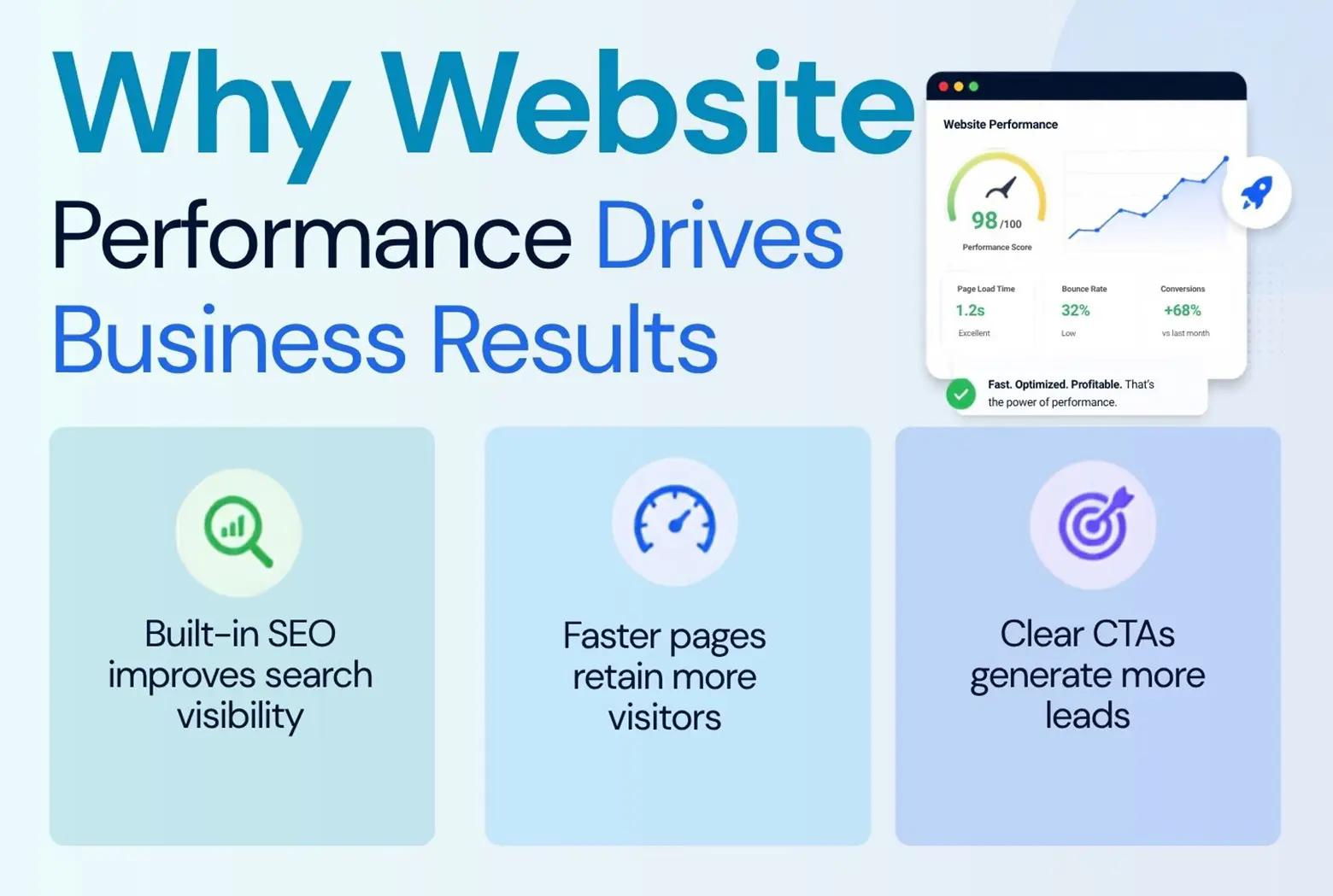
A great website does three things well:
Miss any one of those goals and your whole investment suffers.
Many Toronto business owners know this feeling. They paid for a website, waited months for it to be built, and still saw no meaningful change in traffic or leads. The root cause is almost always down to a technical decision that was made—or skipped—during the build itself.
Choosing the right web development company in Toronto means understanding what goes into a website that is worth the ongoing investment.
Here we will discuss how to build a website that ranks, loads quickly, and converts with the assistance of a reputable web development company.
Every website decision connects back to three outcomes: whether people find it, whether they stay, and whether they take action.
Most business owners think of SEO as something you add after a website launches. It’s a layer of keywords and backlinks applied once the work is done. But that is a mistake that costs months of recovery time.
The best web development companies in Toronto start with technical SEO baked into their websites’ structure. That includes clean code, crawlable URLs, proper heading hierarchy, and schema markup from day one. A site built without these foundations will find it hard to rank no matter how much content you publish later. The build stage is where these decisions cost the least and carry the most weight.
A slow website loses visitors before a single word is read. Google has been clear that page speed is a core ranking factor for both mobile and desktop results. Visitors who land on a slow page don’t wait—they leave.
Speed is not a technical concern but is a direct signal of brand quality. It also shapes conversion rates. A visitor who lands on a fast and responsive webpage tends to stay on it longer. If they land on a page that lags, they are likely to leave.
A website build that prioritizes compressed images, minimal scripts, and efficient hosting will always outperform a flashy but slow site in every meaningful metric.
Toronto’s smartphone usage rates are among the highest in the world, and the way locals browse has changed a lot. Most of your website visitors will arrive via phone, not a desktop. This means that every layout decision, font size, button placement, and image must be designed for a small screen first and scaled up from there.
A commitment to SEO-friendly web development means building for mobile from the very first wireframe, not adapting an existing desktop layout afterward. The result is a site that feels natural to use, regardless of the device and signals credibility to Google’s mobile-first index specifically.
Every visit to your website equals a small window of opportunity. Someone landed there because they needed something. The question is whether your site helps them take the next step or leaves them guessing and ultimately disinterested.
Conversion-focused web development treats every page as a guided path; it has a clear heading, supporting information, and recommends a visible and specific action. “Book a consultation,” “Get a quote,” “Call us now” are all simple phrases which, when placed in the right spots, do the heavy lifting. For instance, a homepage with a strong headline and a clear primary call-to-action button will consistently outperform one with five options and no hierarchy.
Google’s crawlers track links to discover and index your content. If your site’s structure is confusing—pages buried four clicks deep, orphaned posts with no links pointing to them, URLs that look like computer error codes—Google will not give those pages the attention they deserve.
Poor site architecture creates a bad experience for visitors too. If they can’t find what they need, they will leave. The right structure uses clear parent-and-child page relationships, logical internal linking and a sitemap that tells Google exactly what exists and how it all connects. Website architecture is strategy, not just a filing system.
People don’t buy from websites they don’t trust. A strong web development company in Toronto will design trust signals directly into your pages. These include real testimonials with full names and photos, security badges near checkout or contact forms, clear privacy policies, and an About page with actual team members rather than stock photos.
For instance, a business that shows genuine client reviews close to a call-to-action button sees measurably better response rates than one that hides social proof in a footer carousel. Trust is not separate from design; it is the foundation upon which every design decision should be built.
A website is not a finished product but a living asset. The smartest way to work with any web development company in Toronto is to ask upfront how they take care of post-launch performance monitoring. Core Web Vitals, bounce rate, heat maps and conversion funnels all tell a story about what is working and what needs adjustment. Google updates its algorithm regularly, and what ranked well six months ago may need refinement today. Booking analytics and performance reviews into the engagement from the start means that problems get caught early, not when they have already cost you traffic and qualified leads.
A reliable and skillful development partner brings more than coding skills to your project. They also bring a structured process that connects your goals to the finished product and keeps it performing neatly long after launch.
When a business invests in a website, it deserves a build shaped around its specific goals — not a template with their logo swapped in.
G Web Pro’s Digital Experience Development process starts with the client’s objectives. The technology stack, the user journey, the page layouts, and the internal logic all reflect what that particular business needs to achieve online. For instance, a professional services firm has entirely different conversion goals than a retail shop. Custom development means those differences are honoured right from the wireframe stage, not awkwardly patched into a generic theme that was never built with your business in mind.
Ranking well on Google begins before a single line of content is written. The best work from any reputable web development company in Toronto integrates SEO priorities at the code level. That includes proper page titles, canonical tags, XML sitemaps, structured data and fast load times baked into the base build.
This is not something to layer on afterward via a plugin alone. When SEO considerations shape the way pages are named, structured and connected, the entire site performs better from launch. Each new page added to the site follows the same built-in standards rather than requiring separate optimization each time.
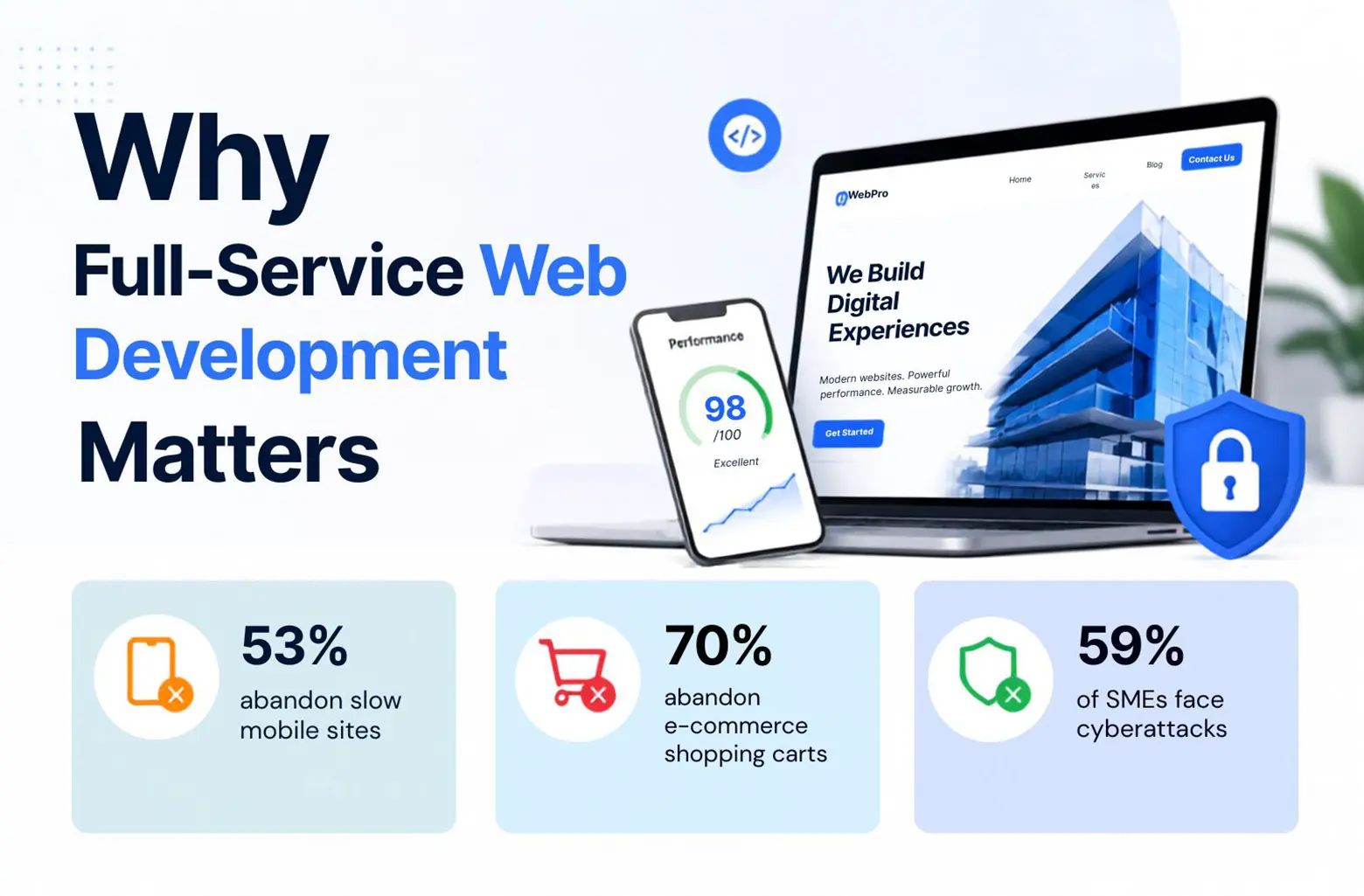
Whether a business sells products online or books appointments, the website development approach for each transactional page matters a lot. Service pages are required to answer questions, address objections and make booking easy. E-commerce web pages need fast load times, clear product images, simple checkout flows, and trust indicators placed right where viewer hesitation tends to show up.
A site built to handle real transaction volume must be structurally solid—not built on a theme that buckles under traffic or payment plugin updates. The goal is a site that works even at midnight without human supervision, making revenue while the owner rests.
A website that launched nicely can deteriorate quickly without proper maintenance. Security updates, plugin compatibility, hosting changes and Google algorithm shifts all can affect performance over time.
The value of ongoing support is that minor problems get fixed before they become serious ones. For instance, a broken contact form or a slow page that develops after a plugin update may go unnoticed for weeks, which can cost real leads.
A good maintenance partner monitors and manages the site on the owner’s behalf. This means no one is left responsible for making technical decisions outside their expertise. The site stays fast, safe, and synchronized with best practices.
Building a website that ranks, loads fast, and converts is not something that happens by chance. It is the result of careful decisions made at every stage of the website development process. From the way pages are coded to the structure that guides visitors toward action, every choice either helps or hurts the business. Choosing the right web development company in Toronto puts those decisions in experienced hands, with your specific goals driving the plan from the first conversation. G Web Pro takes that responsibility seriously. Our work is built to perform over time, not just look good on launch day. A strong, well-built website earns its keep by providing great user experience and helping convert visitors into customers.
Ranking depends on a mixture of technical bases, relevant content, page speed, mobile responsiveness and earned backlinks. These are built-in considerations not afterthoughts. A site built correctly from the very beginning will rank faster and hold its position better with time.
Slow pages lose visitors before they read a single word. Speed also affects how Google ranks your site. A fast-loading, nicely built site improves both your search visibility and the likelihood that visitors will stay long enough to take impactful action.
Template websites are pre-built and constrained by their design and code. Custom builds start from your goals and are constructed to support them exactly. Custom sites usually perform better for SEO, speed and conversion because every element is purposeful in its deployment.
Extremely important. The majority of web traffic arrives via mobile devices and Google’s ranking system prioritizes the mobile version of your site. A mobile-first design approach means your site looks and works well on every screen size from day one.
Ask how they handle mobile design and page speed, how SEO is integrated during the build, what post-launch support and maintenance looks like, and whether they can show you actual live sites they have built with measurable real-world performance results.
The timeline varies by its scope. A brochure site might take around four to six weeks whereas custom build with e-commerce or advanced features usually takes eight to twelve weeks approximately. However, rushing the timeline almost always creates problems that ultimately cost more to fix later.