
If you have ever searched for your own business on Google and watched a competitor appear above you, you know exactly how that feels. It is not a minor inconvenience. It is lost revenue, lost trust, and a subtle signal that something about your online presence needs attention.
The good news is that this gap is rarely mysterious. Most of the time, a structured local SEO audit reveals fixable reasons why another business is outranking you in the Map Pack. The answers are not hidden. They are sitting in your data, waiting to be extracted.
Understanding what an audit actually examines is the first step toward closing that gap. Many business owners assume the problem is their website. But the real issues often live elsewhere, in your Google Business Profile, your citation consistency, or your review signals.
Here, we will discuss how a local SEO audit explains why competitors own your map pack.
A proper audit does not just hand you a checklist. It tells a story about how Google currently understands your business and why it trusts your competitors more. Here is what that typically uncovers.
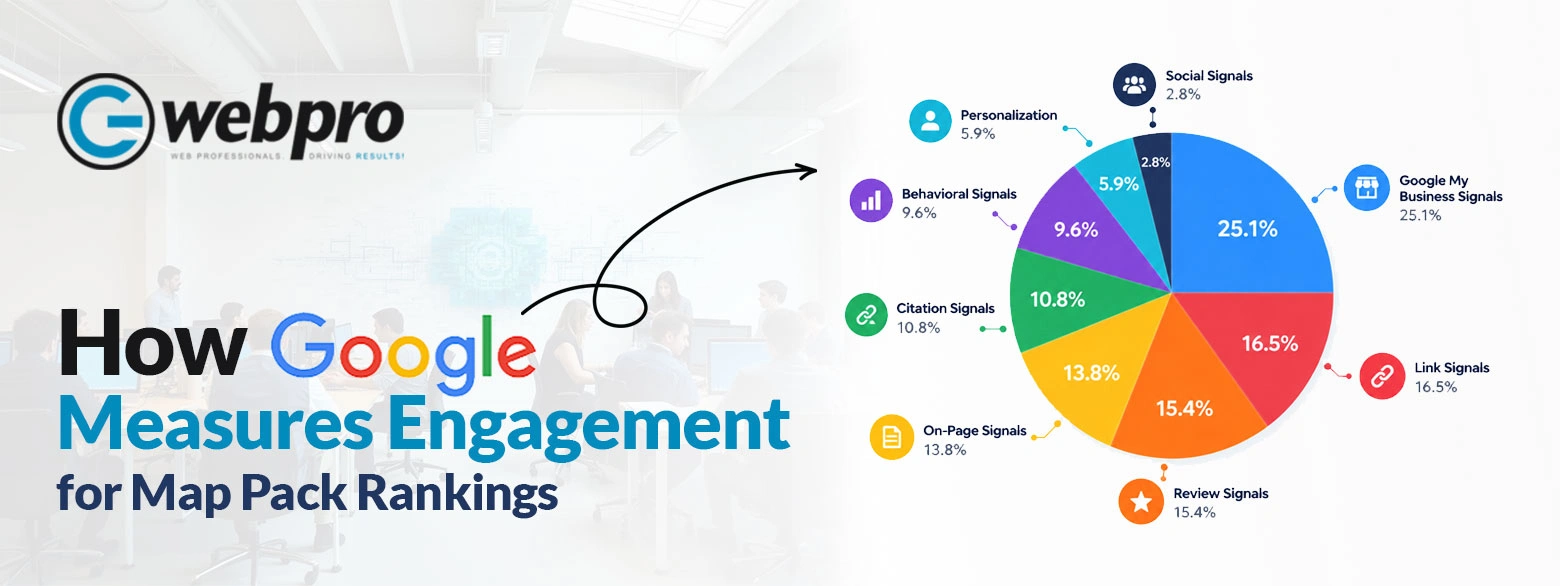
Your Google Business Profile is the single most influential factor in Map Pack rankings. When conducting a local SEO audit, the profile is always the first place to examine. Auditors look at whether your business category is accurate, whether your hours are current, whether your services are listed in detail, and whether you are using
Google Posts regularly. Profiles with thin information give Google very little to work with. Businesses that treat their profile as a living document by updating it consistently tend to rank above those that set it up once and walked away.
Citations are any online mention of your business name, address, and phone number. When these details appear differently across directories—a suite number missing here, a phone number format different there—Google loses confidence in your business data. That lost confidence translates directly into lower Map Pack placement. A local
SEO audit cross-references your primary citations against your Google Business Profile to catch these discrepancies.
The sheer volume of consistent citations also matters. Competitors with broader, organized citation profiles tend to win the trust signals that Google uses to rank locally.
Most business owners understand that good reviews help them look credible. Fewer understand that review velocity, recency and owner response rate are active ranking inputs. An audit examines how often you are receiving new reviews, how quickly you respond, and whether your responses are substantive or templated. For instance, a competitor receiving three new reviews per week will consistently outperform a business with 200 older reviews and no recent activity. Google interprets fresh, engaged review profiles as signs of an active, legitimate local business.
Google does not separate your website from your Map Pack ranking. The two are connected. During a local SEO audit, your website is evaluated for local signals. These include:
A website that does not reinforce your local identity creates a mismatch that Google notices. Competitors with locally optimized sites send stronger, cleaner signals consistently.
Links from other websites pointing to yours remain one of Google’s most trusted quality signals, even in local search. However, local SEO v is not about chasing high-volume link-building campaigns. It is about relevance and geography. Links from local news outlets, community organizations, industry associations, and nearby businesses carry significant weight. An audit examines who links to your competitors and identifies realistic opportunities you may be missing. Businesses with even a modest number of
locally relevant backlinks frequently outperform those with no link profile at all.
Thin, generic website content is one of the most common audit findings. Many service-based businesses have a homepage that mentions their service, a contact page, and very little else. Competitors who invest in location-specific service pages, neighbourhood-focused content, and clear service area definitions give Google far more material to
index and rank.
A local SEO audit maps your content against your competitors’ content structures. The gap is often significant. Businesses that create pages answering specific, locally relevant questions earn far more organic and local visibility over time.
Google monitors how users interact with your Map Pack listing. Click-through rates, direction requests, phone calls, and website visits from your profile all feed into how Google evaluates your relevance. If users are consistently clicking your competitors’ listings over yours, Google interprets this as a preference signal. An audit looks at your Google Business Profile Insights data to identify where engagement is dropping off. Poor photo quality, an incomplete business description, and missing attributes all reduce clicks. Profile completeness has a direct and
measurable effect on how often your listing appears.
Identifying the gaps is just the beginning of the work. The other part is knowing how to act on them efficiently. These areas give researchers a logical starting point for moving from diagnosis to progress.
Several platforms are commonly used to gather the data that feeds a local SEO audit:
Google’s own search results—examining top-ranking Map Pack profiles directly—remain one of the most revealing research methods available. Familiarity with these tools helps any business owner understand what an audit is actually measuring and why each data point matters.
One of the more useful by-products of a thorough audit is the content direction it reveals. When competitor keyword gaps are mapped, patterns emerge. These include certain service-plus-location queries that your site does not address at all, or topics that top-ranking competitors cover in depth while your site skips entirely.
For instance, a competitor ranking for multiple neighbourhood-level queries may have dedicated pages for each service area, while your site addresses only the city as a whole. An audit makes these absences visible and concrete. The findings translate directly into a prioritized list of pages worth creating—grounded in actual search demand rather
than assumption.
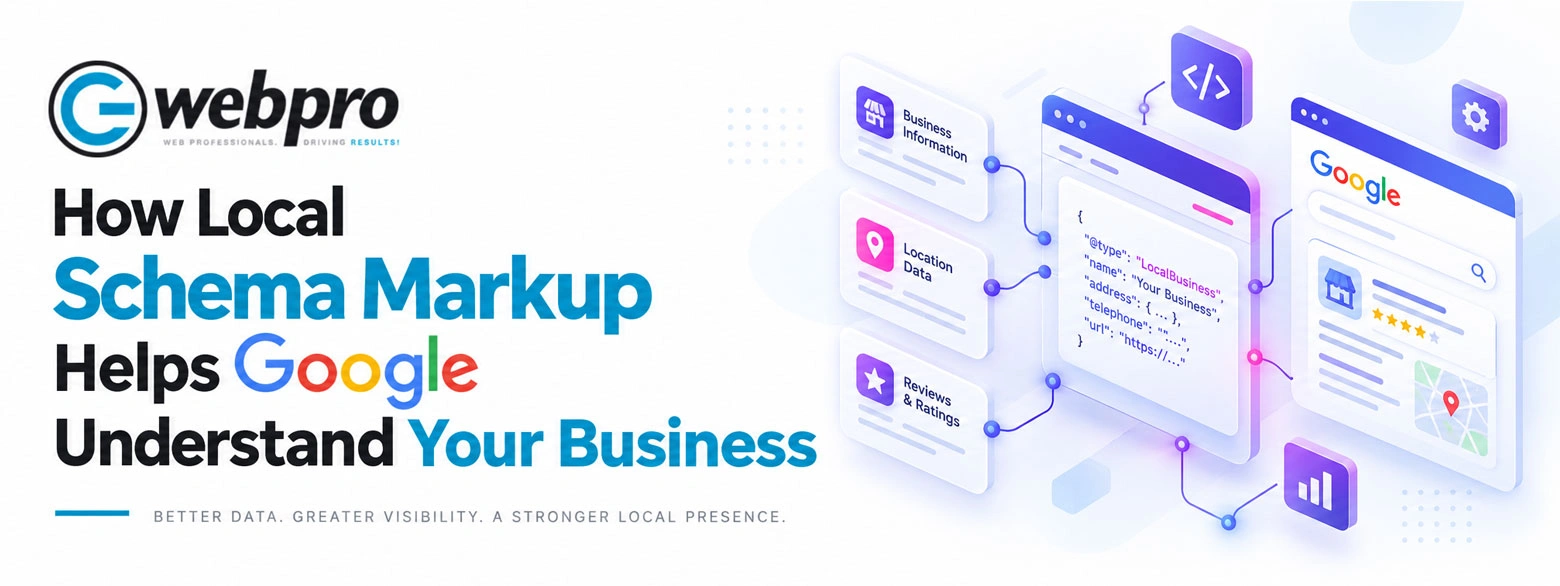
Schema markup is structured data added to a website’s code that helps Google read and categorize your business information more precisely. Many businesses operating in competitive local markets have little or no schema in place, while top-ranking competitors use it to communicate their business type, service area, hours, and reviews in a format Google processes with less ambiguity.
A local SEO audit typically checks whether LocalBusiness schema is present, whether it is accurate, and whether it aligns with the information on your Google Business Profile. Schema is one of the few technical improvements that can be applied without a full site rebuild, making it a high-value, lower-effort fix for many businesses.
Without audit data, businesses often spend on paid advertising to compensate for weak organic and local visibility. This is an expensive workaround for issues that are often correctable at the source.
An audit sequences findings by impact, which gives any marketing investment a logical foundation. Foundational issues such as profile gaps, citation errors and thin local content are addressed before broader campaigns are layered on top. For instance, running paid local ads while your Google Business Profile is incomplete or your citations are inconsistent means paying to drive traffic to a presence that Google itself does not fully trust. The audit removes that kind of misdirection before budget decisions are made.
Competitors holding the top Map Pack positions are not there by accident. They have addressed the same signals this article covers, consistently and in the right order. A thorough local SEO audit gives your business the same clarity: where the gaps are, which ones matter most and what a reasonable path forward looks like. The fixes are
rarely extraordinary. They are specific, sequenced and grounded in how Google evaluates local businesses.
Yes. Map Pack rankings rely heavily on your Google Business Profile, citations and reviews. Organic rankings depend more on website content and domain authority. A proper audit evaluates both separately, because the fixes for each are different.
Proximity and brand age play a minor role, but most Map Pack gaps trace back to observable inputs that are a more complete profile, cleaner citations and more consistent review activity. An audit separates what you can act on from what is simply contextual.
Profile and citation fixes can show movement within four to six weeks. Content and backlink improvements take three to six months. Timelines also depend on how competitive your local market is and how many foundational issues need addressing first.
Not usually. Most findings reflect inaction rather than error. That includes profiles that were never updated, citations that drifted over time or content that never grew. Local search has become more competitive, and yesterday’s adequate presence may no longer be sufficient today.