

 Perplexity
 ChatGPT
 Claude
 Gemini
 Grok
Grok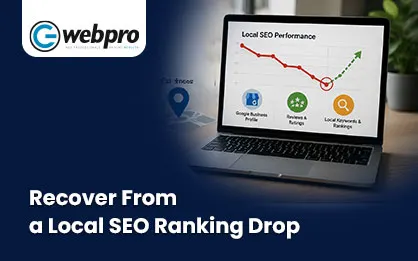
Watching your business drop from the top of Google’s local results is a gut punch. Phone calls slow down. Website visits fall. And in a matter of days, the momentum you worked hard to build starts slipping through your fingers.
Local rankings are not a fixed asset. Google refines its algorithm constantly, and the signals it rewards today may differ from what worked six months ago. A strong position earned through consistent effort can soften quickly when those signals shift.
The important thing to know is that this kind of drop is almost always fixable. The problem has a cause. The cause has a solution. And the solution, approached correctly, is achievable without panic or assumptions.
Working with the right local SEO services is where recovery begins. Here we discuss how to recover from a drop in local SEO rankings to help reclaim your visibility and bring customers back.
Table of Contents
- How Do Local SEO Services Help You Recover from a Rankings Drop?
- 1. Why Do Google Algorithm Updates Shift the Rules Without Warning?
- 2. Is Your GBP Sending the Wrong Signals?
- 3. How Does NAP Inconsistency Slowly Erode Local Authority?
- 4. Why Has Review Velocity Overtaken Review Volume?
- 5. How Do Technical Website Issues Suppress Local Visibility?
- 6. Does Thin or Outdated Content Weaken Your Relevance?
- 7. Are Competitors Getting Stronger While You Stand Still?
- What Do Local SEO Services Look for When Diagnosing the Drop?
- What Recovery Steps Should Your Local SEO Services Follow?
- FAQ
How Do Local SEO Services Help You Recover from a Rankings Drop?
Understanding why local rankings slip is just as important as knowing how to fix them, and that understanding always starts with the right diagnosis.
Why Do Google Algorithm Updates Shift the Rules Without Warning?
Google releases algorithm updates throughout the year, and broad core updates can shake up local rankings significantly. These updates re-evaluate how Google measures trust, relevance and authority. A business that ranked well before an update may slide afterward simply because Google changed what it values.
This does not mean your site is broken. It means the evaluation criteria shifted. Recent updates have consistently rewarded businesses with complete, active Google Business Profiles and penalized those where key information is missing or outdated. Businesses with absent photos, unverified hours or no recent reviews have seen disproportionate drops. Understanding which update triggered the decline is the first clear step toward recovery.
Is Your GBP Sending the Wrong Signals?
Your Google Business Profile (GBP) is the centrepiece of your local search presence, and even small gaps there can lead to noticeable ranking drops. Google pays very close attention to profile completeness. Missing service categories, outdated hours, absent photos, or missing attributes all signal to Google that your business may be inactive or unreliable.
Recent algorithm changes have made GBP completeness a much stronger ranking lever than before. Review recency now carries more weight than total review count. A business with many older reviews but no recent activity can lose ground to a competitor with fewer but fresher ones.
How Does NAP Inconsistency Slowly Erode Local Authority?
NAP stands for Name, Address and Phone Number. When these details appear differently across online directories, Google’s ability to confirm your business information is compromised. A listing on Yelp that shows a different phone number than your website, or a citation on Yellow Pages listing an old address, sends mixed signals.
These inconsistencies do not always cause an immediate drop but they erode trust over time. When your competitors have clean, consistent citations and yours are scattered, the gap in authority compounds. Carefully auditing every directory your business appears in is a necessary part of any ranking recovery effort.
Why Has Review Velocity Overtaken Review Volume?
Having a hundred reviews sounds strong until you realize the last one arrived fourteen months ago. Google is now more interested in the rate at which you earn reviews than the total number you have accumulated. Businesses that go several weeks without new reviews begin to show measurable ranking declines, particularly in competitive local markets.
The fix is not complicated, but it requires consistency. Build a simple, repeatable process for asking satisfied customers to leave a review after each job or visit. Steady, genuine review activity signals to Google that your business is active, trusted and relevant to local searchers.
How Do Technical Website Issues Suppress Local Visibility?
Your website and your Google Business Profile do not operate independently. Google evaluates signals from both when measuring your local authority.
If your website has indexing errors, slow page speed, broken internal links or missing location-specific schema markup, those technical problems directly affect the results your local SEO services produce. A service page that loads slowly on mobile can drag down your map pack position even when your GBP is in good shape.
Start with a detailed site crawl using Google Search Console and carefully address the issues on the pages tied to your most important local service queries first.
Does Thin or Outdated Content Weaken Your Relevance?
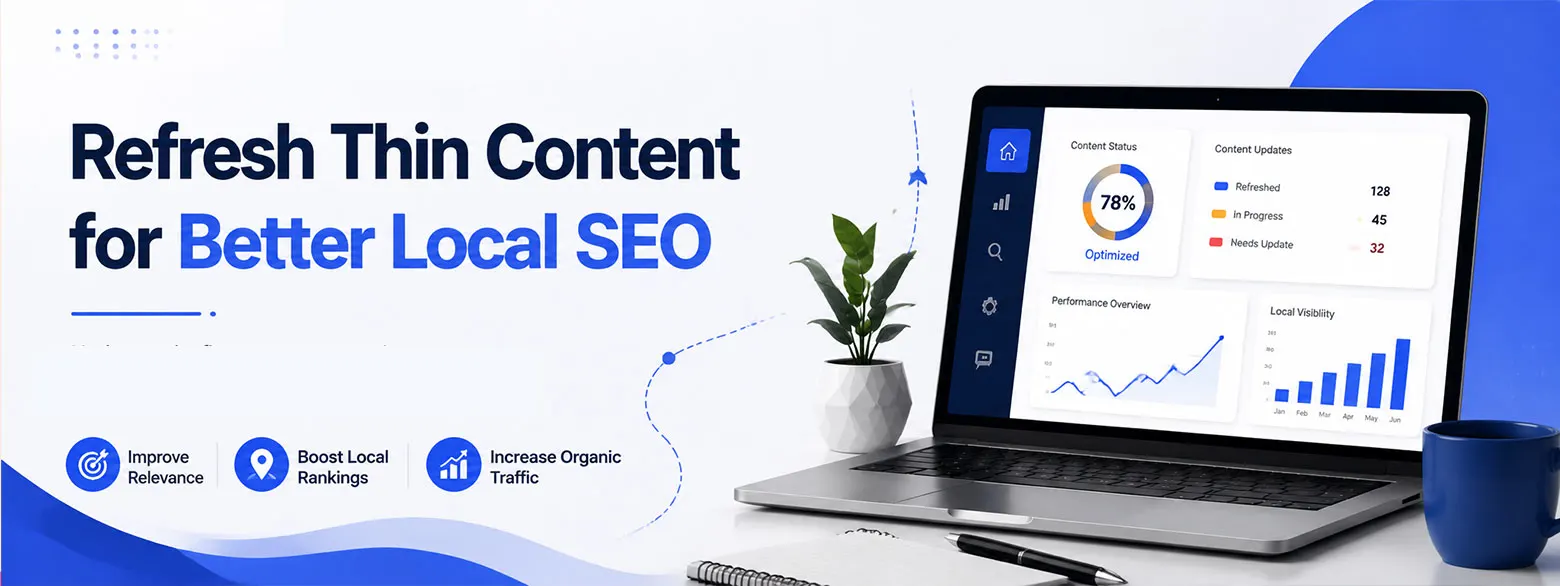
Content on your service pages plays a direct role in how Google evaluates your relevance for local search queries. Pages that are short, generic or have not been updated in recent years tend to lose ground as competitors publish stronger, more specific content. This matters particularly for location-based queries.
If your page covers plumbing services in Toronto with no mention of specific neighbourhoods or common local issues, it is less relevant than a competitor page that addresses all three. Refreshing your service pages with accurate, specific, locally relevant information is consistently one of the clearest paths to recovering lost ground.
Are Competitors Getting Stronger While You Stand Still?
Sometimes a ranking drop has nothing to do with anything you did wrong. It is about something a competitor did right.
If a business in your market hired a specialist, refreshed their GBP, earned a wave of new reviews, or published more locally relevant content, they may have simply outperformed you. Search rankings are relative, not absolute. Your position is always measured against what other businesses in your area are doing.
Monitoring competitors should be a regular part of your approach, not a reaction to a crisis. Knowing what changed in their strategy reveals exactly what needs strengthening in yours.
What Do Local SEO Services Look for When Diagnosing the Drop?
A structured diagnosis is what separates a real fix from a series of random changes that waste time and make the problem harder to track.
Why Start With Google Search Console?
Google Search Console is the most direct window into how Google sees your website. When a local SEO recovery begins, this is the first place to look. Check the Performance report for sudden drops in clicks or impressions. Look at the Coverage report for crawl errors, pages marked as noindex, or URLs recently excluded from the index.
The URL Inspection tool lets you see exactly how Google last crawled individual pages. Cross-reference any traffic decline with Google’s published algorithm update history. If the timelines align, you have a strong starting point for understanding what changed and what to address next.
How Do You Audit Your GBP in Detail?
After Search Console, move to your Google Business Profile. Check that your primary category still accurately reflects your core service. Confirm that your business hours are current, including any seasonal or holiday updates. Review the list of services and make sure each one is described clearly and specifically. Look at your photos and consider when the most recent ones were added. Check for unanswered reviews or open questions in the Q&A section. Pull up your GBP Insights and look for sudden changes in calls, direction requests, or website clicks. Each of these individual details can reveal a specific gap worth closing.
How Do You Check Citation Accuracy Across All Directories?
Citation consistency is often overlooked during a ranking drop investigation, yet it remains a fundamental trust signal for Google. Run a citation audit using a tool like BrightLocal or Whitespark. These platforms compare your business information across dozens of directories and flag inconsistencies.
Pay close attention to your name, address and phone number. A single outdated listing on a high-authority directory can introduce doubt for Google. When you find inconsistencies, correct them at the source rather than adding new citations to compensate. Building on top of inconsistent data simply adds noise to an already muddled signal and unnecessarily delays recovery.
What Did Your Competitors Change?
If your rankings dropped while a competitor gained visibility, their profile and website hold useful clues. Look at their GBP for recent reviews, new photos, updated service categories or recent posts. Check their website for new location-specific pages, stronger service content or improved load times.
Local SEO rankings are determined in part by how your profile compares to others in the same category and geography. When you understand what your top competitors strengthened, you have a clearer picture of where your recovery effort should focus. Tools like BrightLocal and SEMrush can help you quickly confirm exactly where the gap opened.
What Recovery Steps Should Your Local SEO Services Follow?
Once the diagnosis is clear, recovery moves faster than most business owners expect, provided the fixes happen in the right order.
Why Fix Technical Issues Before Anything Else?
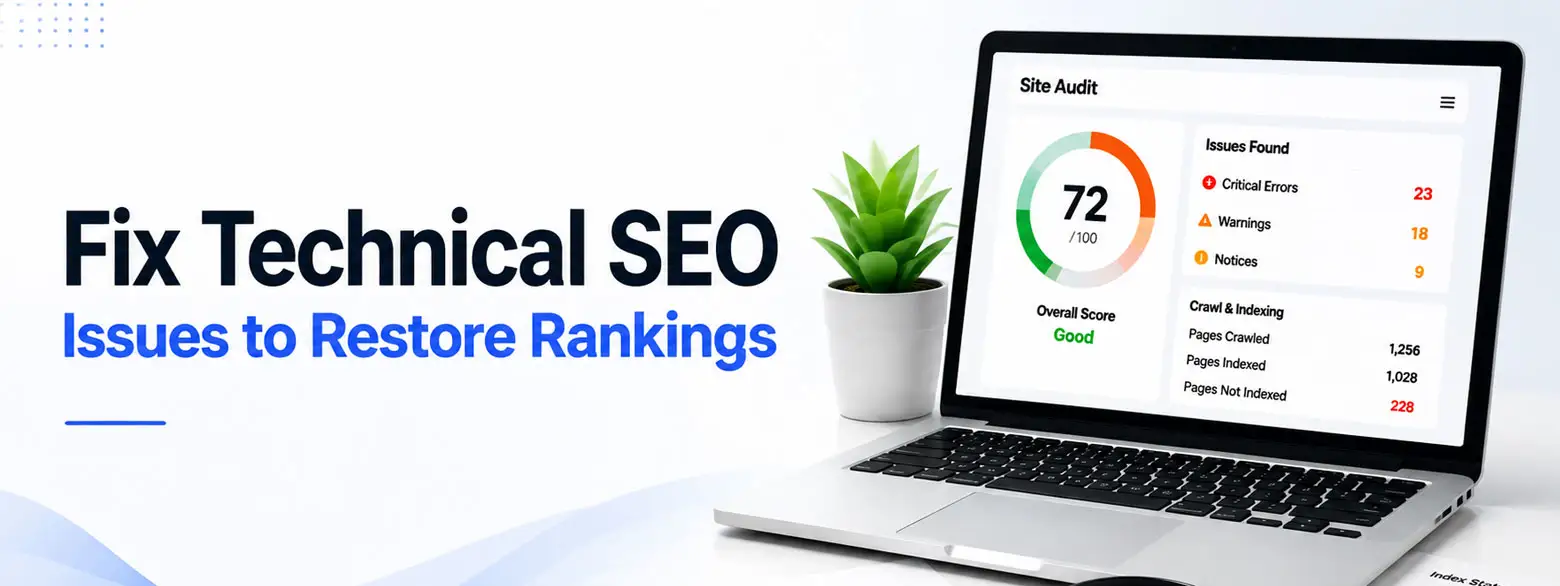
Technical problems block every other fix from working properly. If Google cannot crawl your service pages, no amount of content improvement or GBP work moves the needle.
Start by resolving any crawl errors flagged in Google Search Console. Fix broken links on pages targeting your key service areas. Confirm that your pages load quickly on mobile devices, since most local searches happen on phones. Add or correct structured data markup that helps Google connect your website to your business location.
These fixes are foundational. They do not produce overnight results, but without them, nothing else in the recovery plan holds.
How Do You Rebuild GBP Activity and Profile Completeness?
An incomplete or inactive Google Business Profile is one of the most common reasons why businesses fall out of the map pack. Update every section with accurate, current information. Add fresh photos that reflect your business today. Write post updates using language your customers search for. Make sure your primary category is the one Google associates most strongly with your core service. Respond to every review, including negative ones, in a professional and specific way.
Each interaction on your profile signals to Google that your business is active, engaged and relevant to the community it serves. Consistency here builds lasting visibility.
How Do You Build a Consistent Review Acquisition Process?
Waiting for reviews to arrive on their own stops working the moment a competitor begins asking for them consistently. Set up a simple request process that becomes part of your service delivery. After a completed job or a positive customer interaction, send a direct link to your Google review page. Keep the request genuine and brief. Thank customers for their time before they respond.
Over time, a steady stream of authentic reviews signals to Google that your business is both active and trusted. Review velocity matters more now than it ever has before and consistency is what makes the difference.
How Do You Refresh Location-Specific Content on Your Service Pages?
Service pages that rank well in local search tend to share a few common qualities. They are specific about what the business does and the area it serves. They address the real questions local customers actually have. And they are updated on a regular basis rather than left untouched for years.
Go through your top service pages and look for opportunities to add local context, address common questions and sharpen the connection between your services and the communities you serve. This kind of targeted content work, done consistently, is how a business moves from recovering its position to holding it.
A drop in local rankings is not a sign that your business is failing. It is a sign that something specific needs attention. The businesses that recover fastest are not those that panic and change everything at once. They are the ones that diagnose carefully, fix problems methodically and stay consistent. Partnering with trusted local SEO services gives you the clarity and structure to make that happen. Recovery is not just possible. It is a process and it starts right now.