
Something quiet but significant is changing in how Canadians are finding businesses. Millions of people are now opening ChatGPT instead of Google when they need a recommendation. They type a question in plain language and within seconds they get a confident, specific answer. No scrolling, no ads, and no list of ten blue links to sort through.
The brands in those answers did not get there by accident. They earned that position through deliberate, structured digital work. Most small business owners have not yet realized this shift is happening, which means the window to act is still open.
Understanding how to advertise on ChatGPT in Canada is no longer a question reserved for large corporations. It is now a practical concern for any business that wants to stay visible to the people who are actively looking for what it offers.
Here, we will discuss whether the customer asking ChatGPT for a recommendation can actually see your brand and what you can do today to make sure the answer is yes.
Table of Contents
The way your customers search for products and services has fundamentally shifted. Here is what every Canadian business owner needs to know.
Most people still think of ChatGPT as a tool for writing emails or summarizing documents. But that picture is incomplete. Millions of users now ask it where to eat, which accountant to hire and which contractor to call. ChatGPT pulls from a wide range of publicly available online content to build those answers. If your business does not have a consistent, well-structured presence across authoritative sources, it simply does not exist in those results.
Knowing how to advertise your Canadian business on ChatGPT starts with recognizing that the platform functions, in part, as a recommendation engine. Your digital footprint either feeds it or it does not.
Traditional SEO focused on getting Google to rank a page. AI-driven search works differently. ChatGPT and similar tools evaluate credibility of a business by looking at patterns across many sources. They favour businesses that appear consistently on trusted platforms, that are cited by reputable local directories, and whose content answers real questions with real specificity. A business with a polished website but no external validation will be overlooked in favour of one with strong third-party mentions. The quality of those mentions matters more than the quantity. One citation from a respected Canadian industry publication carries more weight than ten listings in directories that are not considered credible.
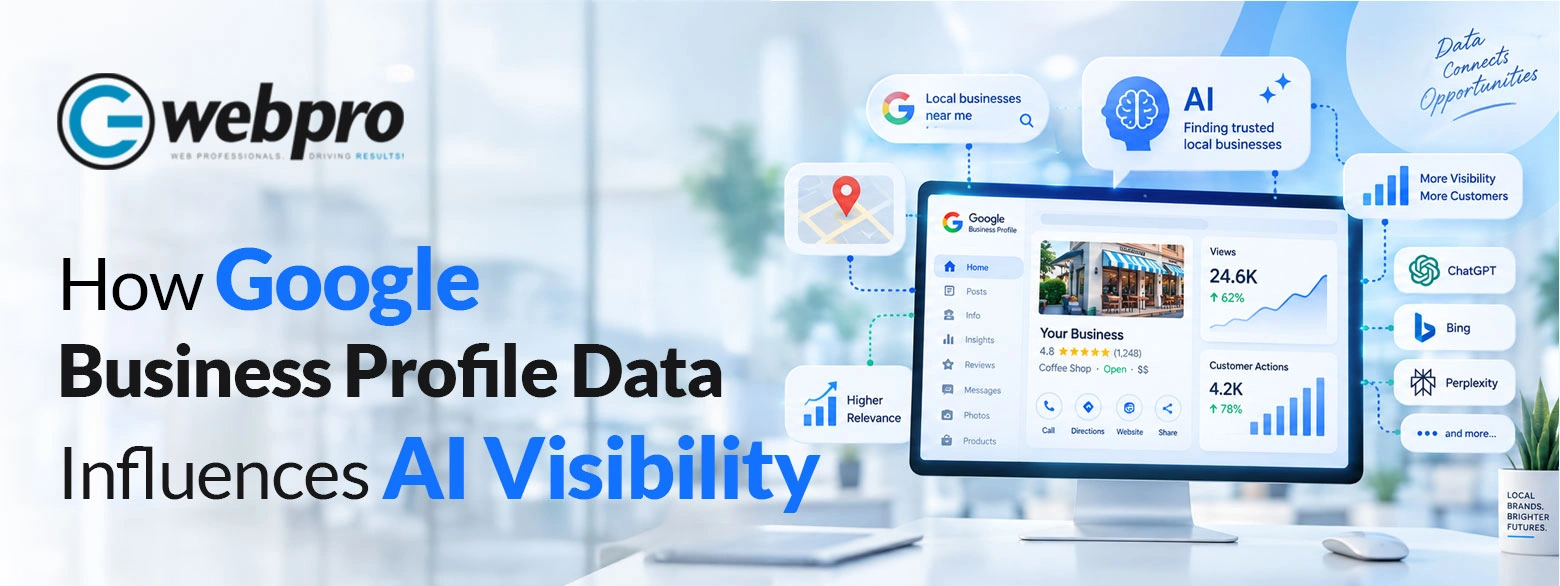
It might seem unusual that a Google product could influence what ChatGPT says, but the connection is real. AI language models are trained on broad internet content, which includes data aggregators that pull from Google Business Profiles. When your profile is accurate, complete and regularly updated, that information flows outward into the wider digital network. Services like Bing Places and Apple Maps also contribute to the data pool that informs AI answers. A business that keeps its name, address, phone number and hours consistent across these platforms gives AI models the clearest possible signal about who it is and where it operates.
Reviews have always mattered when it comes to consumer trust. In the AI search world, they serve an additional purpose. ChatGPT and other models use review sentiment, the volume of reviews, and recency to assess whether a business is actively serving its customers well.
A business with dozens of four-and-five-star reviews from the past six months looks very different to an AI model than one with reviews that stopped two years ago. For instance, a Toronto-based plumber with 80 recent reviews mentioning specific services will appear more credible to an AI model than a competitor with a sparse, outdated profile. Regularly responding to reviews also adds fresh, relevant text to your listing.
When ChatGPT pulls information from a website, it does not read the way a person does. It processes HTML structure, heading hierarchy and labelled content blocks to extract meaning. A page with a clear H1, logical H2 and H3 subheadings and short paragraphs signals credibility to an AI model far more reliably than a dense, unbroken block of text. Proper use of title tags, alt text on images, and schema markup also contributes to how accurately an AI tool interprets what your business does.
Pages that are structurally clean and technically sound are far more likely to be cited in AI-generated answers than those that rely on visual design alone to communicate their meaning.
One of the most overlooked aspects of AI visibility is the role that specialized directories play. When a business appears in well-known Canadian directories like the Better Business Bureau, Yelp Canada, the Yellow Pages and relevant industry associations, it builds a web of consistent, authoritative references.
AI models treat this consistency as a trust signal. A dental clinic listed identically across 15 reputable directories is far more likely to surface in a local AI recommendation than one that exists only on its own website.
Citation building, while unglamorous, is one of the most direct ways to influence how AI tools perceive and present your business in search results.
Content marketing has always been about earning trust over time. In the AI era, that trust has a direct and practical payoff. When your business publishes articles, guides or service pages that answer the specific questions your customers ask, those pages become part of the broader knowledge pool from which AI models draw.
For example, a landscaping company in Ontario that publishes a detailed guide on winter lawn care gives AI tools genuinely useful content to reference. Over months and years, this content accumulates into authority. Businesses that publish helpful content consistently build a stronger AI footprint than those that publish rarely or only for promotional purposes.
Becoming visible in AI-driven search does not require a massive budget. It requires consistency, patience, and the right priorities applied in the right order.
Before building anything new, review what already exists. Search your business name on Google, Bing and ChatGPT itself. Look at how you are described, whether your information is accurate and where the gaps are. Check your Google Business Profile, your website’s structured content, and your presence on key Canadian directories. Many businesses discover that inconsistent information, old phone numbers, or outdated hours are creating noise within the AI ecosystem. Cleaning up these inconsistencies is the single most cost-effective first step any business can take. It is a foundational move before any other strategy will work reliably and well.
If your business operates across multiple cities or regions, a single generic service page will not give AI tools enough geographic specificity to recommend you confidently in local results. A separate landing page for each city you serve, written with that area’s context in mind, gives AI models a precise, location-anchored signal. Each page should name the city, reference local conditions or regulations where relevant and include a distinct set of FAQs tied to that market.
When a small business treats ChatGPT as an ad channel, success in local results often comes down to giving AI tools the specific geographic detail they need to surface your name when a nearby customer asks for a recommendation.
Reviews do not build themselves. The businesses that consistently earn fresh reviews have a system in place that fosters them. They ask customers at the right moment, they make it easy, and they follow up promptly. This might mean a follow-up email after a project closes or a polite request at the end of a service call.
Timing matters as much as the task itself. A customer who is delighted with their experience is likely to write a review when prompted right away. That same customer is far less likely to act two weeks later when their enthusiasm has passed. Fresh and specific reviews mentioning your services by name are among the most powerful AI trust signals you can build.
Every service you offer should have an associated FAQ section. These sections serve two purposes simultaneously, that is they answer authentic customer concerns and they create structured, scannable content that AI tools can reference directly.
Write each question the way a customer would actually type it into a search bar. “How much does furnace maintenance cost in Ontario?” is far more useful to an AI model than a heading that simply says “Pricing.” Answers should be conversational, specific and complete in two to four sentences.
Adding FAQ sections to existing service pages is one of the quickest ways to improve your company’s AI visibility without creating entirely new content.
AI search is not a one-time project. It rewards businesses that treat their digital presence as an ongoing and deliberate practice worth maintaining.
Most business owners have never typed their own company name into ChatGPT. Doing so regularly is a simple and revealing habit. Ask questions your customers might ask, like “Who are the best web designers in Toronto?” or “Which moving companies in Vancouver have strong reviews?” See if your business appears and, if so, how it is described. This gives you a direct view into how AI models currently represent you.
When you find inaccuracies or gaps, you have a clear direction for your content and citation work. Conversational AI advertising begins with understanding what the AI already says about your brand today.
Schema markup is structured data added to your website’s code that tells AI tools and search engines exactly what your content means. A business that marks up its services, reviews, FAQs, and operating hours using schema gives AI models a precise, unambiguous layer of data to read alongside the visible page content. Without it, an AI tool has to infer meaning from context alone, which introduces uncertainty.
Adding FAQ schema to your existing question-and-answer sections, LocalBusiness schema to your contact pages, and Review schema to your testimonial sections are all low-cost changes that can significantly impact how accurately AI tools represent your business in generated recommendations.
One of the most underused strategies for AI visibility is earning mentions in respected local publications and industry blogs. When a Canadian business publication, local newspaper, or respected trade blog references your business, it creates a citation that AI models treat as a strong endorsement. You do not need to be featured in The Globe and Mail. A mention in a well-regarded local business journal or a quote in a regional news story about your field contributes meaningfully to your AI presence. Reaching out to journalists and editors with genuinely useful insights, rather than promotional pitches, is the most reliable way to earn this kind of coverage.
AI tools build a picture of your business from dozens of sources at once. When your website, your Google Business Profile, your social media bios, your directory listings and your review responses all say the same things about who you are and what you do, the AI model receives a coherent, confident signal upon which it can act. When those sources contradict each other, the model defaults to businesses with cleaner and clearer signals.
Building a presence so consistent that any AI tool looking for a recommendation in your category has no reason to look past you is the most effective advertising strategy a Canadian business can bring to ChatGPT.
Many of the customers who once picked up a phone book to find a Canadian business or typed their query into Google are now having conversations with AI tools. They are asking for recommendations, and those recommendations are shaping real decisions about which businesses they pick every day.Understanding how to advertise on ChatGPT is no longer a theoretical concern for Canadian businesses. It is a practical, immediate priority for any business that wants to stay visible to its customer base. The work is not something extraordinary and is entirely within reach. G Web Pro helps Canadian businesses build the kind of digital presence that AI tools trust and recommend.
ChatGPT does not currently run traditional pay-per-click ads. Visibility in AI-generated recommendations comes from building a well-structured digital presence, earning consistent reviews and publishing genuinely useful content that AI tools can reference and trust when forming answers for users.
Most businesses begin to see measurable improvements within three to six months of consistent effort. Results depend on how competitive your local market is, how thoroughly you address digital inconsistencies and how regularly you publish new, question-driven content on your website.
No large budget is required. The most effective tactics, including Google Business Profile optimization, review generation and structured content creation, require time and consistency more than significant financial investment. Small businesses with modest budgets can build meaningful AI visibility through disciplined and ongoing effort.
ChatGPT draws from publicly available web content, including business websites, review platforms, directories, industry publications and news sources. Content that is structured clearly, answers specific questions, and appears consistently across multiple trusted sources is most likely to surface in AI-generated answers.
They share a foundation but differ in their focus. Traditional SEO targets keyword rankings in search results pages. AI optimization prioritizes authority signals, content structure, citation consistency and review sentiment. Businesses with strong traditional SEO have a head start but need additional steps to perform well in AI-driven recommendation results.