
ChatGPT has emerged as one of the most talked-about tools in the world of artificial intelligence. It has revolutionized the way we interact with technology and provides a powerful platform for generating human-like text responses. This AI model processes language in a way that feels natural. It offers solutions to everything, whether it is a simple query or a more detailed conversation.
But how exactly does ChatGPT understand and answer questions? What makes its responses seem so natural and conversational? A ChatGPT explanation for beginners can help shed light on the magic behind its responses. In this blog, we will decode ChatGPT, explain its reasoning process, and reveal how it generates the answers that make it so effective for communication.
Keep reading to learn how ChatGPT thinks, how it processes information, and how you can use it to your advantage.
Created by OpenAI, ChatGPT is an advanced AI language model built on a powerful architecture called GPT (Generative Pre-trained Transformer). It is designed to process natural language inputs and generate human-like responses. This makes it incredibly versatile across many different applications.
Whether you’re asking a simple question, engaging in a lengthy conversation, or requesting detailed advice, ChatGPT can understand and respond in ways that often feel remarkably conversational.
At its core, ChatGPT operates by predicting the next most likely word or sequence of words in a conversation based on the input it receives. It does this by leveraging a massive dataset on which it was trained, consisting of a wide variety of texts. The more specific and contextual the input, the more relevant and accurate the response tends to be.
ChatGPT’s reasoning process is driven by complex patterns in language and context, rather than a human-like thought process. Here are some of the key features that make ChatGPT a powerful tool for various applications:
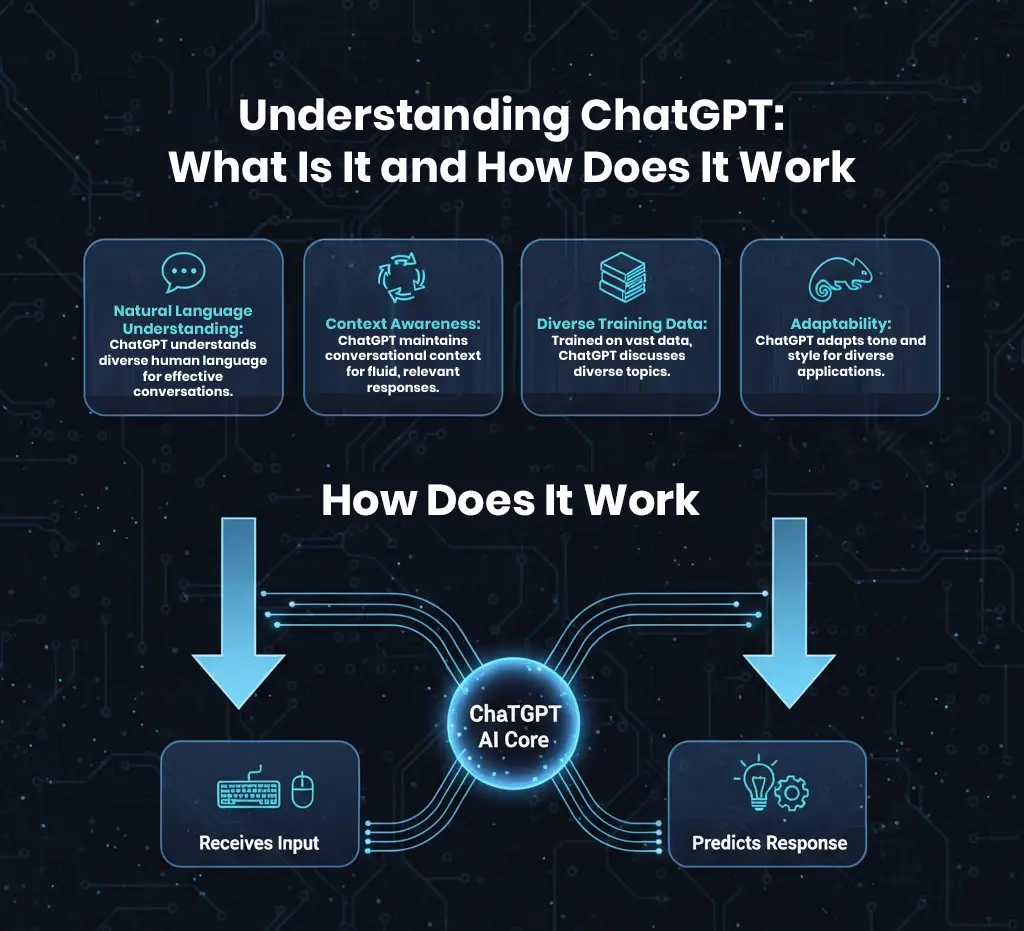
Despite its capabilities, ChatGPT has limitations. It might struggle with nuanced topics or provide inaccurate answers in some cases. Additionally, its responses are based on patterns in the data it was trained on, so it may not always understand the deeper meaning behind complex queries.
To truly understand how ChatGPT generates its responses, it is important to explore the reasoning process that powers its decision-making. By examining how it analyzes input and predicts the most likely outcomes, we can gain insight into the underlying mechanics that allow it to provide relevant and coherent answers.
Understanding how ChatGPT understands and answers questions begins with its reasoning process. ChatGPT’s approach to forming answers starts with the input it receives. Unlike human reasoning, which involves logical thought processes and emotions, ChatGPT operates based on probabilities.
Given a prompt, the model breaks it down into smaller components, using its training data to predict the most likely response. For example, if you ask ChatGPT, “What is the capital of Canada?” The model predicts that “Ottawa” is the most probable answer based on historical data and context.
However, the process isn’t just about selecting the most likely word. ChatGPT also considers the structure of the input, the context of the conversation, and previous exchanges. This helps ensure that the response is relevant and coherent. For example, if you ask about “Ottawa” after mentioning Canada, ChatGPT uses context to ensure it generates a response related to Canadian geography, not another city with a similar name.
Context is very important in understanding how ChatGPT delivers accurate responses. It remembers previous parts of the conversation, which allows it to maintain continuity and relevance. For example, if you were discussing a topic like machine learning and later asked, “What are the key algorithms used?” ChatGPT understands that the question is still related to machine learning and doesn’t need to reintroduce the topic.
At its core, ChatGPT operates on statistical patterns learned from the vast datasets it has been trained on. It doesn’t “think” like humans but instead predicts the next most likely word based on the context. This probabilistic approach is why ChatGPT can generate multiple responses to a single query. It chooses the response that is most statistically likely based on the input and context.
ChatGPT can generate a variety of responses to the same input, depending on how the question is framed and the context provided. For example, when asked for advice on a topic like ‘improving productivity’, ChatGPT could provide tips on time management, motivation techniques, or prioritization, depending on the context established in the conversation.
ChatGPT is often praised for its ability to balance accurate information with creativity. When asked for factual knowledge, such as the answer to a historical question, ChatGPT strives for accuracy, referencing its training data.
However, when it is tasked with more creative responses, like writing a story or poem, it uses its creativity to generate engaging, novel content while still adhering to the rules of language and coherence.
One of the more advanced features of ChatGPT is its ability to break down complex queries into simpler parts and respond in a manner that is understandable. For example, when asked for an explanation of a technical concept, ChatGPT might start with a simple definition, followed by a deeper explanation, and then provide examples to solidify understanding.

While ChatGPT doesn’t ‘learn’ in real-time from each interaction, it evolves through updates from OpenAI. These updates enhance the model’s performance, improve its accuracy, and refine its ability to handle a wider variety of queries. As more data is fed into its system, ChatGPT becomes better at recognizing patterns, understanding nuance, and generating more relevant responses.
ChatGPT is continuously evolving and improving thanks to ongoing updates and user feedback. Here’s how these processes help refine its answers, ensuring that the model becomes more accurate, relevant, and effective with each interaction.
One of the key ways in which ChatGPT improves over time is through user feedback. OpenAI continually monitors how well the model is performing and collects feedback on its responses. This feedback helps identify areas where the model may need improvement, such as handling ambiguous queries or providing more detailed answers.
As you interact with ChatGPT, it becomes better at adjusting its responses to fit the tone and style of the conversation. If you’re asking for formal advice or casual suggestions, ChatGPT adapts accordingly. This adaptability allows it to engage in a more personalized way, making interactions feel natural and tailored.
ChatGPT is periodically updated with new data and fine-tuned to improve its accuracy. These updates not only improve the quality of its responses but also enable the model to stay relevant in an ever-changing world. For example, it might be updated with the latest scientific research or current events, ensuring that it can provide accurate and up-to-date information.
Despite its advancements, ChatGPT still encounters reasoning challenges, particularly when dealing with nuanced topics or interpreting vague queries. However, with ongoing updates, the model learns to refine its reasoning process, becoming better at identifying and addressing these issues.
The more users engage with ChatGPT, the more data is available for refining its responses. Real-world interactions help improve its understanding of user intent and preferences, allowing it to generate more relevant and engaging responses.
ChatGPT’s ability to maintain context over long conversations is a vital feature. The longer and more detailed the interaction, the better the model becomes at providing nuanced answers that fit within the established context. This helps ensure that responses remain relevant and useful throughout the conversation.
As ChatGPT is exposed to more user queries and feedback, it evolves to handle a wider variety of topics and respond with greater accuracy. Continuous interaction helps the model adapt to emerging trends and understand the evolving needs of users.
Understanding how ChatGPT works and how it processes and generates responses gives users the power to engage with this tool more effectively. By recognizing its reasoning process and how it improves over time, you can tailor your queries and interactions to get the most out of it. Whether you’re using ChatGPT for simple tasks, complex problem-solving, or creative projects, understanding its inner workings can enhance your experience.
ChatGPT is an AI model that generates human-like text based on the input it receives. It uses patterns in language to predict responses, leveraging large datasets to provide answers to a wide range of queries.
It relies on statistical patterns and context to generate relevant responses. It uses probabilities to determine the most likely answer, drawing from its training data.
Yes, ChatGPT is widely used in professional settings for content creation, customer support, research, and more. Its versatility makes it useful for a variety of industries.
While ChatGPT is highly accurate, it may sometimes provide incorrect or outdated information. It is important to verify critical details when using ChatGPT for important tasks.
Yes, ChatGPT evolves through regular updates based on feedback, allowing it to improve its performance, accuracy, and understanding of complex queries.