
The FIFA World Cup is one of the most-watched sporting events. It draws millions of fans from all corners of the globe and sparks excitement, conversations, and, of course, increased online activity. For app developers and marketers, this presents a prime opportunity to tap into the surge in search volume and fan engagement. With the right approach, you can boost your app’s visibility and drive more installs.
As the 2026 tournament nears, optimizing your app listings for match-day searches becomes essential. The keywords surrounding the FIFA World Cup offer a chance to target specific fan interests, such as live updates, team scores, and match schedules. Tapping into these trends can give your app an edge in a competitive market.
Keep reading to explore how to understand these keyword trends and optimize your app listings for maximum visibility during the World Cup.
Table of Contents
The 2026 FIFA World Cup presents a unique challenge for app marketers. Fan search behaviour is not constant; it fluctuates based on the match schedule, the teams playing, and significant events during the tournament. Understanding these fluctuations is key to tapping into the massive wave of searches that occur throughout the tournament.
Major sports events like the World Cup create a massive spike in app searches. As the event draws closer, there is a noticeable increase in interest for apps related to live match updates, team schedules, and real-time notifications. This surge happens not just before the tournament but peaks during crucial match days.
Search patterns indicate that fans are eager for information, often searching for apps that provide live scores, match previews, and player stats. When the World Cup begins, mobile app usage rises significantly, with users looking for quick access to match results and updates.
For app developers, this means there is a window of opportunity to capture the attention of a highly engaged, sports-obsessed audience. Apps that cater to these needs can benefit from the surge in search traffic, leading to more downloads and a higher app ranking.
To fully capitalize on the keyword trends, it is essential to identify the top search terms that fans will use during the tournament. For 2026, focus on keywords like “live match updates,” “team scores,” “FIFA World Cup 2026,” and “live football scores.” These search terms are likely to surge as fans search for real-time information during match days.
Using keyword research tools, like Google Trends or SEMrush, can help you monitor rising keywords related to the World Cup. These tools allow you to track which terms are gaining traction as the tournament progresses.
Also, as the event unfolds, seasonal keywords related to match-day schedules, team matchups, and player performances will become more relevant. Identifying these terms early and integrating them into your app listings can significantly increase the likelihood of your app appearing in relevant search results.
On match days, search behaviour shifts drastically. Fans are searching for apps not only to check live scores but also to stay updated on any breaking news, match statistics, and player performance. Their focus is on real-time engagement, and apps that provide instant updates or live commentary will see the highest demand.
For app developers, this means optimizing for keywords tied to immediate needs. Search queries like “live score FIFA World Cup,” “live football updates,” or “match results” are all highly relevant on match days. Therefore, your app’s metadata, including the title and description, should reflect these real-time needs.
Additionally, offering notifications for live scores, match events, and breaking news can increase user engagement. Fans will likely be drawn to apps that cater to their need for speed and accuracy during critical moments.
Long-tail keywords play a significant role in driving highly specific, high-intent searches during the World Cup. These are longer phrases that fans might use when they are looking for something particular. For example, a long-tail keyword might be “how to watch FIFA World Cup live on mobile” or “team Brazil match highlights FIFA World Cup.”
Long-tail keywords are often less competitive. This makes it easier to rank higher for those specific terms. When integrated strategically into your app listing, these keywords help increase visibility among users who are searching for very specific content related to the World Cup.
As the tournament progresses, different teams and players will dominate search traffic, which offers opportunities for targeting long-tail keywords that are highly relevant to specific matchups.
FIFA World Cup searches are not the same across the globe. Different countries, regions, and fan bases will have varying needs and interests during the tournament. For example, in Brazil, search terms might revolve around “Brazil match results,” while, in France, fans might be more likely to search for “France match updates.”
Understanding the geographic differences in search behaviour and optimizing your app listings for regional keywords can help your app stand out in international markets. Localization plays a significant role in app visibility, especially during global events like the World Cup.
App marketers should consider localizing app metadata by incorporating region-specific keywords and translating app descriptions to target the relevant audiences more effectively.
With an understanding of FIFA World Cup keyword trends, the next step is to ensure your app’s listings are optimized for maximum visibility, particularly on match days when search traffic is at its highest. Knowing how to optimize app keywords for FIFA World Cup match days is essential to make sure your app stands out when fans are actively searching for live updates and match results. Here’s how you can do it:
Your app’s title and description are prime real estate for keyword optimization. Including match-related keywords like “live match updates” or “World Cup 2026 scores” in your title or description can significantly boost your app’s visibility when fans search for real-time information.
Make sure these keywords appear naturally and are contextually relevant. Overstuffing keywords can lead to a poor user experience and might hurt your rankings. Focus on incorporating the most relevant, high-traffic keywords without compromising the readability of your app listing.
As the World Cup progresses, your app’s metadata should be regularly updated to reflect real-time match information. Fans will search for the latest match results and news, so staying relevant and up to date is crucial.
Incorporate live updates like team names, match scores, and news stories into your app’s description. Make sure to also update your app’s screenshots and videos to showcase the latest tournament events and features related to the World Cup.
This strategy ensures your app stays at the top of search results for trending keywords and provides users with the most relevant content.
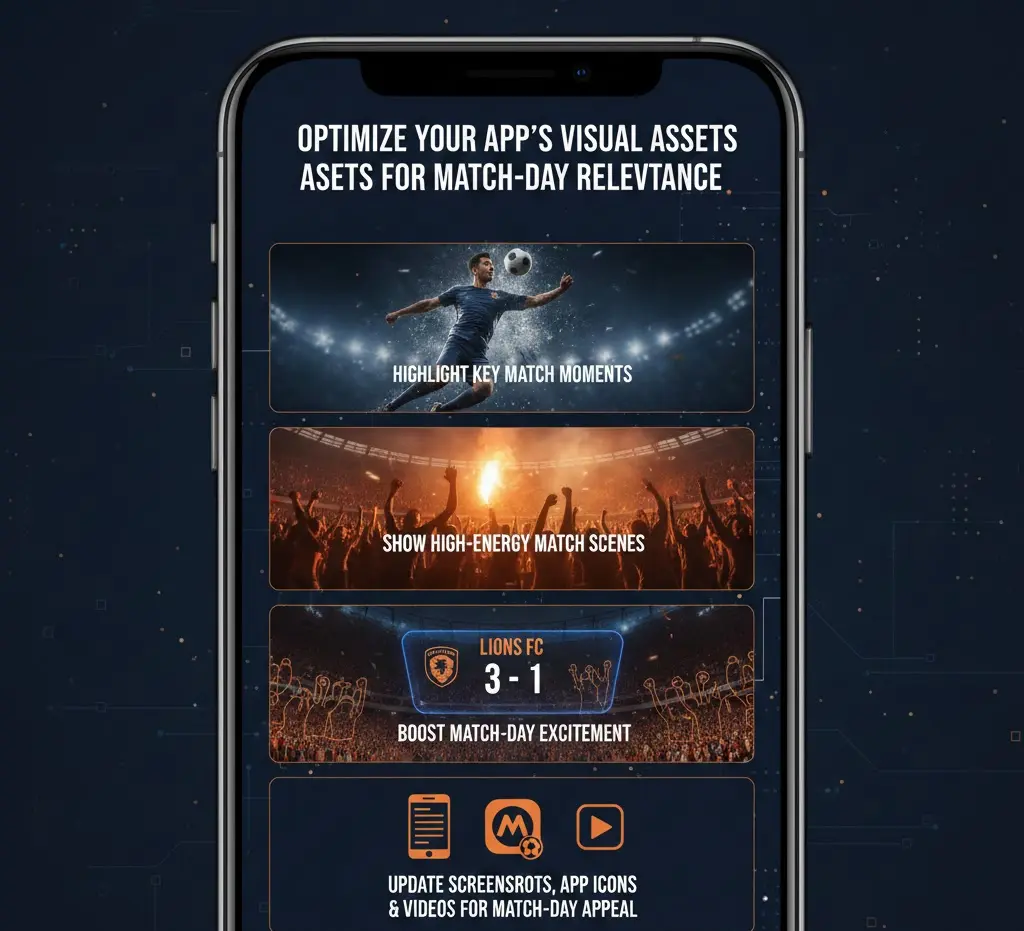
App store optimization isn’t just about keywords. The visual assets, including screenshots, app icons, and videos, must also reflect the match-day excitement. A strong visual representation can increase user engagement and help your app stand out among the competition.
Consider updating your app’s images to feature popular teams, key moments, and high-energy match scenes. These visuals should capture the essence of the tournament and entice users to click on your app for the latest updates and match information.
Including real-time content like live scores, match previews, or breaking news in your app description is an effective way to stay relevant to users. Fans want quick access to information, and providing this in your app’s description can help you cater to that need.
By focusing on real-time content, you can increase your app’s visibility and appeal to users searching for the most current World Cup updates. This is particularly effective during high-traffic moments, such as when major matches are taking place.
The keyword landscape for the World Cup will evolve as the tournament progresses. Certain teams may gain more attention, or specific matchups may generate more search interest. It is essential to track these trends and adjust your app’s keywords accordingly.
Using tools like Google Analytics or App Store Connect, you can monitor how your app’s keywords are performing and make adjustments based on which keywords are generating the most traffic. This allows you to stay agile and maintain a competitive edge throughout the tournament.
Event-based App Store Optimization (ASO) takes your app optimization to the next level by focusing on the unique search patterns that occur during events like the World Cup.
The key to event-based ASO is aligning your keyword strategy with real-time events. During the World Cup, fans will search for specific content related to the ongoing matches, team performances, and game results. By targeting keywords that reflect live events, you can maximize your app’s visibility when users are most engaged.
Match days are when search traffic spikes, so it is essential to optimize your metadata for relevant keywords. This includes updating your app description, title, and keywords to reflect live match-related terms.
To stay competitive, it is important to adjust your ASO strategy based on real-time data. Events like surprise wins, major upsets, or high-profile matches can shift search trends. Keeping track of these trends ensures that your app listings stay relevant.
During key moments, like the final stages or semi-finals, search volume for certain keywords will soar. Identifying these high-traffic moments and targeting related keywords can significantly boost your app’s visibility.
Finally, ensuring your app’s content is updated according to current events will keep it visible. Real-time updates during crucial matches, such as final scores or major events, will help your app stay at the top of search results.
The 2026 FIFA World Cup offers a huge opportunity for app developers to capture the attention of millions of fans worldwide. By understanding FIFA World Cup app keyword trends, optimizing your app listings for match-day searches, and utilizing event-based ASO, you can drive visibility and installs. Partnering with a digital marketing agency like G Web Pro can help optimize your app for success during the World Cup. With our expertise in ASO and keyword strategy, we will guide you through the complexities of maximizing downloads and visibility. Make the most of 2026 FIFA World Cup search trends and engage users with your app.
FIFA World Cup app keyword trends directly impact how your app appears in search results. During the tournament, search volume for keywords related to match updates, team scores, and live events increases. By optimizing your app listing with relevant, trending keywords, you can ensure your app is more visible to users actively searching for World Cup-related content.
For the 2026 World Cup, focus on high-traffic keywords like “live match updates,” “team scores,” “FIFA World Cup 2026,” “live football scores,” and “World Cup schedule.” These terms are likely to be highly searched during the tournament, so including them in your app title, description, and metadata can help improve app visibility.
It’s important to update your app’s metadata regularly, especially as the tournament progresses. Match results, team performances, and major events can drive changes in search behaviour. By updating your app’s description, title, and keywords to reflect these changes, you can stay relevant and increase the chances of your app being discovered by fans searching for real-time information.
To optimize for match-day searches, incorporate real-time keywords like “live score,” “FIFA match updates,” and “team results.” Ensure your app metadata, including the description and keywords, reflects these search terms. Additionally, offering real-time notifications and keeping your app’s content up to date with the latest match results can further engage users.
Localization is crucial because FIFA World Cup search trends can vary by region. Different countries and fanbases may search for specific teams, players, or match schedules. By localizing your app’s metadata, including language and keywords relevant to the region, you can increase your app’s visibility in different markets.