
Every four years, billions of people gather around screens in living rooms, pubs, and public squares to watch nations compete for football’s greatest prize: the FIFA World Cup. It is one of the largest sporting events on Earth, and brands know it.
The numbers behind a World Cup are staggering. The FIFA World Cup that took place in Qatar in 2022 attracted over five billion viewers globally—more than half the world’s population. No other platform offers that kind of concentrated human attention.
For marketers, this is not just an opportunity. It is a specific, time-bound window where consumer emotion runs high, attention is fixed, and audiences are genuinely receptive. Brands that show up during this window earn something money cannot buy on its own—i.e., trust built through shared experience.
FIFA World Cup campaigns have long been the proving ground for some of the most memorable advertising in history. Here we will discuss the impact of FIFA World Cup campaigns on brand visibility and customer engagement.
The link between major tournament sponsorship and lasting brand recognition is not a fluke. It is the result of strategic storytelling, emotional timing, and massive reach working together.
No other marketing moment offers simultaneous access to audiences across every continent. FIFA World Cup campaigns run during a particular window when people in cities as far apart as Seoul, Sao Paulo, Lagos and Toronto are watching the same match at almost the same time. That shared cultural experience creates a backdrop that intensifies brand messaging far beyond what a standard paid media buy can achieve.
The emotional charge of this football tournament means that audiences are actively engaged and not passively scrolling. Brands that place their message inside that moment benefit from an attentive audience whose emotional state makes them genuinely more receptive to storytelling.
The FIFA World Cup provides brands a rare and unique scope for emotionally resonant storytelling. The most effective tournament campaigns do not just showcase a product—they tell stories about hope, pressures, belonging and consequences.
When audiences are already emotionally invested in every match result, advertising that tells a genuine human story reaches them far more deeply than it would in any other context. Emotional advertising has measurably stronger recall than rational advertising. Brands that align their stories with the human drama of competition—the underdogs, the comebacks, the national pride—earn the kind of attention that translates into long-term brand affinity, not just short-term impressions.
There is a quiet transfer of trust that happens when a brand shows up consistently inside a cultural moment people genuinely care about. It does not require official status—it requires relevance, consistency and a clear sense of what the brand actually stands for.
Audiences are reasonably good at detecting when a brand belongs in a conversation and when it is forcing its way in. Brands that align authentically with the energy of a major sporting event—through content, community involvement or athlete partnerships—earn a layer of credibility that straightforward advertising rarely delivers on its own. That credibility is not loud. It accumulates quietly, over time, through repeated and honest association with something the audience already values.
Modern FIFA World Cup campaigns do not live only on television. They live on social media platforms where fans share, debate, celebrate and commiserate in real time. A well-timed campaign post during a knockout match can achieve organic reach that would cost millions to mimic through paid channels.
Fan-generated content—like people wearing branded gear, sharing branded hashtags, or recreating campaign moments—extends a brand’s message into conversations the brand never had to pay for. Brands that build social interactivity into their World Cup strategy earn impressions through culture and not just budget.
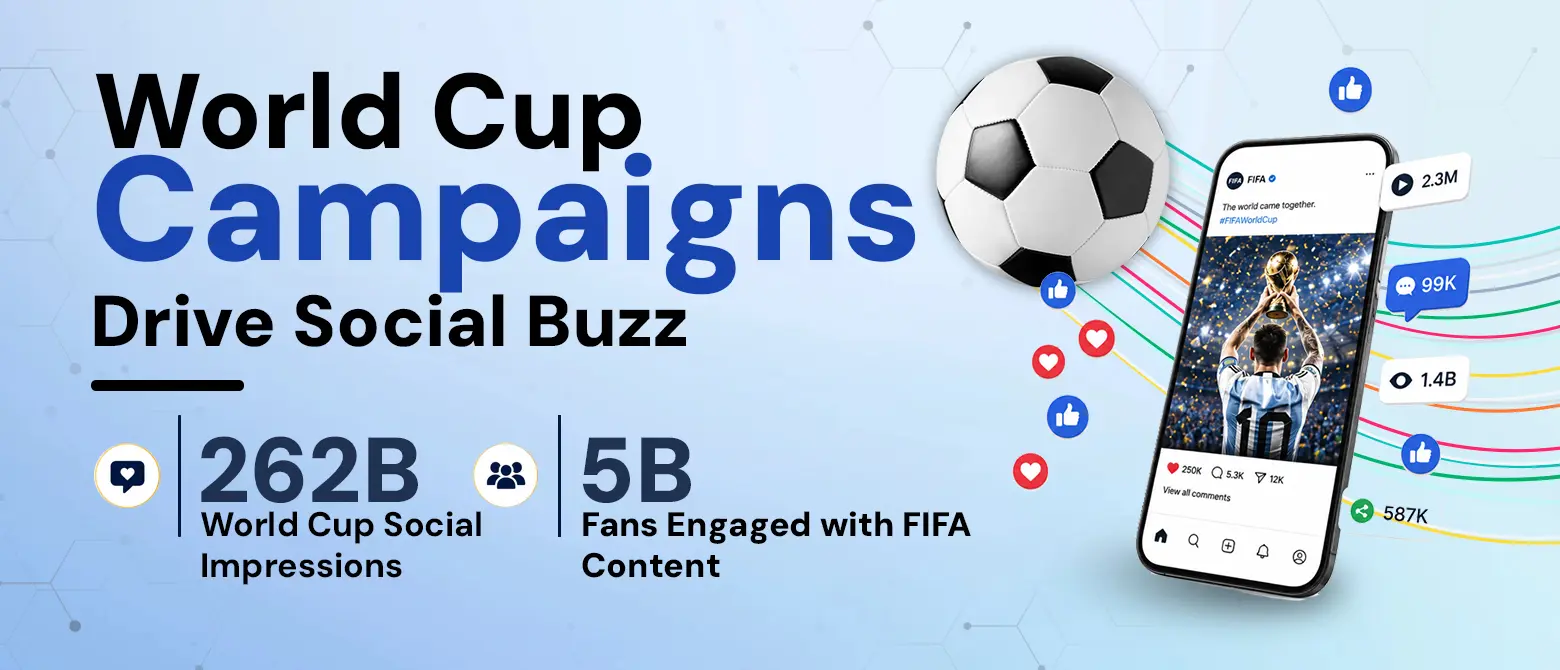
Research in sports marketing consistently shows that brands associated with major tournaments enjoy a lot more recall months and sometimes years after the event ends.
This is not a fluke. The emotional intensity of tournament moments creates strong memory encoding. When consumers recall a stunning last-minute goal, they often also recall the brand present at that moment.
The quadrennial nature of the World Cup means that a well-executed campaign becomes part of a collective brand story told across years. Each tournament sets up on the last, intensifying the emotional association between brand and event in the minds of loyal fans.
Sports events in general (and the World Cup in particular) are one of the few remaining media contexts that reliably attract young adult men—a demographic that has largely abandoned traditional television and resists interruptive advertising.
FIFA World Cup campaigns offer brands a legitimate path to this audience in a context where they are actively watching and paying attention. For instance, brands in categories like financial services, automotive and telecom have used World Cup sponsorships to shift brand perception among younger male consumers who would otherwise be difficult to reach through conventional digital channels.
The World Cup is not only a stage for existing brands. It is also a promoter for new product introductions. The global attention of a tournament provides ideal conditions for a product launch that needs elaborate, fast awareness. Sportswear and equipment brands in particular have long used major tournaments as backdrops for new releases, pairing product launches with tournament narrative to insert the product into a cultural moment.
Launches tied to World Cup campaigns benefit from editorial coverage, social commentary and fan debate that extends their media footprint beyond what a standalone product announcement would generate.
Showing up is not enough. The brands that build lasting visibility are the ones that show up consistently, creatively, and across every surface the tournament touches.
Brand visibility in sports marketing is not set up through a single ad—it is built via the consistent repetition of brand signals across every touchpoint in the tournament ecosystem. Stadium signage, broadcast overlays, kit logos, official digital channels and partner activations all work together to surround the consumer with familiar brand cues. The more consistently a brand appears across these varied contexts, the stronger the visual memory becomes.
Brands that invest in a full ecosystem presence rather than single placements earn a kind of visibility that is almost ambient. Consumers see the brand without being consciously sold to which is often the more effective path.
The best World Cup campaigns understand that a global event is experienced locally. A fan in Toronto feels the tournament differently than a fan in Buenos Aires or Nairobi. Smart brands build global campaign frameworks with localized executions i.e., adjusting messaging, imagery, and channels to reflect the cultural context of each key market. Local relevance signals respect for the consumer’s identity, which deepens emotional resonance. A brand that speaks to a Canadian audience about their own football hopes, rather than simply rebranding a generic global asset, earns a much stronger connection in that market.
Visibility does not only come from paid placements. During the World Cup, the creative work itself becomes newsworthy when it is bold enough. Campaigns that take a genuine creative risk—through humour, emotion, controversy, or spectacle—generate earned media coverage that multiplies their paid reach many times over. For instance, British department store chain John Lewis & Partners has no World Cup affiliation, but its Christmas campaigns generate earned coverage worth far more than their production budgets. The same principle applies in sports marketing: campaigns that are genuinely interesting become stories that media and audiences propagate voluntarily.
Official sponsorship also opens the door to partnership ecosystems where brands co-create activations with other sponsors, broadcasters and rights-holders. These partnerships extend visibility into new channels and new audiences without proportional budget increases. Co-branding with a beloved national team or football star transfers that figure’s emotional equity to the brand in a way that straightforward advertising cannot duplicate. When a trusted athlete endorses a brand in the context of a tournament they are visibly part of, the message carries an authenticity that audiences can relate with.
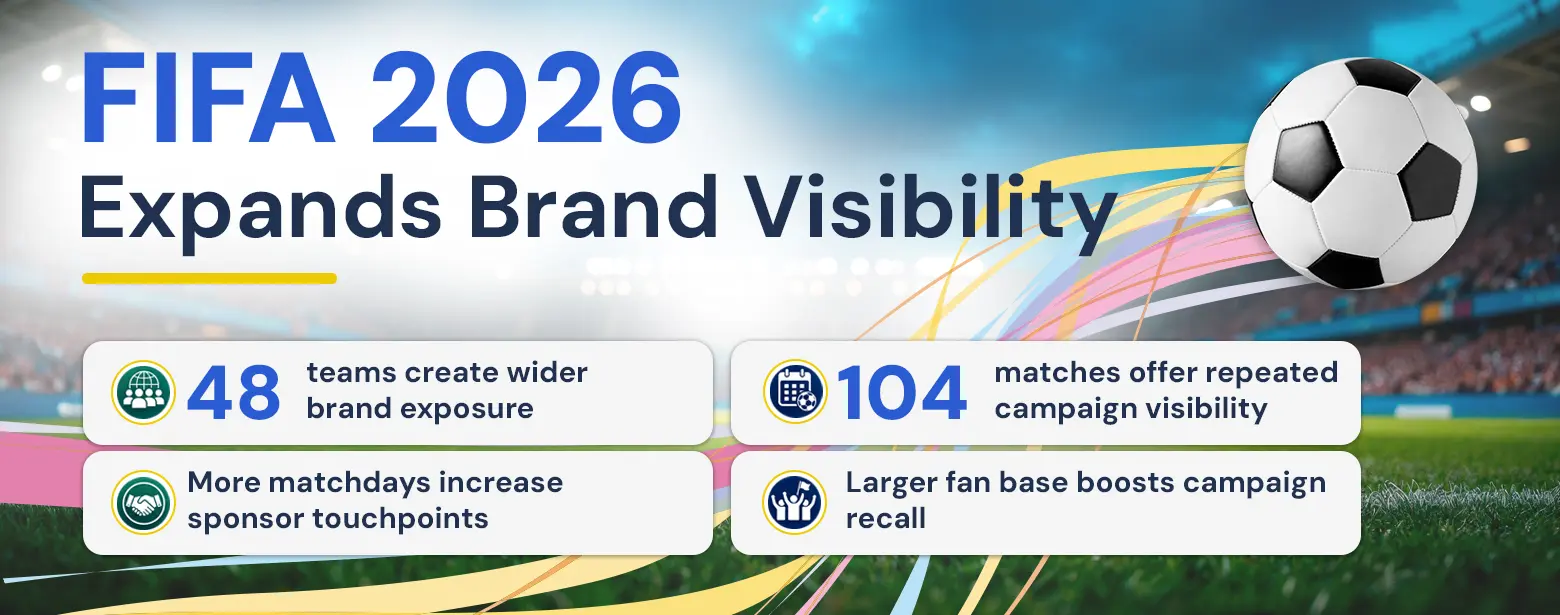
Engagement does not happen by accident—it is the result of deliberate choices about how a brand invites its audience to participate, feel, and stay connected long after the final match ends.
Customer engagement through sports campaigns deepens when brands move beyond broadcasting and invite participation. Prediction contests, fan voting, interactive AR filters and user-generated content challenges all give audiences a role in the campaign rather than positioning them as passive recipients of it. When fans feel that they have contributed to something—when they have picked a winner, submitted a photo, or shared a moment—their emotional investment in your brand rises.
Participatory activations also generate data that brands can use to personalize follow-up communication long after the tournament ends. This extends the engagement window well beyond the final whistle.
Increasingly, audiences expect brands to stand for something beyond their product category. World Cup campaigns that align with a credible social cause—like grassroots football development, youth access to sport or environmental responsibility—earn a stronger loyalty than campaigns that are majorly commercial.
For instance, Visa’s long-running support for small business owners through its World Cup sponsorship has united the brand’s core product values with the entrepreneurial spirit of the tournament’s host communities.
Audiences reward brands that show honest investment in the communities the sport touches. This connection feels earned rather than paid for.
Live sport is one of the truly synchronous media experiences. Audiences watching a World Cup match are present in a way they rarely are in other media contexts. Brands that build real-time engagement mechanisms—like match-day social content, live activations triggered by game events, or second-screen companion experiences—can capture that heightened attention at the precise moment it exists.
Real-time engagement builds a sense of shared experience between the brand and the fan. When a brand celebrates a goal, commences a miss or reacts to an upset with the same emotional honesty as the audience, it stops feeling like advertising and starts feeling like a community.
The end of the tournament is not the end of the engagement opportunity. Brands that build World Cup campaigns with post-tournament retention strategies in mind can convert the emotional connection earned during the tournament into lasting customer relationships.
Follow-up email campaigns, loyalty rewards tied to tournament participation and content that extends the narrative arc of the campaign into the off-season all help brands retain the attention they worked hard to earn.
Moreover, consumers who felt genuinely connected to a brand during a shared cultural moment are more likely to become advocates—recommending the brand to others because the emotional association is positive and personal.
The evidence is clear and consistent. Brands that invest carefully in FIFA World Cup campaigns do not just buy impressions—they build real equity through emotional alignment with one of humanity’s most unifying rituals. The opportunity is important, but the execution must be honest, specific and grounded in genuine respect for the audience. Brands that show up with clarity, creativity and cultural awareness earn something that outlasts the tournament itself. That is the real return on investment in global sports marketing.
Official FIFA partnership packages vary a lot depending on the tier and scope of the sponsorship. Brands with smaller budgets can still participate through regional sponsorships, broadcaster partnerships or creative campaigns that capitalize on tournament interest without requiring official status.
Yes. But the strategy differs from major brands. Small businesses have successfully used locally relevant promotions, themed social content and in-store activations tied to match schedules to drive foot traffic and community engagement without requiring a large advertising budget. The key is specificity and local relevance.
Emotional storytelling is the differentiator. Campaigns that tell a human story—about aspiration, belonging, pride or perseverance—tend to be recalled long after the tournament ends. Campaigns that simply display a logo or run a discount promotion are forgotten quickly because they offer no emotional anchor for the audience.
Key metrics include brand recall and awareness lift measured through pre- and post-campaign surveys, earned media value, social engagement rates, website traffic spikes during match windows and sales uplift in categories directly promoted during the tournament. Long-term brand equity tracking is also advisable for sustained sponsorship investments.
Yes. Brands that line up with tournaments held in countries with human rights concerns or that appear to exploit cultural moments without genuine respect for local context, can face public criticism. Brands should approach sponsorship with transparent values and make sure their campaign messaging is consistent with their elaborate corporate commitments.
Brands that sustain momentum treat the tournament as the beginning of a relationship and not the end of a campaign. Post-tournament content, loyalty follow-ups and ongoing community investment keep audiences connected. Brands that go quiet immediately after the final whistle abandon earned benefits.