
Running ads online can feel exciting at first. You launch a campaign, see clicks coming in, and expect steady
results. But over time, those same ads start losing their impact. People stop noticing them, and performance
slowly drops.
This situation is very common in digital marketing. It happens when your audience keeps seeing the same message.
Instead of engaging, they start ignoring it.
This is where PPC ad fatigue becomes a serious concern. It can reduce clicks, increase costs, and make your
campaigns less effective. Even well-planned ads can fail if they are not refreshed regularly.
In this guide, we will explain PPC ad fatigue and how to keep your campaigns engaging and effective.
TABLE OF CONTENTS
Before fixing the problem, it is important to understand what causes it and why it matters for your results.
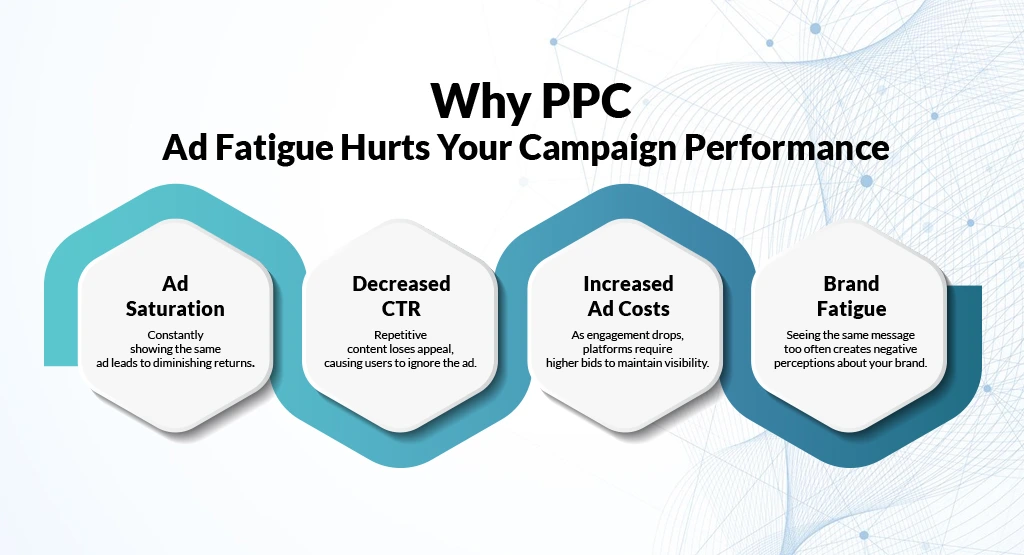
When users repeatedly see the same ad, it becomes familiar in a negative way. Instead of attracting attention, it
slowly fades into the background. This happens because the human brain naturally ignores things it has already
seen many times. At first, your ad may stand out, but over time, it stops feeling new or interesting.
In a pay-per-click campaign, this leads to fewer clicks because people just scroll past it without noticing. Even
if your offer is strong, users may ignore it just because they feel they have already seen and understood it.
This repeated exposure reduces curiosity and interest. If not managed early, it can lower engagement and waste
your ad budget, as you keep showing ads that no longer capture audience attention.
Ad fatigue often shows up clearly when your click-through rate starts going down. In the starting stage, your ad
may perform well because it is fresh and grabs attention easily. People are more likely to click because they
are curious or interested. However, as time passes and the same ad is shown repeatedly, fewer users feel the
need to engage with it. This drop in clicks is a strong signal that your audience is losing interest. Lower
click-through rates can also affect how ad platforms evaluate your content.
If your ad is not getting enough engagement, it may be shown less often or may require a higher cost to stay
visible. This then reduces your overall campaign performance.
When your ad stops performing well, the cost of running it can increase without giving better results. This
happens because advertising platforms prefer ads that users engage with. If your ad is not getting enough clicks
or attention, it is considered less relevant. As a result, you may have to pay more for each click or
impression. This means your budget is being used less efficiently. You might notice that you are spending the
same or even more money but getting fewer conversions in return. With time, this can reduce your return on
investment (ROI). If you are not tracking these changes carefully, you may continue spending without realizing
that your campaign is no longer delivering strong results.
People enjoy seeing new and interesting content. But when they are exposed to the same visuals, headlines, and
messages, they start losing interest. This is a natural reaction because repetition removes the excitement and
curiosity that drive engagement. Even users who were once interested in your product or service may stop paying
attention if nothing changes. This boredom can directly impact your campaign performance, as fewer people
interact with your ads.
To avoid this, it is important to refresh your creatives regularly. Updating images, trying different formats, or
changing the message can make your ads feel new again. Keeping your content fresh helps maintain audience
interest and encourages continued engagement.
Showing the same ad too often does not just affect performance; it can also impact how people feel about your
brand. When users keep seeing the same message repeatedly, they may start feeling annoyed or frustrated. Instead
of seeing your brand as helpful or interesting, they may think it lacks creativity or effort. This negative
impression can stay with them and influence their future decisions. Over time, it can reduce trust and make
people less likely to engage with your business.
That is why it is important to balance how often your ads are shown and to keep your content varied. A thoughtful
approach helps your brand appear fresh, creative, and respectful of the audience’s attention.
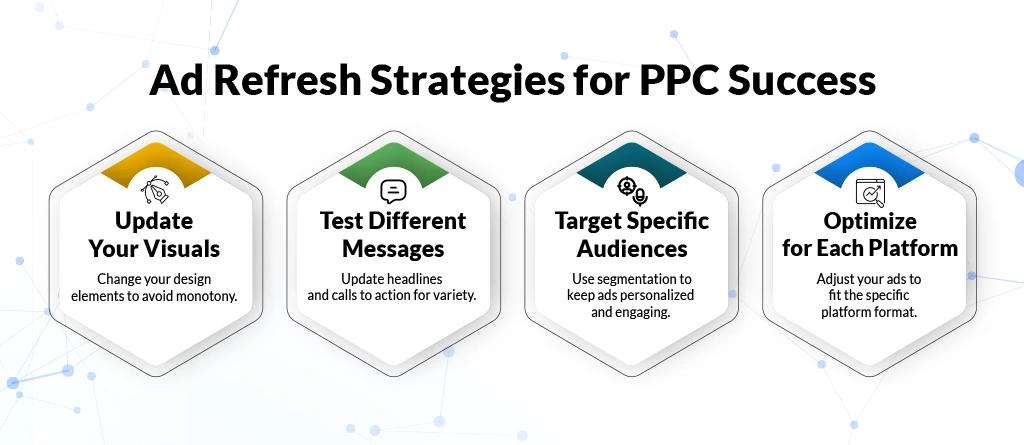
After understanding the problem, the next step is learning how to keep your ads fresh and interesting.
Updating your visuals is one of the easiest ways to deal with ad fatigue. This means changing images, colours,
videos, layouts, or even the style of your design. When people see something new, it naturally catches their
attention. Even if your offer stays the same message, a different look can make your ad feel fresh again. Many
marketers use multiple versions of creatives and rotate them to keep things interesting. This approach helps
prevent your audience from getting bored. It also allows you to see which designs perform better.
By updating creatives regularly, you keep your ads engaging and make sure users continue to notice and interact
with them instead of ignoring them.
Your ad copy is what communicates your message, so it needs to stay fresh. Even small changes in words can make a
big difference in how people respond. You can try different headlines, descriptions, or calls to action to see
what works better.
For example, you can focus on benefits in one version and urgency in another. This keeps your messaging
interesting and avoids repetition. It also helps you connect with different types of users who may respond to
different styles.
Updating your copy regularly ensures that your ads remain relevant and engaging, which can lead to better click
rates and improved overall performance over time.
Not everyone in your audience behaves the same way, so showing the same ad to everyone may not work well.
Audience segmentation means segregating your audience into smaller groups based on their behaviour, interests,
or stage in the buying process.
For example, new users may need more information, while returning users may respond better to offers. By creating
specific ads for each group, you make your message more relevant. This reduces repetition and keeps your ads
from feeling overused. It also helps users feel that the ad is made for them, which increases engagement.
When your ads feel more personal, people are more likely to click and take action.
Instead of using the same ad everywhere, it is better to adjust your ads based on the platform you are using.
Each PPC advertising platform has a different type of audience and format.
For example, what works well on one platform may not perform the same way on another. Some platforms focus more
on visuals, while others focus on text. By customizing your ads for each platform, you can match the style that
users expect. This makes your ads feel more natural and less repetitive. It also helps improve engagement
because users see content that fits the platform they are utilizing, making your campaigns more effective overall.
Testing is a key part of improving your ads and keeping them fresh. Instead of using one version for a long time,
you should try different ideas regularly. This can include testing different images, headlines, formats, or
audience groups. By doing this, you can find out what works best and what does not.
Testing also helps you discover new approaches that may perform better than your current ads. It keeps your
campaigns active and prevents them from becoming repetitive. Over time, this process helps you build stronger
ads that connect better with your audience, leading to improved results and more effective campaigns.
Timing is important when managing ads. Knowing when to make changes is an important portion of paid marketing
management, which can help you avoid performance drops.
Keep an eye on main numbers like clicks, impressions, and conversions. If you see a steady drop, it could be a
sign of PPC ad fatigue. These changes show that your audience is losing interest. Acting early helps you avoid
bigger losses and wasted budget. Regular tracking is important because it helps you understand what is working
and what is not, allowing you to make better decisions and improve your campaign performance over time.
Do not wait for your ads to completely stop working before making changes. Plan a regular schedule to update your
ads, such as every few weeks or months. This depends on your audience size and campaign type. A fixed schedule
helps keep your ads fresh and relevant. It also reduces the need for urgent fixes later. Regular updates ensure
your ads stay interesting and continue to perform well without sudden drops in engagement.
Your audience shows what they like through their actions. If they stop clicking, scrolling faster, or not
engaging, it means something needs to change. These signals are important and should not be ignored.
By paying attention to these patterns, you can adjust your ads to match their interests. This approach works well
because it is based on real user behaviour, making it one of the most practical and effective ad fatigue
solutions.
Showing your ads too often can make people tired of seeing them. This leads to faster ad fatigue and lower
engagement. By controlling how often your ads appear, you can avoid overexposing your audience. Adjusting your budget and frequency of ad displays helps maintain a balance so your ads stay noticeable without becoming annoying. This keeps your audience interested and improves the chances of better results from your creative PPC campaigns over time.
Every campaign gives you useful information about what works and what does not. By studying this data, you can
understand which ads work well and which ones need improvement. This helps you make smarter decisions for future campaigns.
Using these PPC campaign optimization techniques allows you to avoid repeating mistakes and focus on PPC ad
strategies that deliver better results, making your ads more effective and efficient over time.
Managing ad fatigue is essential for long-term success in digital advertising. If ignored, PPC ad fatigue can
reduce engagement, increase costs, and harm your results. By refreshing creatives, updating messages, and
tracking performance regularly, you can keep your campaigns interesting. Simple changes made at the right time
can make a big difference and help your ads stay effective while reaching the right audience consistently.
PPC ad fatigue happens when people see the same ad too many times and gradually stop paying attention to it. This
leads to fewer clicks and lower engagement. It is a common issue in digital advertising and needs regular
updates to keep ads fresh and effective.
You can notice ad fatigue by checking your campaign data. If your click-through rate drops, costs increase, or
conversions go down, it may be a sign. Watching these changes regularly helps you act early and improve results.
There is no fixed rule, but many marketers update ads every few weeks. The timing depends on your audience size
and campaign performance. If you see a drop in engagement, it is a good time to refresh your ads.
Yes, even small campaigns can face ad fatigue. If your audience is limited, they may see your ads more often,
which increases the chance of fatigue. Regular updates help maintain interest and improve results.
The best way is to keep testing new ideas. Change visuals, update text, and adjust targeting. This keeps your ads
interesting and prevents repetition. Consistent updates help maintain strong performance over time.
Yes, ad fatigue can reduce your return on investment. When people stop engaging, you spend more money for fewer
results. Fixing this issue helps improve your campaign’s efficiency and ensures better use of your budget.