
Toronto’s business landscape is crowded. Every industry has dozens of companies saying the same things, promising the
same results, and fighting for the same clients. The businesses that rise above that noise are not always the biggest,
but they are the most trusted.
But trust in today’s market is not given freely. It is built one consistent action at a time, through something
called authority marketing. When done well, it turns your brand from a name in a directory into a recognized voice
people actively seek out.
The good news is that branding for business growth does not require a massive budget or a PR team. What it does
require is intention, consistency, and a clear understanding of what your audience needs from you.
Here , we will discuss mastering authority marketing for your Toronto brand and strategies that work to help you
build genuine credibility and attract the right clients with confidence.
TABLE OF CONTENTS
These seven foundational practices form the backbone of any authority marketing effort in Toronto, and each one builds directly on the last.
Most Toronto business owners start branding with the wrong question. They ask, “What should our logo look like?” when the real question is “What do we actually believe about our industry?”
Authority marketing is built on a clear point of view, a perspective that is yours alone. It is not about being controversial. It is about being specific. A financial planning firm that openly states “We think most investment advice overcomplicates things for everyday Canadians” has a position. That position attracts people who feel the same way and repels those who do not—and that is a good thing.
When you know what you stand for, your messaging becomes consistent. Your website, your social media, your emails, and your conversations all carry the same tone. Furthermore, that consistency is what clients and Google both reward. Branding for business growth starts here, before any design work begins.
One of the most common mistakes Toronto business owners make is keeping their knowledge to themselves, waiting for a client to ask the right question. Authority, however, is built by sharing what you know—openly, generously, and regularly.
This means writing articles that answer real questions. It means recording short videos that explain a common problem in your field. It means posting on LinkedIn not just about your wins, but about what you have learned from your losses. For instance, a contractor who posts a short breakdown of why certain renovations add more resale value than others signals expertise to every homeowner who reads it.
Consistent content creation signals to search engines that you are a relevant, active voice in your field, which supports your digital marketing efforts by improving how your Toronto business appears in local search results. The more you teach, the more you are trusted.
Nothing builds authority faster than a well-told client story. Not a generic testimonial but a real story with a real problem, process, and result. These stories do several things at once. They prove your capabilities. They help potential clients see themselves in the situation. They make your brand feel human.
Toronto buyers are sophisticated. They have seen every claim. “We deliver results.” “We care about our clients.” These phrases mean nothing without evidence. A case study that walks a reader through the exact challenge a client faced, what your team did, and what changed afterward—that is evidence.
Furthermore, these stories are endlessly reusable. They can become blog posts, social content, pitch deck slides, and sales email fodder. Building brand authority in Toronto starts with earning real results and then having the courage to talk about them honestly.
Authority is not built by being everywhere. It is built by being reliably present in the right places. Spreading yourself too thin across every platform guarantees mediocrity on all of them.
The better approach is to choose two or three channels where your ideal clients are genuinely active and commit to showing up there well. For a B2B service in Toronto, that might be LinkedIn and a monthly email newsletter. For a retail brand, it might be Instagram and Google Business. For a professional services firm, it might be speaking at local events and maintaining a well-written blog.
Consistency matters more than frequency. Showing up with something genuinely useful once a week beats posting something forgettable every day. Moreover, consistent presence builds the kind of familiarity that precedes trust. When a client finally needs what you offer, you want your name to be the first one that comes to mind.
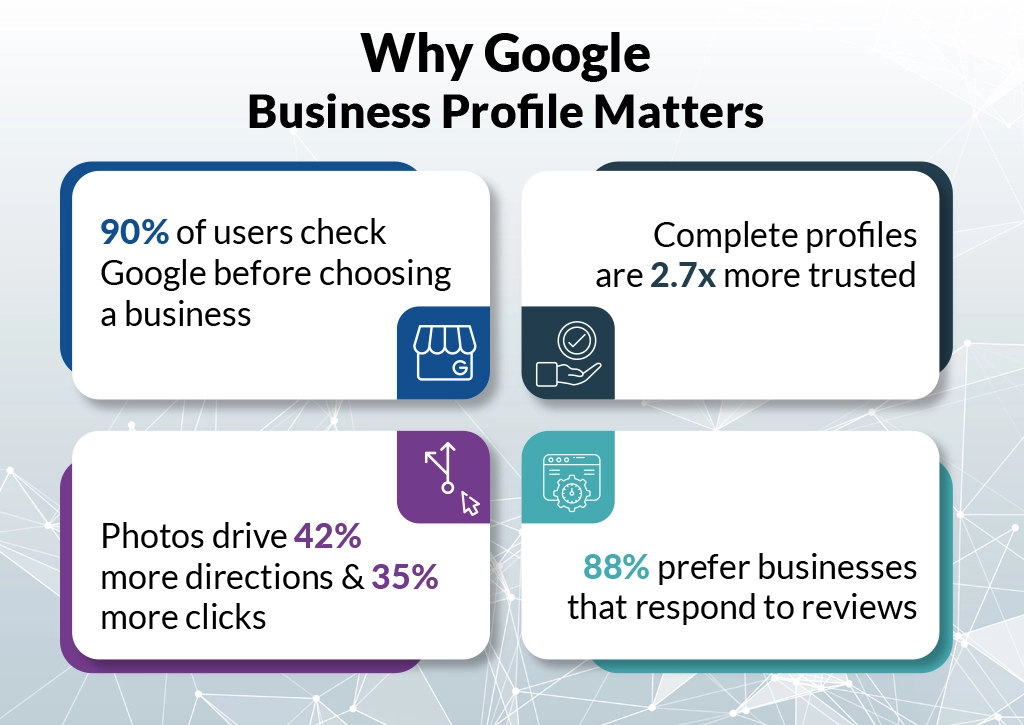
Many Toronto businesses treat their Google Business Profile as something they set up once and forget. That is a missed opportunity, as your profile is often the first impression a potential client has of you, and it needs to work hard.
A complete, well-maintained profile with recent photos, accurate hours, and a consistent flow of real client reviews signals credibility. Why branding is important for business becomes obvious here, as a polished Google presence tells the story of an active, trustworthy company before a client even visits your website.
Responding to every review—positive or critical—matters as well because it shows that a real person is paying attention. For instance, a law firm that responds to a negative review with empathy and a clear explanation builds more trust than one that ignores it entirely. This is local authority marketing in its most practical form.
Authority is also transferred through association. When a trusted Toronto figure like an influencer, a respected blogger, a local business association, a media outlet, or a complementary service provider speaks well of your work, their credibility lends weight to yours.
This is not about chasing vanity press coverage. It is about building genuine relationships with people whose audiences overlap with yours. Speak at a Toronto Board of Trade event. Be a guest on a local podcast. Co-create a resource with a business that serves the same clients you do but offers a different service.
Furthermore, these partnerships expand your reach without requiring you to spend a cent on advertising. The key is that the partnership must feel natural and mutually valuable. Authority marketing strategies in Toronto that rely on
authentic community connections tend to outlast paid campaigns by a wide margin.
Your brand voice is the personality that comes through in everything you write and say. It is not just a style guide but a promise. When your website sounds warm and approachable but your emails read like legal notices, that inconsistency creates doubt.
Clients and prospects notice when a brand feels off. They may not be able to name what bothers them, but they feel the lack of coherence. Every piece of content your business produces, from a proposal to an Instagram caption to a phone greeting, should feel like it comes from the same voice.
Document your brand voice in writing. Give it three or four clear descriptors. “We are direct, warm, and plain-spoken” is more useful than “we are professional.” Share that document with everyone on your team who writes or communicates on behalf of the business. Branding for business growth depends on this kind of internal clarity as much as external execution.
With your foundation in place, these digital tactics give your authority a wider reach and a longer shelf life online.
Ranking well in Toronto-specific searches is one of the highest value things a local business can do. It means people who are actively looking for your service find you first. Local SEO involves consistent name-address-phone information across all directories, location-relevant content on your website, and a steady stream of client reviews. It is slow work, but the results compound.
Social media platforms can change their algorithms overnight. Your email list is yours. A monthly newsletter that shares useful, non-salesy content keeps your brand warm in the minds of people who already like you. When they are ready to buy—or know someone who is—they think of you. This is authority marketing at its most reliable.
Toronto clients want to work with people they like and trust. Video lets them make that judgment before they ever meet you. Short videos explaining your process, walking through a client result or simply sharing a thought on something happening in your industry build familiarity far faster than text alone. You do not need production quality; you need authenticity.
Paid advertising works best when it supports a brand people already recognize or have seen before. Running ads to a cold audience with no organic presence is expensive and often ineffective. Running ads that reinforce what someone has already seen from your blog, video or referral source? That converts. Authority and advertising are most powerful when they work together.
Digital presence matters enormously, but the most trusted Toronto brands also show up in the real world, and that offline reliability feeds everything else.
For businesses with a location like a studio, an office or a shop, the physical space is part of the brand experience. Cleanliness, signage, how your team greets people and the small details of the space all communicate your values. A brand that claims to be premium must feel premium in person. Misalignment between online presence and in-person experience erodes trust quickly.
Standing in front of a room of your peers or potential clients and delivering something genuinely useful is one of the most powerful authority-building activities available to any Toronto business owner. It is visible, memorable, and positions you as a leader rather than a vendor. Start with smaller local events and build from there.
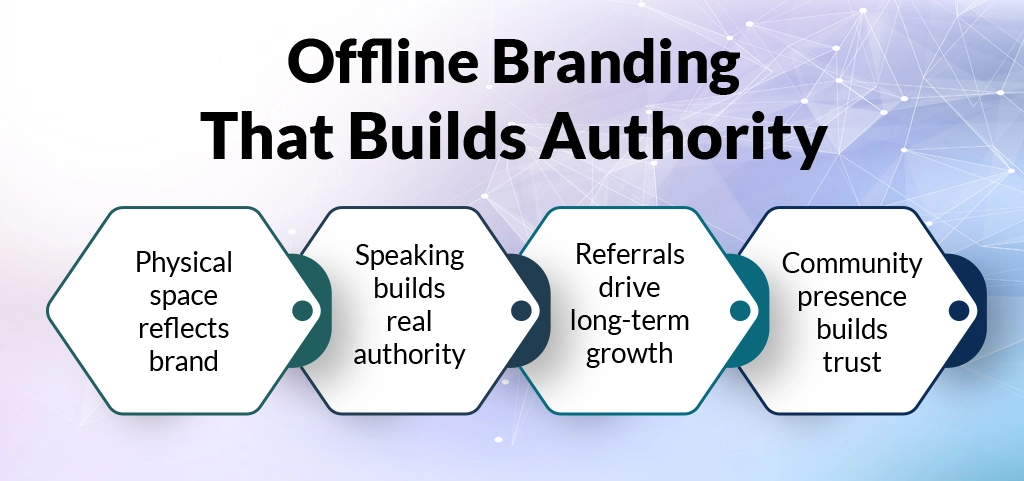
A satisfied client who refers to you once is valuable. A client who knows you have a referral programme and actively participates is a long-term growth asset.
Make it easy for people to refer to you and thank them when they do. Keep them informed about what happened with the referral. Authority marketing is, at its core, about being the kind of business that people are proud to recommend.
Toronto communities are loyal to businesses that invest in them. Sponsoring a local event, volunteering, partnering with a neighbourhood initiative, or simply being a visible and generous local presence builds the kind of goodwill that no ad campaign can replicate. It also reinforces that your business is not just here to extract value—it is here to contribute.
Building authority in a city as competitive and dynamic as Toronto is not a one-time project. It is an ongoing practice rooted in clarity, consistency, and genuine care for the people you serve. The businesses that commit to these habits do not just grow faster. They grow better, attracting the right clients and holding onto them. If you are serious about branding for business growth, start with one idea from this article and do it well before adding the next. That is how real authority is earned.
Most businesses start to notice measurable shifts—more referrals, better-quality leads, stronger online visibility—within six to twelve months of consistent effort. Authority is built slowly and lasts a long time.
No. Many of the most effective authority-building strategies—content creation, Google Business optimization, email newsletters, and speaking—cost very little money. What they require is time, consistency, and a genuine desire to be helpful.
Branding is who you are—your values, voice, reputation, and visual identity. Marketing is how you communicate that identity to the world. Strong marketing built on a weak brand rarely holds up. Begin with the brand, then set up the marketing strategies based on it.
Extremely important. Reviews on Google, industry directories, and social platforms serve as public trust signals. A steady stream of honest, recent reviews tells potential clients that your business is active, accountable, and worth considering seriously.
Your website is your home base—you own it and it works for you around the clock. Social media is a rental. Prioritize your website and email list first, then use social platforms to drive people back to your owned channels.
Look at three things such as the quality of inbound leads, how often clients refer others without being asked, and whether your pricing holds without pushback. Weak branding tends to attract price shoppers. Strong branding attracts people who already trust you.