
ChatGPT has subtly started testing paid advertising within its platform. For Canadian businesses that depend on search-driven leads, that is worth paying attention to.
People are already using AI to ask purchase-related questions—like “who can fix my roof in Mississauga?” or “who are the best accountants for small businesses in Vancouver?”—and the answers they get are shaping their buying decisions. Paid placements inside those answers are now becoming part of that picture.
Instead of examining a list of ten blue links on Google, more people are typing a full question into an AI platform’s prompt and reading a single, confident answer. The businesses that appear in those answers—whether organically or through paid placement—will have a significant edge.
Most small business owners in Canada have not yet heard about ChatGPT ads. That gap is an opportunity. Getting familiar with this channel now, before the competition crowds it, is a genuinely smart move.
Here we will discuss ads on ChatGPT and how Canadian businesses can prepare for AI-powered customer intent.
The shift to AI-powered search is already underway—and ChatGPT ads are positioned right at the centre of it.
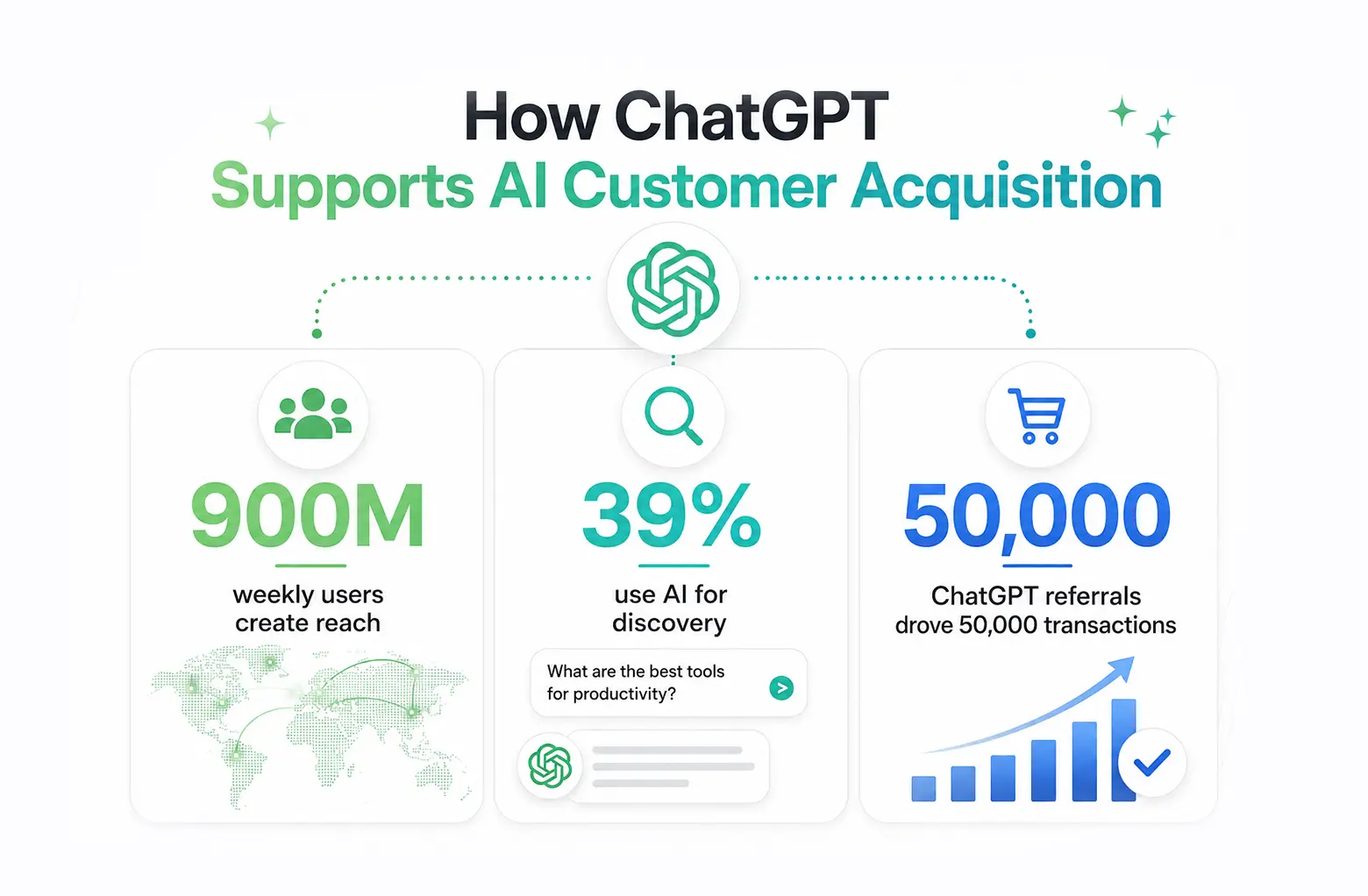
Before a business considers any advertising channel, it needs to know whether real customers are actually there. With ChatGPT, the answer is clearly yes. The platform has grown to hundreds of millions of active users globally, many of whom are asking the kind of purchase-intent questions that small businesses live and die by—like “who is the best accountant near me?”, “Where can I get a custom website in Toronto?” or “What landscaping company is reliable in my neighbourhood?”
Canadian use of ChatGPT has been steadily climbing as AI tools become part of everyday work and personal decision-making. For any business that currently runs Google Ads or Facebook Ads, this channel deserves serious attention right now.
Traditional advertising targets people based on who they are, including their age, location, interests, and browsing history. ChatGPT advertising operates differently for businesses. It targets people based on what they are actively trying to figure out or accomplish at the exact moment they are typing. This is intent-based advertising at its most direct.
Because the AI understands context and nuance in ways a keyword match cannot, it can connect a local plumbing company to someone asking, “Why does my water pressure drop at night?”—a query that reveals a genuine purchase need even without the word “plumber” in it. That kind of contextual relevance is new and valuable.
One of the persistent frustrations with digital advertising is that it interrupts the user experience. Examples include a banner ad appearing while you are reading or a pre-roll video playing before the content you actually wanted to view.
ChatGPT ads are designed to appear as part of the conversation itself—as relevant, clearly labelled suggestions that feel like a natural extension of the answer being given. For instance, if someone asks for the best way to set up an online store in Canada, a well-placed ad for a web development agency can appear as a genuinely useful recommendation rather than an unwanted distraction. That shift in format matters enormously for how customers receive and respond to your message.
Right now, very few small and medium-sized Canadian businesses are thinking seriously about ads on ChatGPT. The businesses paying attention today—who are reading articles like this one and talking to their marketing partners—have a rare window. Early movers in any new advertising channel tend to benefit from lower competition, lower costs per click, and first-mover brand recognition.
This advantage does not last indefinitely. As the channel matures and more advertisers enter, positioning becomes harder and costs rise. Canadian businesses that begin their research and preparation now will not be scrambling to catch up in twelve months.
A common misconception is that AI advertising replaces the need for strong website content and SEO.
It does not.
ChatGPT and other AI platforms pull from indexed web content to build their answers and recommendations. Businesses with well-structured, authoritative, clearly written website content are far more likely to be cited or recommended—whether through organic placement or paid ads.
When a customer clicks through from a paid ChatGPT ad and lands on a website that is sparse, confusing, or poorly written, the ad spend is wasted. The ad gets them to the door, but a weak website sends them straight back out. Before investing in any new advertising channel, the website it points to has to be genuinely ready to receive that traffic and turn it into a conversation or a sale.
There is a reasonable concern that advertising inside an AI conversation might feel deceptive or erode trust. The indication from how ChatGPT is building its ad product is that transparency is a core design principle—sponsored responses will be clearly identified as such, similar to how Google labels paid search results.
For Canadian consumers who are already attuned to authenticity and are increasingly cautious about who they buy from, this labelling approach provides a healthy foundation of trust between the advertiser and the reader. A business that shows up with an honest, helpful ad message in a relevant conversation has a real chance to build credibility rather than undermine it.
One of the most important practical questions for any business considering a new ad platform is ‘how do I know if it is working?’
With ChatGPT ads, the measurement infrastructure is still being built, but it is being built seriously. Advertisers will have access to performance data—including click-through rates, conversions, and cost metrics—similar to what they see on Google or Meta. As the platform matures, attribution tools will become more refined, allowing businesses to trace a customer’s path from an AI conversation to a purchase decision.
Getting comfortable with the basics of digital ad measurement now will make this transition far smoother when the time comes.
The groundwork you lay today will determine how well your business performs when this channel opens up fully.
Before you spend a dollar on ChatGPT advertising for businesses, you need to take an honest look at what exists online right now. This means reviewing your business’s website for clear, well-written service descriptions, accurate contact information, genuine customer testimonials, and structured content that AI systems can read and understand. If your website has thinly written pages, outdated copy, or missing service details, those gaps need to be addressed first. An ad can bring someone to your digital front door, but it has to be welcoming and informative when they arrive. A simple content audit today will reveal exactly where the work needs to happen tomorrow.
As AI advertising grows and third-party cookie tracking continues to decline, the businesses that will perform best are those that have their own customer data, including email lists, CRM records, purchase histories, loyalty program sign-ups. This kind of first-party data allows for more precise ad targeting, better retargeting, and smarter budget allocation. Canadian businesses that have been slow to prioritize list-building and customer data collection should treat this as an urgent priority, not a future task. Every customer interaction—whether it is online or in store—is an opportunity to gather permission-based data that will give you a real competitive edge on platforms like ChatGPT.
ChatGPT users are having conversations. They are asking questions in full sentences, and they expect answers that sound human and genuinely useful.
Businesses whose marketing language is stiff, overly formal, or packed with hollow promotional phrases are going to struggle to connect in this environment. The businesses that will thrive are those that communicate the way a trusted local expert would—directly, warmly, and with real information.
This is a good time to revisit your core brand messages and ask whether they actually explain what you do, who you help, and why a customer should choose you, without resorting to empty superlatives.
The skills required to run effective ChatGPT ads overlap significantly with—but are not identical to—traditional search advertising. Understanding how AI models rank and recommend content, how conversational queries differ from typed keywords, and how to structure ad copy for an AI context requires specific knowledge.
Canadian businesses are best positioned when they work with marketing partners who are actively studying this channel, not just waiting to see how it shakes out. Finding an agency or consultant who can speak to both the content strategy side and the paid media side of AI advertising will save significant time and money in the months ahead.
Understanding the platform is one thing. Understanding what it means for how your customers behave is another thing entirely.
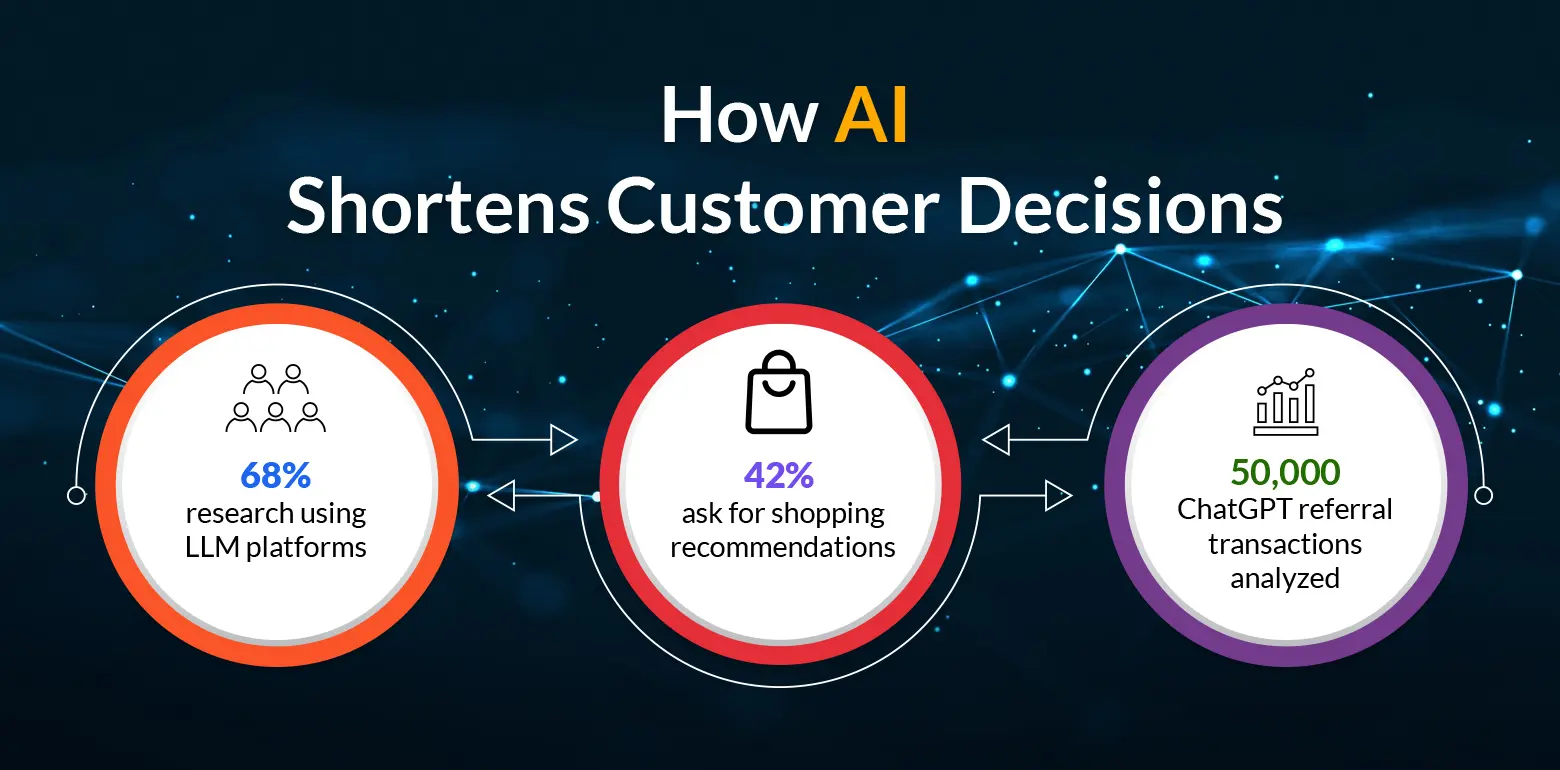
For a long time, the path from “I have a problem” to “I found someone to solve it” ran through multiple steps—a Google search, a few website visits, some comparison, then a decision. AI platforms are compressing that journey. A customer who asks ChatGPT “which Toronto agency can help me get more customers online?” may receive a confident recommendation and click through immediately, without ever opening a second tab.
Because the AI has already filtered and evaluated options on the customer’s behalf, the trust level arriving at your website is often higher than it would be from a cold search click. Businesses that understand this compressed journey will design their website and ad copy accordingly.
There is a tempting assumption that AI advertising will favour big national brands with enormous budgets. The evidence so far suggests that the opposite may be true for intent-based channels.
When someone asks an AI a specific, local question—like “what is the best Italian restaurant in Hamilton?” or “give me a plumber who works on older homes in Ottawa”—the AI is looking for the most relevant, credible answer to that specific query, not the largest advertiser. For small Canadian businesses with genuine expertise in a local market or a specific service niche, this specificity is a real asset. Being the most relevant answer to a precise question is far more achievable than being the most prominent brand in a broad category.
This is a point that does not get enough attention. AI systems like ChatGPT do not just read your website. They draw from the broader web, including reviews on Google, Yelp, and industry directories, mentions in local news, and social media conversations. A business with a strong pattern of positive reviews and credible mentions across the web is, in effect, feeding the AI the evidence it needs to recommend that business confidently.
Canadian business owners who have been neglecting their online reputation—not responding to reviews, not encouraging satisfied customers to leave feedback—should recognize that reputation management is now a direct input into AI advertising performance.
In most Canadian cities and most service industries, no one has figured out AI advertising yet as the playbook is still being written. This is uncomfortable for business owners who prefer proven, established channels, but it is an extraordinary opportunity for those willing to engage early.
The businesses that show up consistently in AI-driven recommendations over the next twelve to eighteen months will build a kind of credibility that is genuinely hard to displace. They will have reviews, citations, content, and ad history on the platform before their competitors have even opened an account. That is the kind of lead that compounds over time.
ChatGPT ads are not a distant possibility. They are an immediate reality that Canadian businesses need to understand and prepare for. The businesses that get ahead of this shift will not only capture more customers; they will build a digital presence that is genuinely hard to compete with. The tools are new, but the fundamentals have not changed: show up where your customers are, speak to them honestly, and make it easy for them to choose you. That is exactly what well-executed ChatGPT advertising for businesses makes possible. Start preparing today, and you will thank yourself in a year.
ChatGPT ads are paid placements that appear within AI-generated responses when users ask relevant questions. They are clearly labelled as sponsored content and are matched to the user’s stated intent, making them more contextually relevant than most traditional digital ad formats.
The ad platform is in active development and rollout stages. Canadian businesses cannot fully purchase placements yet in all formats, but preparing your digital presence and understanding the channel now puts you in the best position when full access opens up.
Pricing models have not been fully published, but early indications suggest cost-per-click structures similar to Google Ads. As with any new platform, early adopters tend to see lower costs before competition increases, making early entry financially advantageous for prepared businesses.
Yes, absolutely. A strong website with clear, well-written service pages, customer testimonials, and accurate business details is essential. If your site is thinly written or outdated, fix that first. Advertising drives traffic, and your website is what converts that traffic into actual customers.
Google Ads targets keyword searches in a list format. ChatGPT ads target conversational intent within an AI dialogue. The context is richer, the queries are more specific, and the customer is often further along in their decision-making, which can lead to higher quality leads for businesses.
For most Canadian small businesses, yes. The channel requires understanding AI content indexing, conversational ad copy, and evolving measurement tools. Working with a knowledgeable digital marketing partner will help you avoid common early mistakes and get better results faster.