
Most businesses already know that showing up online is not optional. The question is not whether to build a corporate brand digitally but where and how to do it well.
For companies selling to other companies, the playing field is not Instagram or TikTok. It is LinkedIn, where over one billion professionals gather to make real business decisions.
The decision-makers at major firms are scrolling through LinkedIn during their lunch breaks, evaluating vendors, reading thought-leadership statements, and making mental notes about which brands feel authentic. If your business is not visible there, someone else is filling that space.
This is where professional LinkedIn marketing services come in. They take the guesswork out of a platform that rewards strategy, consistency, and genuine value—not luck.
Here, we will discuss why LinkedIn marketing services play a significant role in expanding your corporate brand online to help you build lasting credibility and attract the right business clients.
LinkedIn is unlike any other platform, and the businesses that treat it that way are the ones that grow. Here is a closer look at what makes a focused LinkedIn strategy so valuable.
One of the most important differences between LinkedIn and every other social platform is the audience itself. On LinkedIn, you are not trying to cut through a sea of random videos and dinner photos to reach someone who might, eventually, need your product. You are speaking directly to the CFOs, operations managers, procurement officers, and executives who have both the authority and budget to act.
Professional LinkedIn marketing services are built around this reality. They help you craft messages, content, and campaigns that speak to those decision-makers in their professional language—not generic copy, but specific, relevant communication that earns attention.
The targeting tools available through LinkedIn’s ad ecosystem let you filter by job title, industry, company size and seniority, which means your message lands with the right people and not just the most people. The difference is significant when it comes to your return on investment.
Trust is the currency of B2B sales, and LinkedIn is one of the best places to earn it. When your company page is consistently active—sharing useful insights, posting about industry changes, and celebrating client wins—it signals that you are a stable and serious organization. Professional LinkedIn marketing services help you maintain that presence without it becoming a second job for your internal team.
Credibility is not just about how often you post; it is about what you post and how it is framed. A well-crafted thought leadership article from your CEO carries far more weight than a promotional banner ad. When buyers search your company name before a sales call—and they always do—they want to see evidence that you know your field. A strong, consistent LinkedIn presence gives them exactly that.
It is easy to post things on LinkedIn; it is much harder to post things that actually work. The difference lies in strategy. Professional LinkedIn marketing services help you figure out which content formats—articles, short posts, carousels, videos, or polls—perform best with your specific audience. For instance, a logistics company might find that short explainers about supply chain disruptions get three times the engagement of promotional content.
Without having that data-informed approach, you are mainly guessing. A proper content calendar keeps your brand visible without overwhelming your team. Consistency over time beats occasional bursts of effort. When you show up reliably with content that helps, educates or informs your audience, you earn and secure a place in their feed and eventually in their consideration set.
Organic content builds trust, but a sharp LinkedIn advertising strategy is what fills your pipeline with qualified leads. LinkedIn’s ad formats are specifically designed for professional audiences—sponsored content, message ads, lead generation forms, and dynamic ads each serve different stages of a buyer’s journey. The key is knowing which format to use, when to use it, and how to measure what is working.
B2B LinkedIn marketing professionals understand that a message ad sent to a cold audience rarely converts, but retargeting website visitors with a relevant case study often does. That kind of nuance takes time to develop through testing, and it is where working with experienced professionals pays for itself many times over.
Moreover, setting a realistic budget and bidding strategy on LinkedIn requires platform-specific knowledge that most internal marketing teams simply do not have on hand.
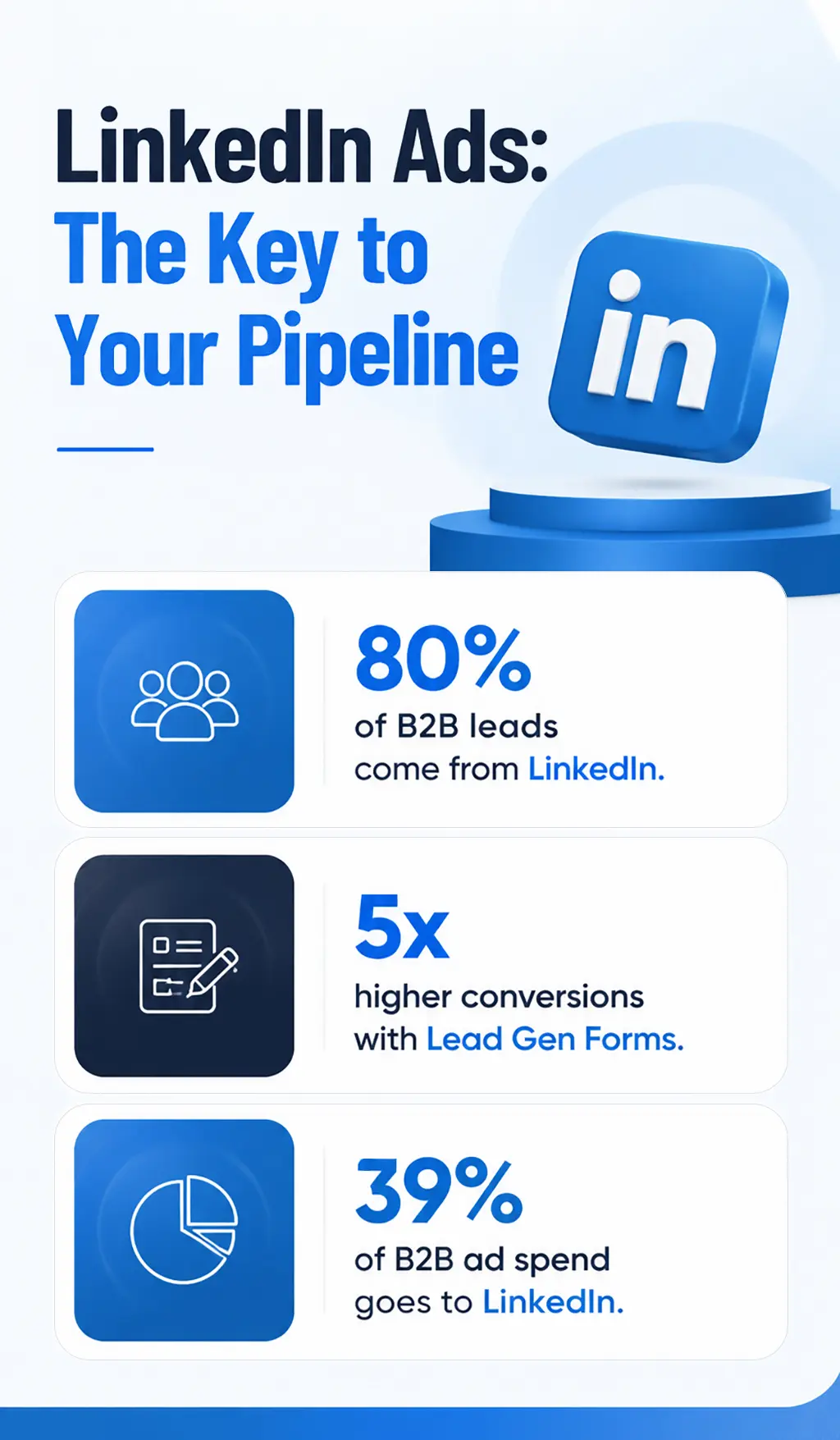
Getting someone’s attention on LinkedIn is just the beginning, not the end. LinkedIn lead nurturing is the ongoing process of staying present and relevant with prospects who are not yet ready to buy. This can include following up with helpful content after a connection accepts your request, sending a relevant article when a major industry shift occurs or simply engaging thoughtfully with a prospect’s posts over time.
Professional LinkedIn marketing services help you build these nurturing sequences in a way that feels human rather than automated and pushy. For instance, a series of three or four messages spaced out over a few weeks—each one adding genuine value—will almost always outperform a hard sales pitch sent on day one. The relationship has to come before the ask, and LinkedIn is perfectly designed for that kind of long-game approach.
Company pages matter, but so do the people behind them. One underused advantage of LinkedIn is employee advocacy—the idea that your team’s individual profiles, when active and on-message, significantly extend your brand’s reach. When your sales reps, executives, and subject-matter experts are posting, commenting, and sharing company content, each of their networks becomes an extension of your marketing.
Professional LinkedIn marketing services often include a component of employee training or profile optimization, ensuring that the humans behind your brand are as polished and credible online as your company page. LinkedIn’s algorithm tends to favour content from personal profiles over company pages, which means your people’s activity can earn more organic reach than corporate posts alone. This is a built-in advantage that most companies leave on the table.
None of the above matters without proper measurement. The real power of a structured LinkedIn marketing approach is knowing what is working, what is not and why. Follower growth, post reach, engagement rate, click-throughs, lead form completions, and cost-per-lead are all trackable but only valuable when viewed in context.
Professional LinkedIn marketing services provide regular reporting that goes beyond raw numbers. They tell you which content topics resonated, which audience segments clicked and where your ad spend delivered the best return. These regular reviews let your strategy evolve rather than staying stagnant.
The businesses that grow on LinkedIn are the ones that treat it as an ongoing learning process rather than a set-it-and-forget-it channel. Data provides you the permission and the strength to keep improving.
A strong LinkedIn presence is built on decisions made before the first post ever goes live. These four areas are where professional guidance makes the most tangible difference to how your brand shows up and how seriously it is taken.
A poorly set-up LinkedIn company page can undermine your credibility before a prospect ever reaches your website. Professional services make sure your page is complete, keyword-rich, visually consistent, and lined up with your overall brand identity. This includes a strong About section, proper use of the featured section, and a catchy call to action. First impressions on LinkedIn are quick and often final, so getting the base right matters more than most businesses realize at the start.
Before a single post is written or a single dollar is spent on ads, knowing exactly who you are talking to is essential. LinkedIn marketing professionals use platform data, industry research, and buyer persona development to define your ideal audience with precision. This work up front means every piece of content and every ad is built for a real person with real problems, not a vague demographic. Good audience research also helps you avoid wasting budget on reaching people who could never become clients.
One of the most common LinkedIn mistakes companies make is being inconsistent. A polished article one week, followed by a rushed promotional post the next, followed by nothing for a month can ruin trust rather than building it.
Professional LinkedIn marketing services establish a clear content voice and visual style that stays consistent across every post, every ad and every direct message. Consistency signals that your brand is organized, dependable and worth paying attention to. Over time, that reliability becomes a competitive advantage in itself.
LinkedIn advertising is not a one-and-done exercise. The most effective campaigns are built through cycles of testing that include trying different headlines, images, offers, and audiences, then doubling down on what performs.
Professional services bring the discipline and experience to run these tests intelligently rather than randomly. For example, an A/B test between two ad creatives might reveal that one drives twice the click-through rate simply because of how the headline is worded. That kind of knowledge compounds over time, making each campaign more efficient than the last one.
Even reputable companies can work against themselves on LinkedIn. Being aware of what to avoid is as important as knowing what to do, and these four patterns come up again and again.
Many companies treat LinkedIn like a digital bulletin board—posting announcements, job listings and the occasional industry article with no real plan behind it. Without a strategy, there is no narrative being built, no audience being nurtured, and no measurable goal being pursued.
Posting without direction is the most common reason businesses look at their LinkedIn page after a year and wonder why it has not done anything for them. Strategy is not optional. It is the difference between a page that sits quietly and one that actively generates business.
LinkedIn rewards engagement, and that engagement goes both ways. Companies that only broadcast content without responding to comments, asking questions, or joining conversations in their industry miss a valuable opportunity to interact with their customers. The comments section is where relationships start. An unbiased reply to a prospect’s comment can begin a conversation that eventually turns into a sales call.
Professional LinkedIn marketing services include active community management as a core component. Engagement builds the kind of trust that no advertisement can replicate on its own.
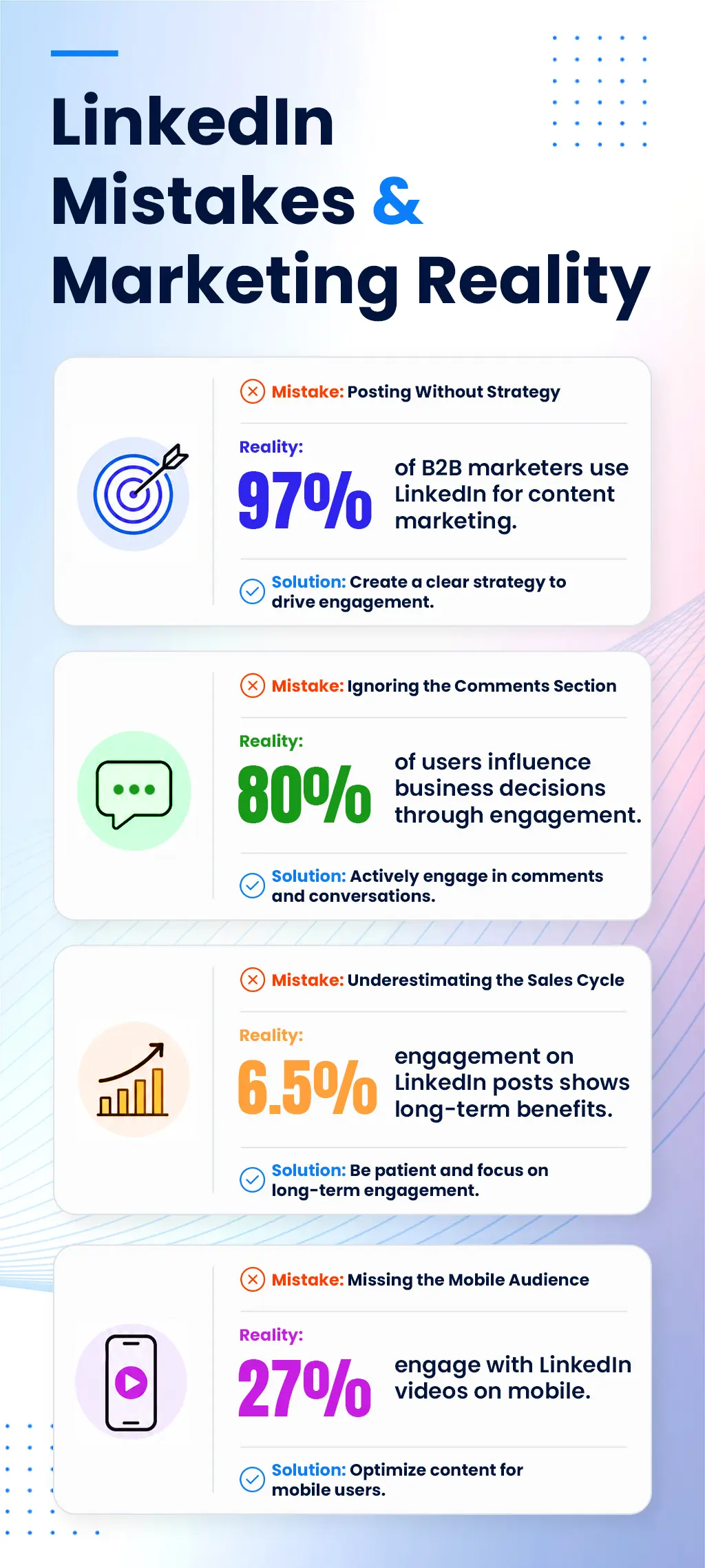
B2B sales cycles are long. On average, a corporate buyer might spend six to twelve months in a research and evaluation phase before making any contact with a vendor. Businesses that expect fast results from LinkedIn are often disappointed. This is not because the platform does not work, but because they are measuring it against the wrong timeline. Professional services help set realistic expectations and build the kind of presence that pays off over quarters, not days. Patience, paired with consistent execution, is what separates the companies that succeed on LinkedIn from those that opt out too soon.
A large portion of LinkedIn users read content on their phones during commutes, breaks and between meetings. Content that is not written and formatted with mobile in mind—long unbroken paragraphs, tiny text in images, videos without captions—loses readers before it ever has a chance to make an impression. Professional LinkedIn marketing services account for mobile behaviour in everything they produce. Short sentences, clear formatting, captioned video, and thumb-friendly layouts are not optional add-ons. They are the baseline for content that gets read and remembered.
Building a strong corporate brand on LinkedIn takes more than good intentions; it takes a clear plan, consistent execution, and the right expertise. Professional LinkedIn marketing services give you all three. Whether you are just starting to build your presence or looking to strengthen what you already have, investing in a focused LinkedIn strategy is one of the most practical decisions a B2B company can make today. The platform is where your buyers already are. The only question is whether your brand will be there to meet them.
LinkedIn marketing services include profile and company page optimization, content strategy, post creation, paid advertising management, audience targeting, lead nurturing campaigns and performance reporting. The scope varies by provider, but the goal is always to build a quantifiable and credible presence that drives authentic business outcomes.
Most businesses begin to see valuable engagement improvements within two to three months of consistent effort. However, tangible pipeline results like qualified leads and converted clients typically take six months or more, reflecting the longer decision-making cycles common in B2B environments.
Yes, particularly for B2B-focused small businesses. LinkedIn allows precise audience targeting, which means even a modest budget can reach highly relevant decision-makers. Small businesses with a clear niche and a specific target client often see strong returns because their messaging can be very focused and personal.
Most marketing professionals recommend posting three to five times per week for company pages. Consistency matters more than frequency, so an organized schedule of three quality posts per week outperforms seven rushed ones. Frequent posting ensures credibility and keeps your brand visible in your audience’s feed.
Organic content builds credibility and trust through regular posting and engagement. Paid advertising generates faster, more targeted reach and is mainly useful for specific campaigns like product launches or lead generation. The most effective LinkedIn strategies combine both, with each supporting the other.
The most important metrics include follower growth, post impressions, engagement rate, click-through rate on ads, cost-per-lead, and lead form completion rates. The most important measure depends on your goal; brand awareness campaigns prioritize reach and impressions, while lead generation campaigns focus on conversion rates and cost efficiency.