
Voice assistants have subtly changed how people find local businesses. Instead of typing a query into a search bar, millions of Canadians now speak their searches aloud while driving, cooking, or walking through a mall. The assistant answers back with one recommendation, sometimes two, and that response determines which business gets the call.
The businesses showing up in those answers did not get there by accident. They made deliberate choices about how their digital presence is structured, maintained, and verified. Most of their competitors have not made those same choices yet.
When people used to Google ‘SEO optimization near me’, the preferred ranking meant appearing high on a Google results page. Now, the goal is to become the one answer a voice assistant reads aloud when a customer asks for a local recommendation.
Here, we will discuss how Siri, Alexa, and ChatGPT decide which local business to recommend.
Table of Contents
Voice assistants do not browse the web the way a human does. They pull from structured data, verified listings and trust signals to select one confident answer. Here is what sits behind that decision.
Every voice assistant that returns a local business result relies, at some level, on structured business data. Google Business Profile sits at the centre of that data ecosystem. When Siri asks Yelp and Google for a plumber near you, both sources check whether that plumber has filled out their profile completely. Name, address, phone number, hours, categories, photos and website must all be present and accurate. Businesses that have answered Google’s Q&A section and kept their hours updated during holidays consistently rank above businesses that treat their profile as a one-time setup task. A partial profile signals an unreliable business to the algorithm, even when the actual service is excellent.
NAP stands for Name, Address and Phone Number. Voice assistants cross-reference your business listing against dozens of directories, including Yelp, Yellow Pages, Apple Maps, Bing Places and Foursquare. When your business name appears differently across those platforms, the algorithm reads inconsistency as a risk signal. A business listed as “ABC Agency” on Google and “ABC Agency Inc.” on Yelp introduces a small doubt as to its trustworthiness. Compounded across many directories, this lowers the confidence score the assistant assigns to your listing.
Correcting NAP errors is one of the lowest-effort, highest-return fixes available to any local business owner who wants to rank in voice results.
Voice assistants prioritize businesses that people genuinely engage with. Reviews are the clearest public signal of that engagement. For instance, a restaurant with 200 reviews and a 4.3-star average will nearly always outrank a restaurant with 40 reviews and a 4.8-star average in voice search results. The volume of reviews signals popularity. The recency signals that the business is still operating and still serving customers well.
Asking satisfied customers for a review immediately after a positive experience, rather than at the end of the month, produces a steady stream of fresh reviews that voice algorithms reward. Conversely, unanswered negative reviews are a penalty because they suggest the owner is not paying attention to customer service.
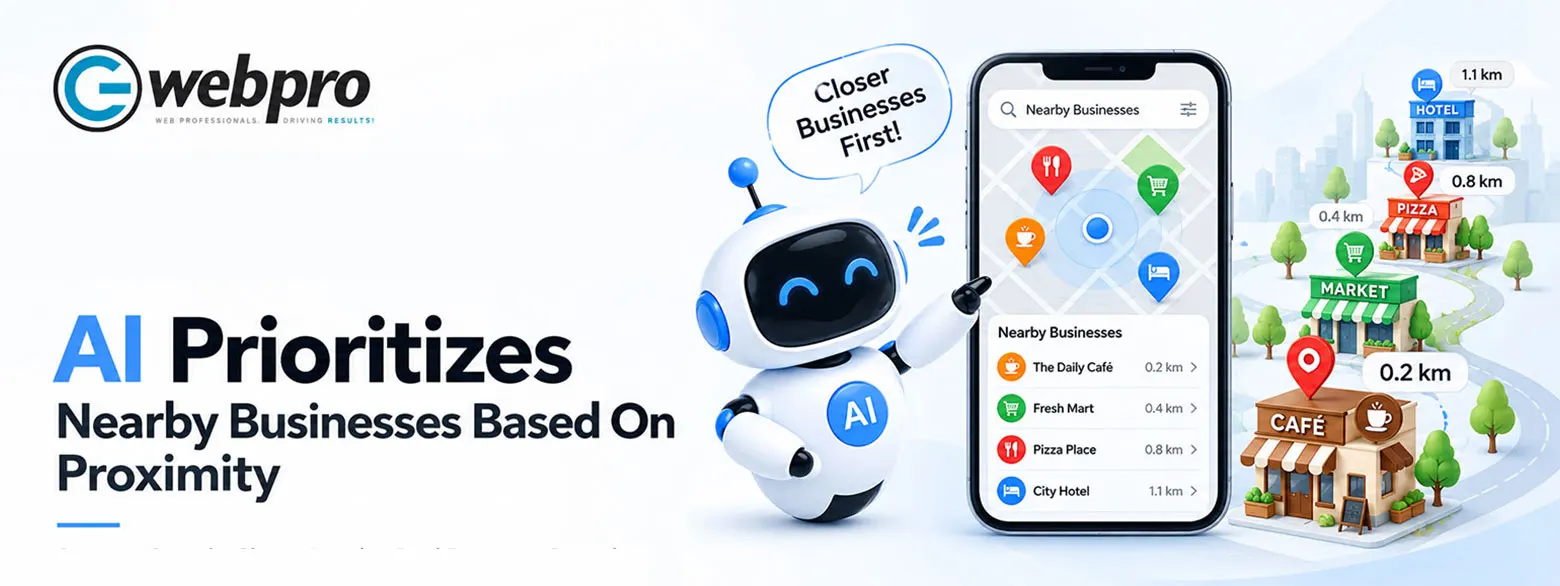
Understanding how near-me search works begins with one hard rule: proximity is applied before any other ranking factor is evaluated. A voice assistant told to find a “dentist near me” will almost never recommend a dentist several kilometres away, regardless of how many reviews that dentist has earned. This is why SEO optimization for “near me” searches is fundamentally a local game.
Your physical address, your service-area settings inside Google Business Profile, and your website’s location signals all determine whether you even enter the candidate pool. Businesses that specify service areas in addition to a primary address capture searches made in neighbourhoods slightly outside their immediate surroundings.
Voice assistants, particularly those powered by AI, pull answers directly from website content when no structured business data is available. A business website that includes city-specific pages, addresses local questions clearly and earns credible links from other local sources carries more authority than those that do not.
For instance, a page titled “Web Design Services in Toronto” that genuinely explains what the service includes, who it serves and what the outcome looks like is far more useful to an AI than a generic services page with no location context. Thin, templated pages rarely earn voice search placements. But local landing pages built with real specificity signal genuine expertise to both AI systems and human readers.
Schema markup is code placed on a website that tells search engines and AI models exactly what type of business you are, where you are located, and what you offer. Adding LocalBusiness schema, along with Service and Review schema where appropriate, gives voice assistants a reliable, machine-readable summary of your business without requiring them to interpret your copy.
Implementing structured data is one area where most local businesses have not yet acted, which means those who do gain a meaningful edge over competitors who haven’t. Properly marked-up sites are easier for AI systems to index, cite, and recommend with confidence than those relying entirely on unstructured text.
Voice search optimization begins with understanding how people speak and not how they type. A typed search might read “best plumber Toronto.” That same search, spoken aloud, becomes “Who is the best plumber near me in Toronto?”
Website content written entirely in keyword-dense fragments does not answer those spoken questions well. Pages that include full sentences addressing common concerns, written the way a customer would actually ask a question, are far more likely to surface in a voice result.
Adding a well-written FAQ section to key service pages, in the conversational register a real customer uses, directly supports this goal and meaningfully improves ranking.
ChatGPT and other generative AI tools approach local recommendations differently than traditional voice assistants. Understanding the signals that matter in this newer context is valuable for any business that wants to stay visible in the years ahead.
When ChatGPT recommends a local business, it draws from a combination of sources. This includes its trained knowledge base, live web search results (when search is enabled) and publicly available review platforms. This means businesses with a strong presence across multiple credible online sources carry more weight. A business mentioned positively in blog posts, news articles or industry directories has a better chance of appearing in a ChatGPT recommendation than one whose only presence is a single Google listing. The depth and diversity of a business’s digital footprint matters more in this context than it does in a traditional Google search, where one strong listing can carry the day.
When a local business is mentioned by name in blog posts, community forums, local news sites and social media discussions, those mentions accumulate into a signal that AI models recognize as social proof. Siri, Alexa and ChatGPT all weigh these mentions differently, but they share the principle that a business talked about by real people carries more credibility than one that exists only as a listing.
Building this kind of earned visibility takes time. It requires consistent, high-quality publishing and outreach so that the business name appears in contexts that reinforce authority rather than dilute it.
Businesses that respond quickly to reviews, answer questions on their Google profile and maintain an active social media presence generate engagement signals that AI systems read as indicators of reliability. A business that last responded to a customer review in 2022 sends a very different signal than one that responds within 24 hours.
Siri pulls Apple Maps data and Yelp reviews; ChatGPT pulls from live search results and review aggregators. In both these cases, recency and responsiveness factor into which business surfaces as the recommended answer.
Ranking in “near me” searches takes more than setup. Good SEO optimization of your Google Business Profile and directory listings is ongoing work.
Generative AI tools, including AI-powered Bing and Google’s Search Generative Experience, increasingly cite specific pages when answering questions. A business that publishes clearly understandable content on its website that answers questions, whether in blog posts, FAQ sections, or service pages, gives these tools something to cite. A business without that content is simply invisible to the citation layer.
For instance, a well-written FAQ page addressing a customer’s top five pre-purchase questions is far more likely to be cited by an AI tool than a generic homepage with no specifics. Building structured and informative pages turns a business’s website from a digital brochure into an active source of local authority.

Appearing consistently in voice and AI search results is not a one-time project. It is an ongoing maintenance task that rewards businesses that treat their digital presence with the same care they bring to their physical space.
Search engines and AI models both update their understanding of the world as new content appears. A business that publishes one blog post per month on a topic relevant to its service area signals ongoing activity, subject matter expertise and community relevance. Over time, this creates a library of content that AI tools can draw on when forming answers to local questions.
Businesses that publish on consistent schedules are indexed more frequently by search crawlers, meaning their most current information is available faster. A dormant website, by contrast, tells an algorithm that the business may no longer be active or relevant in that space.
A link from a reputable local source, such as a city business association, a local news outlet or a community directory, tells search engines that your business is genuinely embedded in a specific area. Voice assistants and AI tools weigh geographic authority when selecting which businesses to recommend in response to a location-based query. For instance, a web design firm mentioned in a Toronto business resource article carries more local authority than the same firm with only directory listings to its name.
Building these local relationships takes time, but the ranking benefit compounds in a way that paid advertising alone cannot replicate over the long term.
Most voice searches happen on mobile devices. If your website loads slowly, displays poorly on a phone screen or requires zooming to read, users leave before a voice assistant even considers citing your page. Page speed, mobile responsiveness and proper call-to-action placement are not optional features. They are baseline requirements for any business that wants to appear in the results Siri or Google Assistant reads aloud.
Google’s Core Web Vitals scores, which measure loading speed, interactivity and visual stability, factor directly into local search rankings and, by extension, into voice search eligibility for any given query.
Business information, including phone numbers and addresses, change and even hours of operation shift seasonally. When those changes are made on one platform and not corrected across the full network of directories and listings, the resulting inconsistency slowly erodes your online ranking.
Most business owners do not discover this erosion until a competitor has already claimed their position. Conducting a full citation audit at least twice per year, correcting errors promptly and monitoring review platforms for new questions and comments keeps the base solid. Businesses that treat this maintenance work as a standing part of operations and not an afterthought, remain consistently visible in voice and AI results over the long term.
Voice assistants and AI tools are selecting local business winners based on trust signals most business owners have never been told about. The businesses appearing in those spoken recommendations built their visibility through consistent, deliberate work on their listings, their websites and their reputations. For any business owner serious about SEO optimization for local “near me” searches, the path forward begins with getting the fundamentals right and maintaining them with genuine care.
Siri pulls from Apple Maps and Yelp when responding to local business queries. It evaluates the completeness of your listings, the volume and recency of your reviews, your proximity to the searcher and whether your information is consistent across major directories. Businesses that have fully completed their Apple Maps listing and actively maintain their Yelp presence have a clear advantage over businesses with incomplete or inconsistent profiles.
When ChatGPT has web search enabled, it can pull current information from review platforms, business websites, and online directories. Without search enabled, it draws from its training data, which may be months or years old. Businesses that maintain a strong, consistent presence across multiple online sources are more likely to appear in ChatGPT recommendations regardless of which mode is active.
Proximity is the dominant filter, but it cannot be controlled directly. Among the factors businesses can control, a fully completed and consistently accurate Google Business Profile has the broadest impact. Reviews, website quality, and structured data all build on that foundation. Without a solid Google Business Profile, the other factors have limited effect on voice search performance.
Traditional SEO includes ranking a webpage on a results page where the searcher sees multiple options. Voice search means being the single spoken answer returned by an assistant. The competition is for one position and not ten. This shifts focus away from backlink quantity toward trust signals like listing accuracy, review recency and conversational content. Writing in natural language becomes far more important than keyword density.
A thorough review of all listings at least twice per year is a reasonable minimum. Any time your business information changes, such as a new phone number, updated hours or a new service offering, corrections should be applied across all platforms immediately. Review platforms should be monitored continuously, with responses posted within 24 to 48 hours. Businesses that treat listing maintenance as an ongoing responsibility consistently outperform those who treat it as a one-time task.