
Online shopping has come a long way. It is no longer just about browsing a website and making a quick purchase. The landscape is transforming, and, today, AI-driven technology plays a very important role in shaping the shopping experience.
As consumers expect smarter, more tailored shopping interactions, businesses must adapt to stay competitive. This evolution is called agentic commerce, where AI not only supports businesses but also leads the decision-making process for consumers.
At the heart of this transformation is the integration of AI in e-commerce, which enables personalized experiences and smooth interactions. With tools that understand customer preferences, predict needs, and make real-time decisions, AI has completely changed the way we shop online.
Keep reading to explore how AI-driven shopping and agentic commerce are shaping the future of e-commerce, altering consumer behaviour, and creating more intuitive online shopping environments.
TABLE OF CONTENTS
The impact of AI in e-commerce goes beyond automation. It’s about enhancing the entire shopping journey. With advanced technologies like machine learning and data analytics, AI can tailor experiences in ways we never imagined before.
One of the valuable benefits of AI is its ability to offer personalized shopping experiences, which often evolve into what we call AI-powered buying experiences. As e-commerce trends shift toward more personalized and efficient shopping methods, AI is becoming a driving force in these changes. When AI analyzes customer data, it doesn’t just offer the same products to everyone. Gone are the days of scrolling through endless pages of irrelevant items. Today, AI tailors the shopping experience to your unique preferences.
For example, think about how you often see product recommendations based on your past purchases or browsing behaviour. This type of personalization makes online shopping feel more like a curated experience, where the products you see are aligned with what you might actually need.
Have you ever wondered how certain online stores seem to know exactly what you want? This is where AI-driven product recommendations come into play. By tracking customer behaviour and analyzing past purchases, AI algorithms suggest items that are likely to match a shopper’s tastes.
Instead of scrolling through pages of products, AI narrows down the choices to the most relevant items. This streamlines the decision-making process, making it quicker and easier to find exactly what you’re looking for. The result? You spend less time searching and more time enjoying your purchases.
Online stores are increasingly using AI to customize storefronts for individual users. When you visit an e-commerce website, AI can change the layout or product recommendations based on your previous interactions with the site. This creates a more engaging and intuitive experience.
Rather than seeing the same generic homepage, you are greeted with content specifically designed for you. It’s like having your own personal shopper who knows exactly what you like, without the need to endlessly search for what you want. This type of customization makes the shopping process feel much more intuitive and engaging.
Behind the scenes of your online shopping experience, AI is also working to ensure that products are available when you want them. AI-powered inventory management helps retailers predict demand, track stock levels, and manage warehouse operations more efficiently.
For you, this means fewer out-of-stock notifications and faster order fulfillment. When AI handles inventory in real time, you get better product availability, making your shopping experience smoother and more reliable. It’s a perfect example of how AI works in the background to improve the overall shopping process.
Understanding consumer intent is a major challenge for any e-commerce business. However, AI’s ability to track and analyze behaviour helps solve this issue.
For instance, AI identifies patterns such as how long you spend on a product page or what items you browse next. With this data, it can predict future purchases and offer personalized suggestions at just the right time. This helps influence buying decisions by presenting the right products when you’re most likely to buy.
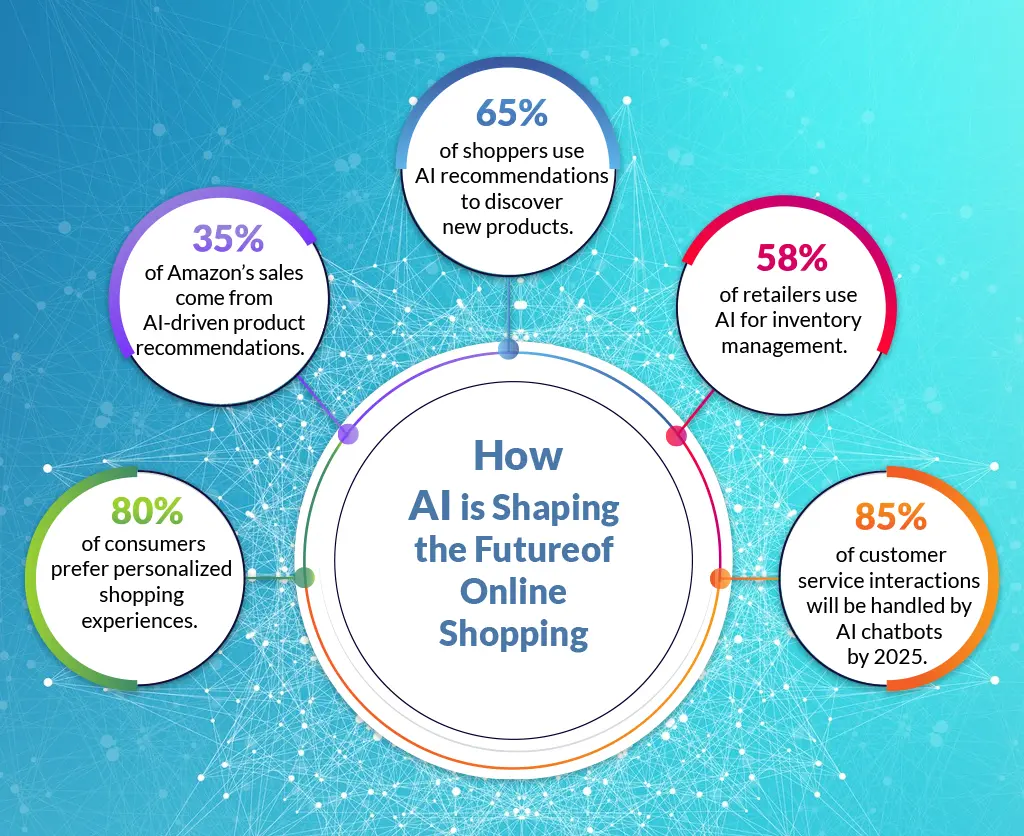
Virtual shopping assistants powered by AI are revolutionizing online shopping. These intelligent assistants guide customers through the shopping journey by answering questions, providing product information, and even helping with the checkout process.
Available 24/7, AI-powered assistants are always ready to provide assistance across different time zones. Whether you are looking for specific product details or need help with shipping policies, these assistants offer a more interactive and satisfying customer service experience.
AI chatbots are becoming a standard feature in online shopping, handling a wide variety of tasks and improving customer service across the board. Whether it’s answering simple product queries or assisting with returns and exchanges, chatbots are ready to help.
These AI-powered tools can manage a high volume of requests simultaneously, making them both efficient and cost-effective. By reducing wait times, chatbots offer instant support when it is needed most. This not only improves the speed of service but also the overall reliability of customer support.
Agentic commerce takes AI’s role in shopping a step further by introducing autonomous, intelligent agents that act on behalf of the consumer. These agents do more than offer product recommendations—they handle decisions and actions based on consumer preferences and needs.
Autonomous shopping agents are AI systems that not only help consumers make decisions but also complete purchases for them. These agents can monitor products, track prices, and automatically buy items when they become available or meet certain criteria. This convenience is changing the way we shop, speeding up the process and cutting down on the time spent comparing options. As these agents grow more reliable, they also reflect a deeper understanding of AI and consumer behaviour, with shoppers increasingly trusting them to make purchases based on data-driven insights into their unique preferences.
As AI shopping agents gain traction, they have a significant impact on purchasing decisions. Rather than relying solely on human judgment, consumers are starting to trust AI agents to make shopping decisions for them. These agents analyze data, predict what products will be the best fit, and act quickly. This trust in AI is changing the way people approach online shopping, giving agents more influence over what people buy and when they buy it.
AI has drastically improved the level of convenience customers experience. AI technology in retail is allowing businesses to provide faster, more personalized service by automating various aspects of the shopping process. AI-driven features like predictive shopping and automated order processing mean that consumers can shop faster, with fewer steps involved. These features are especially useful for customers who know exactly what they want. Instead of spending time browsing, they can rely on AI to suggest the right product and handle the transaction, streamlining the entire process.
AI has the unique ability to analyze vast amounts of data to understand what consumers really want and need. By processing customer interactions, purchasing habits, and even social media behaviour, AI creates a profile of preferences. This knowledge allows AI agents to make shopping suggestions and guide decisions with remarkable accuracy. Consumers no longer have to search through endless products—they get instant suggestions based on what they are most likely to enjoy.
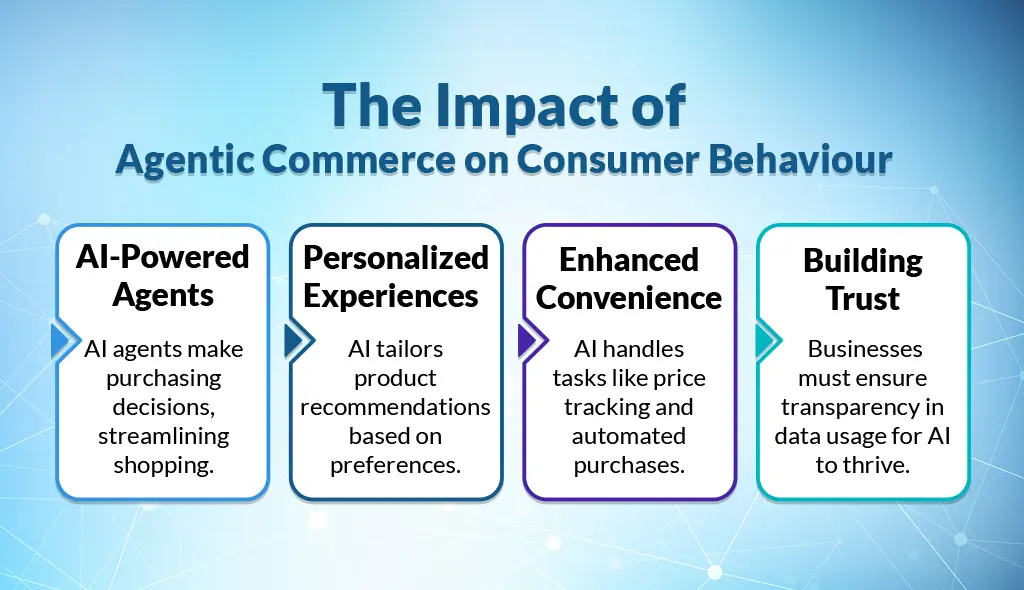
While AI-driven shopping is convenient, it also raises questions about trust and transparency. How do consumers know that their data is being used responsibly? How can they be sure that AI agents are recommending products based on their best interests?
For agentic commerce to grow, businesses must prioritize transparency, providing clear information about how AI works and how their customers’ data is being used. This trust is essential in convincing consumers to embrace AI as part of their shopping routine.
Shopping, especially online, can be exhausting. The sheer volume of options and information can overwhelm a person. AI helps by narrowing down choices based on individual preferences. By offering only the most relevant products, AI reduces the burden of decision-making. This makes shopping easier and more enjoyable, as consumers are presented with a more manageable selection.
Pricing is one area where AI can have a huge impact on the shopping experience. AI can analyze factors like demand, competition, and inventory levels to offer dynamic pricing. This means that prices may fluctuate in real-time, allowing businesses to adjust prices for maximum profitability while offering consumers better deals. AI-driven pricing models can also predict when discounts or promotions will be available, helping consumers make purchasing decisions at the right time.
AI-driven e-commerce is no longer just a trend. It’s the future of online shopping. The rise of agentic commerce, with its autonomous agents and intelligent recommendations, is transforming consumer behaviour and the overall shopping experience. As AI continues to evolve, businesses like G Web Pro are helping companies harness the power of AI to create better, more personalized experiences for their customers. By understanding how AI influences purchasing decisions and streamlining shopping processes, e-commerce companies can remain competitive in an ever-changing market.
Agentic commerce refers to a shopping model where autonomous AI agents help with online purchases by interpreting user intent, comparing options, and acting on behalf of the shopper. These AI systems go beyond simple recommendations or chatbots by taking actions such as finding products, comparing prices, and even completing transactions automatically.
AI is reshaping how consumers interact with online stores by studying patterns in browsing and buying, predicting preferences, and offering tailored suggestions. This interaction between AI and consumer behaviour changes the way shoppers evaluate options, decide what to buy, and complete purchases.
AI is used in many parts of online retail, such as recommending products, powering chatbots for customer support, forecasting demand and inventory, and personalizing the entire shopping experience. These uses help brands meet modern e‑commerce trends and consumer expectations.
Consumer trust varies. While many shoppers enjoy the convenience of AI recommendations and tools, fully transferring decision‑making to AI agents still raises concerns. Some people prefer AI support for research and suggestions rather than handing over complete control of buying decisions to algorithms.
AI is changing how digital shopping works, but it is not replacing humans entirely. Instead, AI systems help with tasks like sorting products, offering suggestions, or completing routine actions. Human choices and strategic decisions still guide many parts of buying and selling. Retailers and brands will adapt their systems so both people and AI tools can serve customers effectively.