
FIFA 2026 is coming to Canada, the United States, and Mexico, marking the first time the tournament will be hosted across three countries. With kickoff only about five weeks away, franchise owners no longer have months to plan broad campaigns. The focus now needs to be speed, clarity, and execution.
For franchises, this moment is different from a regular local promotion. A single-location business can move quickly on instinct, but a franchise has to balance brand consistency, local flexibility, approved offers, staff readiness, and multi-location reporting. That makes the next few weeks critical for those doing franchise marketing for FIFA 2026.
The good news is that there is still some time to make an impact. Franchise owners and marketing teams can utilize the tournament to increase foot traffic, grow customer lists, build local visibility, and strengthen brand loyalty. The important thing is to focus on actions that can be launched quickly, measured easily and adapted across different locations.
Let’s discuss how franchises can leverage FIFA 2026 to maximize their reach, boost local engagement, and build momentum that lasts beyond the final whistle.
Below are seven practical ways franchise owners can make the most of the tournament, even with only a few weeks left before kickoff.
At this point, the goal is not long term planning but a fast, organized execution. Franchise owners should set up a simple five-week campaign sprint that covers what needs to happen before, during, and immediately after the tournament begins.
Begin with the basics. Make a decision about which locations are able to run promotions, which offers are approved, which creative assets are ready, and which channels will be used. Franchisors should provide clear campaign guidelines so local franchisees are not creating disconnected messages on their own.
This is especially important for franchise brands because one poorly planned local campaign can affect the larger brand image. A short campaign calendar is able to help each location stay aligned. Include email dates, social media posts, in-store signage, paid ad timing, and staff reminders.
Instead of trying to set up a large campaign from scratch, focus on what can be launched in a much quicker way. A proper offer, a few approved graphics, a short email sequence, and a match day operations plan can do more than a complicated strategy that never gets executed.
Franchise marketing works ideally when the brand feels both familiar and local. At the time of FIFA 2026, customers will be looking for places that share the excitement of the tournament. Franchise locations can use this energy to connect with their communities while still staying within brand rules.
Corporate teams should give approved templates for posters, social media graphics, email banners and in-store messaging. Franchisees can then personalize these materials with local references, neighbourhood names, store-specific offers, or community events.
For example, a franchise location in a host city is able to highlight nearby match day traffic, extended hours, or special services for fans. A location outside a host city can focus on watch parties, national pride or local soccer clubs.
This is where FIFA 2026 marketing strategies for franchises differ from general local business promotions. The brand needs to feel consistent across all locations, but each franchise should still have room to speak to its own community. That balance helps build trust and keeps the campaign from feeling basic.
Franchise owners should also be careful with tournament related branding. Unless the business is an official sponsor, it should avoid using protected logos, official marks or language that suggests a formal partnership. The safer approach is to utilize general soccer, match day, fan and community-focused messaging.
Match day offers can drive strong short-term traffic, however franchises need to keep them simple and consistent. A single-location business can change a deal at the last minute. A franchise system needs approved offers that staff can explain easily, and customers can understand quickly.
Good match day offers include limited time bundles, free add-ons, loyalty points, group deals or discounts during specific hours. For food franchises, this could mean a match day combo. For fitness franchises, this could be a limited trial package tied to the tournament season. For service franchises, it could be a special booking incentive during the FIFA 2026 window.
The offer should be simple enough to apply across multiple locations. Avoid complicated rules, unclear discount codes or promotions that require too much staff explanation. If the customer needs to ask three questions before understanding the deal, it is too complex.
Franchisors should also give franchisees a proper offer menu. Some locations may have different inventory, staffing or customer demand. A controlled set of approved options lets each location choose what fits while keeping the overall brand aligned.
Track each offer by location. This helps the franchise system understand which promotions performed best, which markets responded strongest, and which ideas should be used again after the tournament.
Social media will be busy throughout FIFA 2026. Franchise brands should use both corporate pages and local franchise pages to stay visible. The corporate account can support the larger brand message, while individual locations can show real people, real customers and local excitement.
This is an important franchise advantage. A single corporate page may have reach, but local pages often have stronger community relationships. So it’s better to use both.
The corporate team can publish approved campaign posts, match reminders, general soccer-themed content, and brand-wide offers. Local franchisees can share staff photos, customer moments, behind-the-scenes clips, local partnerships, and store-specific updates.
Short videos are able to work especially well. A clip of staff preparing for a busy match day, a local customer reaction or a quick reminder about a limited time offer can feel more natural than a polished ad. The goal is to join the conversation without sounding like a billboard.
Franchise owners should also respond quickly to comments and messages. During a fast-moving event, customers may ask about hours, availability, wait times, bookings, or offers. A quick response can turn interest into a visit.
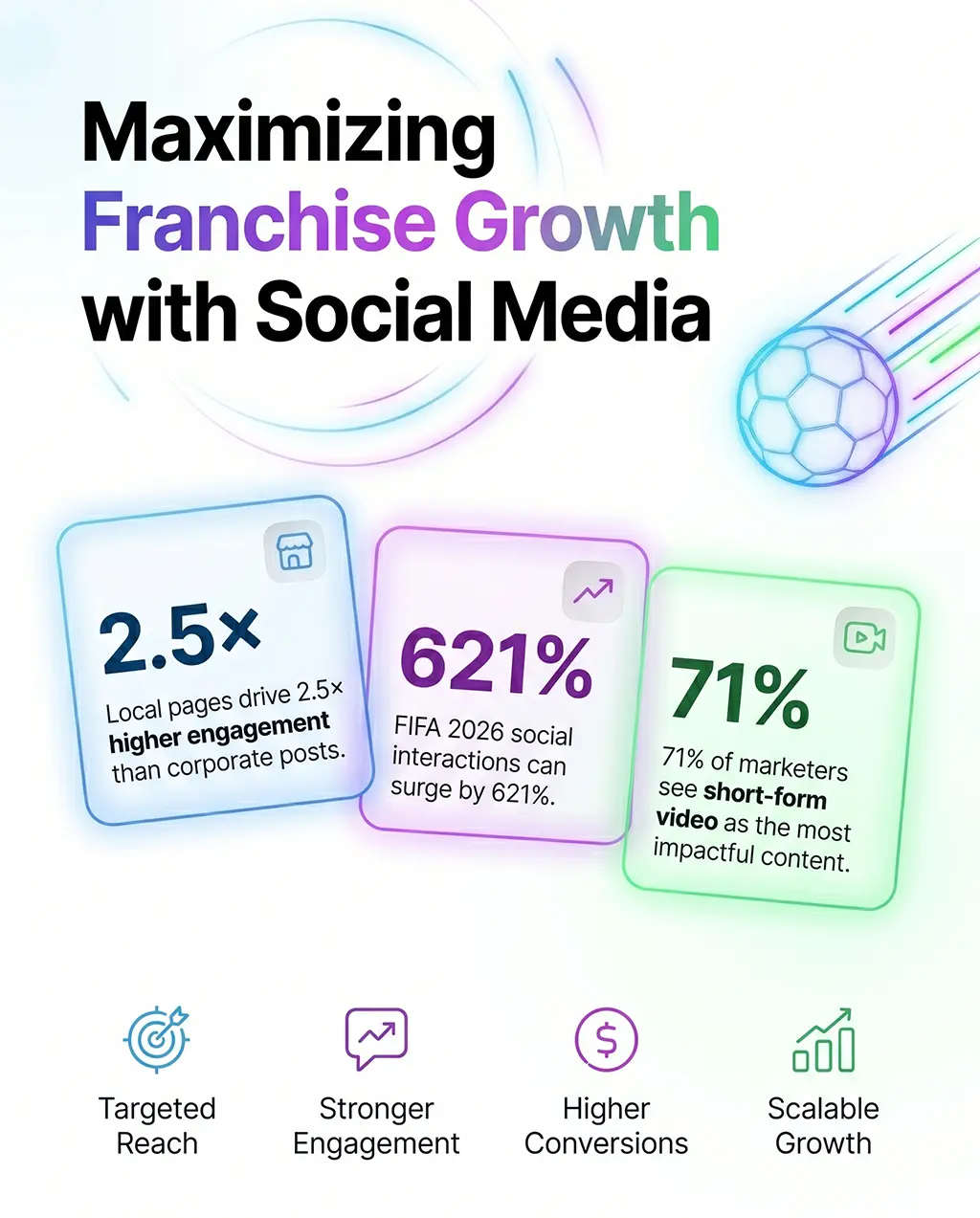
Franchisees know their local markets better than anyone. That makes local partnerships a smart way to extend reach without depending only on paid ads.
A food franchise can partner with a nearby gym, sports store, community centre, or local soccer club. A service franchise can team up with hotels, event spaces, transportation providers, or tourism-related businesses. A retail franchise can work with neighbourhood organizations to create tournament-themed promotions or giveaways.
The franchisor should set partnership rules to protect the brand. These rules can cover logo use, offer language, co-branded materials, approval steps and social media guidelines. Once those rules are clear, franchisees can move quickly.
This local partnership model is one of the strongest paths for franchise growth through sports events because it lets each location connect with nearby audiences while supporting the larger brand campaign.
The best partnerships are not complex. Cross-promote each other’s offers, share social posts, create a joint match day bundle or host a small local event. With only a few weeks left, avoid partnerships that require heavy planning or complicated logistics.
Marketing can bring customers in, operations determine whether they come back. Franchise owners should use the next few weeks to prepare staff, inventory, scheduling, and customer service processes.
This matters even more for franchises because customers expect the same quality from one location to another. If one store is overwhelmed, understaffed, or unclear about the promotion, it can hurt the entire brand experience.
Create a short staff playbook for the FIFA 2026 campaign. It should explain the offers, expected busy times, customer service scripts, refund or substitution rules, and how to answer common questions. If tourists visit your location, include service reminders and basic welcoming language.
Franchisees should also review staffing levels around major matches. Locations near host cities, hotels, transit hubs, entertainment districts, or viewing areas might need extra support. Even locations outside host cities may see traffic spikes around key games.
Inventory and technology should also be tested. Make sure POS systems, online ordering, booking tools, loyalty apps, and payment systems are ready. A great offer will not help if customers face long delays or technical issues.
A franchise campaign should not be judged by guesswork. Every participating location should track performance before, during, and after the tournament.
Useful numbers include Google Analytics, Meta Insights, foot traffic, sales, average order value, online orders, bookings, email sign-ups, coupon redemptions, loyalty program joins, social engagement and repeat visits. Compare match days with regular days to observe the true impact.
Corporate teams should make reporting simple for franchisees. A shared dashboard, weekly form or basic spreadsheet can help collect the most important numbers. The goal is not to create extra admin work. The goal is to see what is working while there is still time to adjust.
This is another area where the FIFA 2026 franchise marketing gives brands a useful advantage. A single business can only learn from one location, but a franchise system can compare results across multiple markets. If one offer performs well in several locations, it can be promoted more widely. If one market struggles, the campaign can be adjusted quickly.
After the tournament, this data becomes useful for future campaigns, seasonal promotions, local sports events, and national marketing planning.
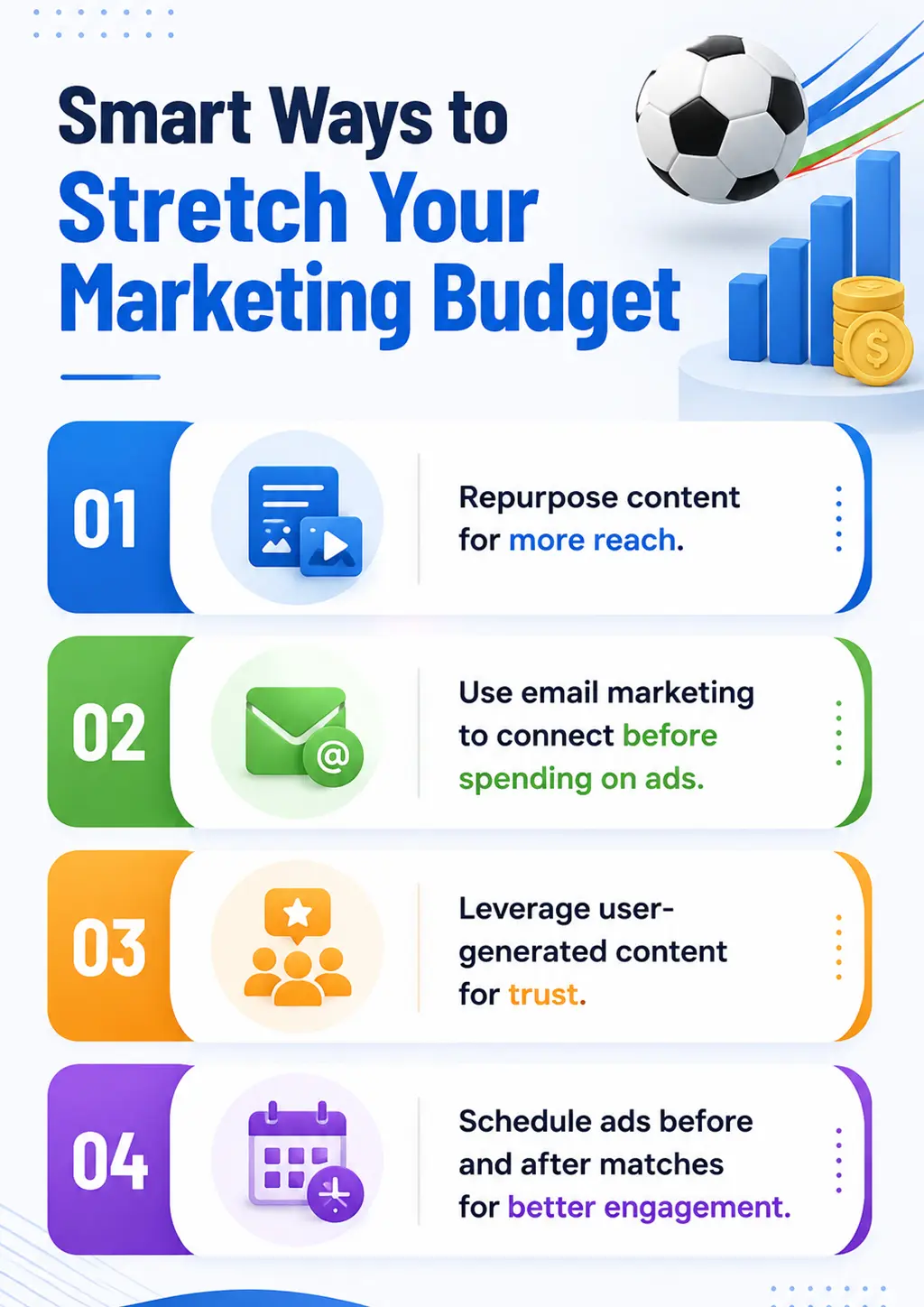
Let’s look at four quick tips to help your franchise spend wisely without losing impact.
One good video can go a long way. Film a short clip of your team cheering, then post it on Instagram, TikTok, Facebook and your website. Trim it for email headers and digital ads. Reusing content saves time and keeps your message consistent on all the platforms. Just make sure that each version fits said platform. Square works for Instagram, vertical works for TikTok and wider crops work for Facebook ads. Smart reuse stretches every dollar you spend on filming and design.
Email is still one of the cheapest tools you have. Your email list is full of people who already like you. Try sending them a short message before each major match. Try and include a small offer and a friendly note. Keep the subject line simple and easy to comprehend. Avoid using the loud caps and emojis. A clean, well written email often beats a flashy ad. Build your list now by offering a small reward at checkout. Future tournaments will thank you for it.
Your customers are your best marketers, so ask them to share photos of their visits during match days. Offer a small prize for the best post or repost their content with credit. This builds trust and saves you from making everything by yourself. Real photos from real people feel genuine and honest. They also reach friends and family who might not follow your brand yet. Make sharing an easy process with a clear hashtag and a simple sign in your store.
Run your ads in the hours before kickoff. That’s when fans are looking for food, drinks, and places to watch. Pause ads during the match itself, since attention usually drops. Restart them after the final whistle for late-night crowds. This rhythm matches how people tend to behave.
Most ad platforms let you schedule by the hour. Smart timing enhances your click-through rates and cuts wasted spend on ads nobody sees.
Here are four ways to keep your momentum strong and steady long after the tournament ends.
The tournament is said to bring fresh faces and your job is to keep them coming back. Send a thank you email after their first visit, acknowledging them. Offer a small reason to return, like a free side or a loyalty stamp. Train your staff to remember the regulars. Small touches like this can build habits. A new customer who returns three times often becomes a regular for years if they are local. Treat that first visit like the beginning of a good friendship, not a one-time sale.
People love a good story. After the tournament, share what your franchise did and what you learned. This can be done by posting photos, sharing numbers and thanking your team. This helps build trust with future customers. It also shows your community that you are part of something huge. A short blog post or video works well. Honesty matters more than perfection, so provide them with the truth about wins and lessons. Your audience will respect you for it.
Look at your data and find the top three things that drove sales. Put more money into those next quarter. Drop the ideas that did not pay off. This is the heart of leveraging FIFA 2026 for brand visibility long after the tournament ends. Your tournament campaign should teach you what your customers love. Use those lessons all year. Smart reinvestment turns a short event into a steady source of growth that keeps building over time.
Soccer fever does not conclude with the final match. You can stay active by sponsoring a youth team or hosting a screening for the next big game. You can stay tied to the sport your community enjoys. This lets your brand stay relevant and friendly. It also lets you care beyond the big payday. Local sports provide you with numerous chances to be seen and appreciated. A small sponsorship sign at a children’s game can also win loyalty for years to come.
FIFA 2026 is a rare opportunity for franchise owners. This is because crowds, the energy and the global attention will lift the brands that prepare well. Start now, stay local and keep your message warm and inviting. Track what works and reinvest in your wins. An ideal franchise marketing plan for FIFA 2026 can transform a few weeks of buzz into years of steady growth. Your community is watching, cheering and ready to support you.
A small franchise does not need a massive budget at this stage. Focus on practical spending that can create quick results, such as local social ads, email campaigns, in-store signage, staff support and simple match day offers. If the franchise has a local marketing fund, use it on campaigns that can be launched and measured quickly.
You are still able to benefit from FIFA 2026. Fans across Canada, the United States, and Mexico will be watching and celebrating. Utilize match day offers, local soccer partnerships, social media content, and community focused promotions to connect with customers in your area.
Franchises are required to balance local marketing with brand consistency. A local business is able to create its own campaign freely, however franchise owners usually need to follow brand guidelines, use approved assets, protect trademarks, and report results to the larger system. The ideal campaigns give franchisees an opening to localize while keeping the brand message consistent.
Yes. However, local micro-influencers are often a better fit than large celebrity accounts. A neighbourhood food blogger, local soccer coach, community creator or family focused influencer will be able to drive more relevant visits. Franchisors should provide clear rules for influencer partnerships, including approved messaging and disclosure requirements.
Track foot traffic, sales, bookings, online orders, email sign-ups, loyalty program joins, coupon redemptions and social engagement. Compare match days with normal days. For franchise systems, compare results across locations to see which offers, markets and channels performed best.
Avoid launching too late, using unapproved creative, making offers too complicated, ignoring staff training or treating every location the same. Also, avoid using official tournament logos or language that suggests sponsorship unless the brand has the legal right to do so. Keep the campaign simple, local, brand-safe and easy for customers to act on.