
Social media has become a key tool for businesses in B2B marketing, and it’s no longer just for brand awareness or casual posts. It’s now essential for lead generation, customer engagement, and fuelling long-term business success.
If you are not using social media to its full potential, you’re missing a very important opportunity to connect with decision-makers and key players in your industry who are actively searching for solutions to their challenges.
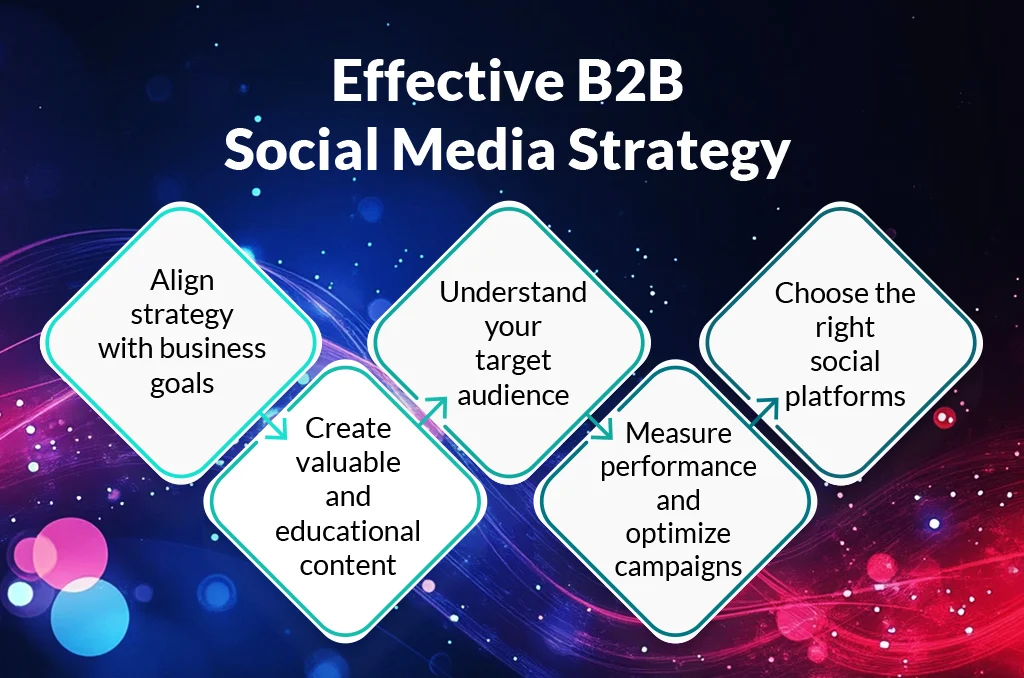
To build an effective B2B social media strategy, you need to have a deep understanding of your audience, choose the right platforms to connect with them, create valuable content, and constantly optimize for better performance. It’s not a one-size-fits-all approach. Each business is unique, and the tactics that work for one might not be effective for another.
Keep reading to find out how you can create an effective B2B social media marketing strategy that drives results, optimizes engagement, and generates leads for your business.
TABLE OF CONTENTS
For many B2B businesses, social media is often pushed aside in favour of tried-and-true channels like email marketing or SEO. But ignoring it could be holding your business back from connecting with the right people and scaling to new heights. When done right, social media can be a very powerful tool in your marketing toolbox.
With social media, you can have real-time conversations with potential clients, partners, and even competitors. Platforms like LinkedIn and Twitter provide spaces where decision-makers actively search for solutions to their challenges. By participating in these conversations, your business can establish itself as an expert in your field.
What’s more, social media offers a cost-effective way to reach a huge audience. Instead of relying solely on expensive trade shows or print ads, you can target exactly the right people with your content. This means you’re not just reaching more people, but the right people—and you can track how well your efforts are paying off. It’s a way to grow your business with measurable results without breaking the bank.
To develop a B2B social media marketing strategy that works requires a thoughtful, structured approach. Every element needs to be aligned with your overall business goals. Let’s explore the main components of a successful strategy.
When beginning your social media marketing efforts, it’s essential to define your goals. Without clear objectives, you risk wasting resources on tactics that don’t align with your business’s needs. Your objectives need to be specific, measurable, and focused on the outcomes you want to see.
Common objectives for B2B social media marketing include:
Each of these goals requires different approaches, but they all work towards the same larger mission: growing your business by reaching the right people at the right time.
Knowing who you want to reach is just as important as the message you want to send. In B2B marketing, your target audience is typically more specific than in B2C. It’s not just about appealing to anyone online—it’s about engaging key professionals or decision-makers in relevant industries.
Start by creating buyer personas to gain insight into the needs, challenges, and decision-making processes of your target audience. Key factors to consider include:
Tailoring your content and messaging to these personas will ensure that your social media strategy resonates with the right individuals, making your efforts more effective.
Not all social media platforms are built the same for B2B marketing. While platforms like Instagram or TikTok are often more popular in the B2C world, B2B companies tend to find better success on professional networks such as LinkedIn, X (formerly Twitter), and sometimes Facebook.
Here’s a brief breakdown of the best platforms for B2B:
Choosing the right platform comes down to where your target audience is most active and how they prefer to engage with content.
Content is the heart of any effective social media strategy, but in the B2B world, it’s not about flashy ads or trying to go viral. It’s about creating value that resonates with professionals and addresses the challenges they face. Your content should educate, inform, and provide solutions that help your audience solve their business problems.
Types of content that work well in B2B social media marketing include:
Be sure to maintain a balance between promotional and informative content. The goal is to position your company as a trusted resource, not just a seller.
Paid media on social platforms can be a great way to extend your reach and drive targeted traffic to your content. By using LinkedIn Ads or promoted ads on X, you can specifically target individuals in certain industries, job roles, or geographic areas. This makes your marketing efforts highly focused and cost-effective.
Paid campaigns should be part of your broader strategy, used to complement organic efforts. For instance, you might use organic posts to engage with your audience and paid ads to promote high-value content or special offers. Here are a few tips to help you optimize your paid social media campaigns:
Social media doesn’t operate in isolation; it should be integrated into your overall marketing funnel. The awareness you build through social channels should lead to deeper engagement with your brand. By integrating social media with tactics like email marketing, SEO, and other strategies, you can nurture leads and move them further down the sales funnel.
For example, after engaging potential clients on social media, you might direct them to a landing page with a free resource in exchange for their contact information. From there, you can send them targeted email campaigns that keep your business top of mind. Over time, you’ll move them closer to making a purchase.
Consistency is very important when it comes to social media. That’s why it is important to post regularly, so your brand stays visible to your audience. This doesn’t mean posting every hour, but it does require a well-planned schedule. Consistency helps build trust and keeps your brand in front of decision-makers when they are ready to make a purchase.
Developing a content calendar is an efficient way to plan and ensure that you’re covering all the topics your audience cares about. Plus, using analytics tools can show you when your audience is most active, so you can time your posts for maximum impact.
After implementing your B2B social media strategy, it is important to measure your success and optimize your approach. Social media is an ongoing process, not a one-off effort. Regularly reviewing your performance will help you fine-tune your strategy and ensure you’re getting the most out of your efforts.
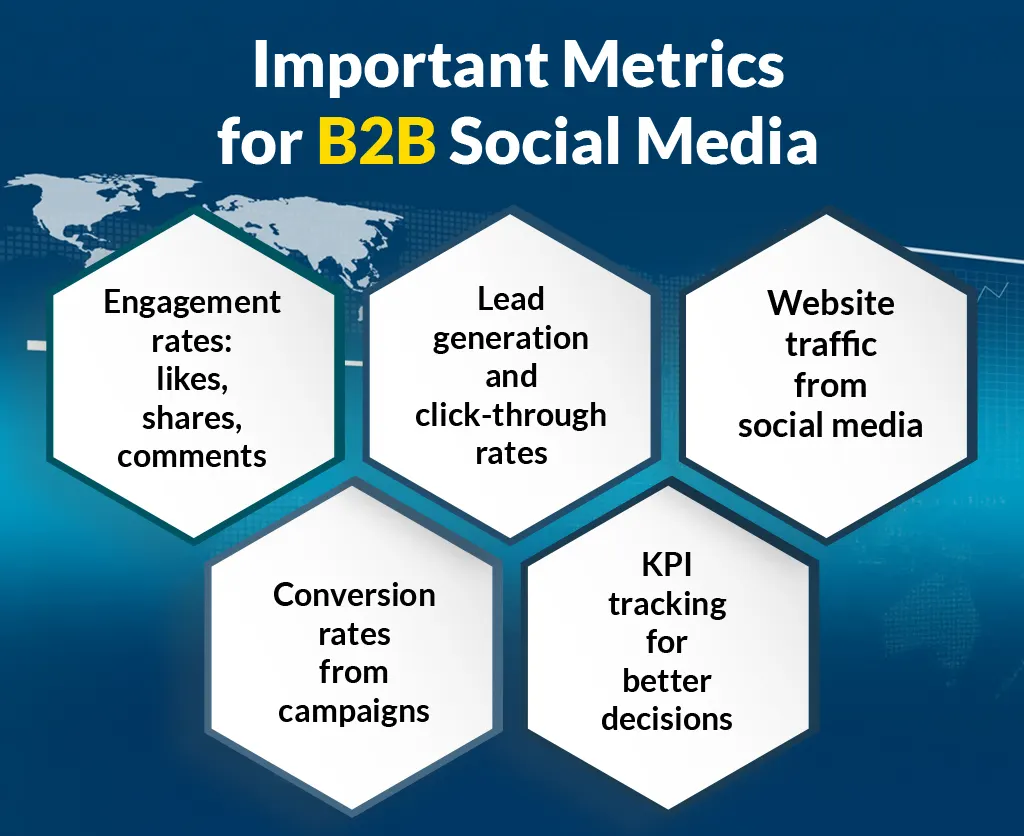
Metrics are very important for evaluating the effectiveness of your B2B social media marketing. Without tracking, it is impossible to understand what’s working and what isn’t. Key performance indicators (KPIs) you should track include:
By focusing on these KPIs, you can make sure that your efforts align with your business objectives and make informed decisions going forward.
Every major social media platform includes built-in analytics tools that lets you track the performance of your posts, ads, and audience engagement. These tools offer valuable insights into what types of content resonate best with your audience.
By analyzing metrics like click-through rates, impressions, and engagement, you can identify patterns and make adjustments to improve future campaigns. Make sure to regularly review your analytics and tweak your approach to keep improving.
Return on investment (ROI) is the ultimate measure of success in any marketing campaign. When it comes to social media, calculating ROI can be tricky. However, it is crucial to connect your social media activities to tangible business outcomes, such as lead generation or sales.
To calculate ROI, track the amount you spend on ads, content creation, and management and compare it to the revenue generated through social media efforts. This will help you determine whether your strategy is worth the investment.
A/B testing is a valuable method to optimize your social media campaigns. When you test different variations of your content, you will be able to figure out what works best for your audience. Try experimenting with different headlines, images, and calls to action to identify the elements that generate the highest engagement and conversions.
Social listening is a very important tool that lets you monitor conversations around your brand, industry, and competitors. It helps you gain insights into customer sentiment, uncover trends, and adjust your content accordingly.
Tools like Brand24 or Hootsuite allow you to track mentions of your brand and relevant keywords, so you can stay informed about what your audience is saying about you.
The key to long-term success in B2B social media marketing is continuous optimization. The market, audience preferences, and social platforms are always evolving. Regularly review your performance metrics, adjust your strategy as necessary, and keep experimenting with new tactics.
Data isn’t just useful for immediate optimization—it’s also valuable for building long-term relationships with your audience. By tracking engagement over time, you can identify loyal followers and craft strategies to keep them engaged.
Social media has become a very important part of B2B marketing, offering businesses unique opportunities for lead generation, relationship-building, and brand visibility. By developing a strong B2B social media marketing strategy, you can connect with decision-makers and grow your business in meaningful ways. With the right approach, your social media efforts can translate into tangible business outcomes If you’re looking to perfect your social media strategy, G Web Pro Marketing Inc. is here to help you create a tailored plan that aligns with your goals. Let’s work together to elevate your B2B marketing efforts and drive results that matter.
A B2B social media marketing strategy is a structured plan that uses social platforms to connect with other businesses, build professional relationships, and generate quality leads. It focuses on engaging decision-makers with content that is relevant and valuable instead of just broadcasting messages without purpose.
LinkedIn is often seen as the most effective platform for B2B social media because it connects you directly with professionals and decision-makers. Other platforms like Twitter (X), Facebook, Instagram, and even YouTube can play roles when used strategically to reach specific audiences or support content formats such as video or industry discussions.
The success of a B2B social media strategy is measured by tracking key metrics like engagement rates, lead generation, traffic to your website from social channels, and conversions. When you use social media analytics tools, you can understand what content works, how audiences respond, and how your efforts contribute to overall business goals.
Effective tactics include posting educational and industry insights, connecting with your audience through personalized responses and conversations, using targeted social media ads to reach decision-makers, and aligning social efforts with sales or marketing teams. Monitoring results and adapting based on performance data is also a key tactical step.
High‑quality content is crucial because B2B audiences look for information that helps them solve business challenges or make informed decisions. Thought leadership pieces, case studies, and data‑driven posts perform better than generic promotions because they build credibility and trust with business buyers.
Social media analytics reveal how people interact with your posts, which types of content generate interest, and where your audience spends most of their time online. These insights help refine your strategy as they focus more on successful content types and also adjust messaging that isn’t resonating.
Yes. A well‑planned strategy helps attract and nurture potential clients by delivering relevant content that addresses their business problems and guides them toward your offerings. Tactics like call‑to‑action posts and targeted campaigns can convert engaged audiences into qualified leads.